
Пересадка волос для женщин предлагает постоянное решение различных типов женского выпадения волос, от генетического облысения по мужскому типу до тракционной алопеции. Эта специализированная хирургическая процедура адаптирует традиционные техники трансплантации для решения уникальных паттернов выпадения волос у женщин и эстетических проблем.
Unlike men who typically experience concentrated balding patches, women often face diffuse thinning across the scalp while maintaining stable donor areas, requiring customized approaches for natural-looking results.
Modern techniques like
Long-Hair FUE
and
DHI
allow for transplantation without obvious shaving, making the process more discreet for female patients. With proper candidate selection and experienced surgical care, women’s hair transplants can restore density, rebuild hairlines, and significantly improve confidence with results that last a lifetime.
Key Points for Women's Hair Transplant:
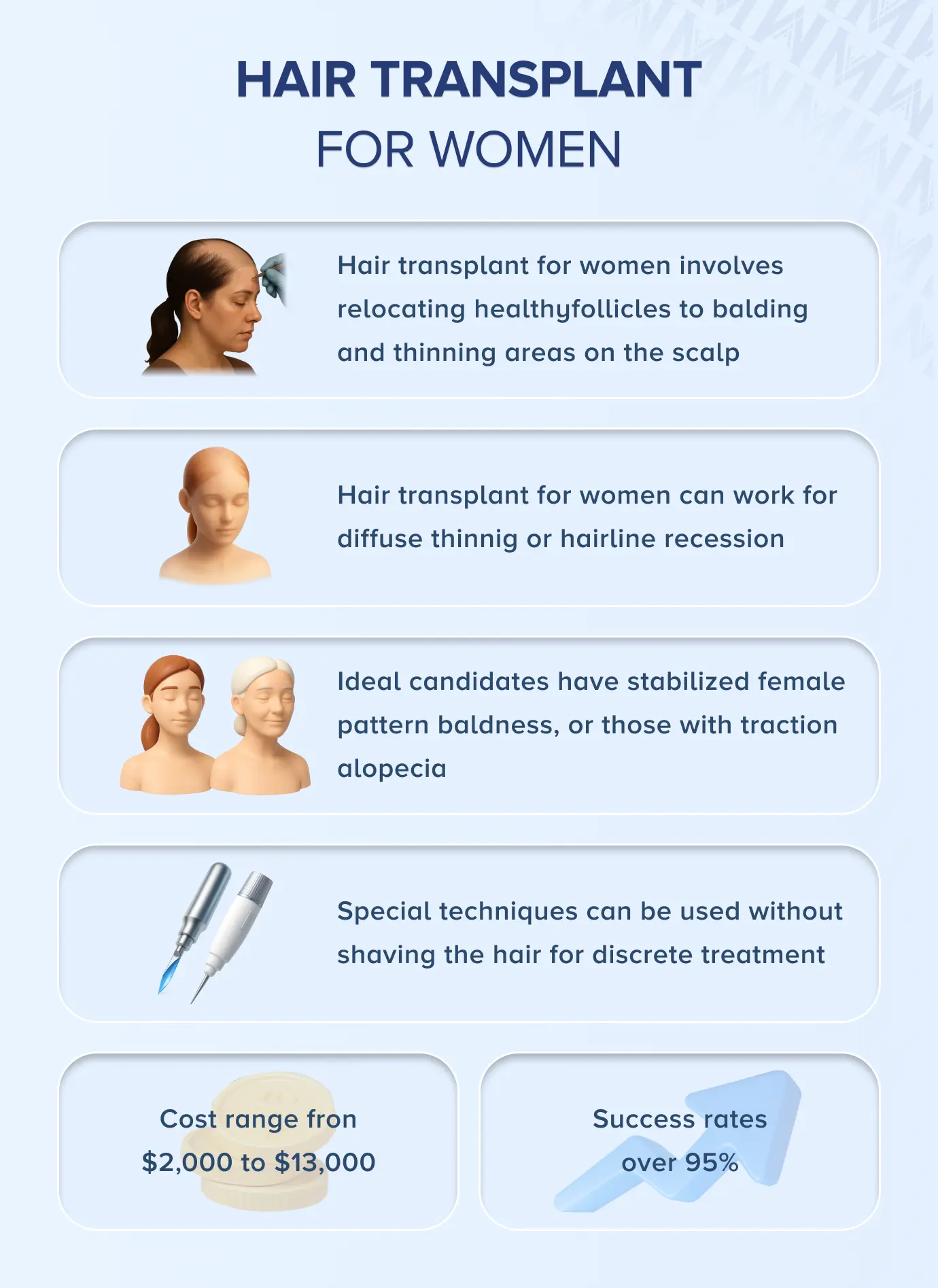
Hair transplants for women relocate healthy follicles from stable donor zones to areas of thinning or hair loss
Women’s procedures typically focus on diffuse thinning, hairline recession, or localized areas rather than large bald spots
Best candidates are women with stable pattern hair loss, traction alopecia, or inactive scarring alopecia
Specialized techniques like Long-Hair FUE avoid shaving, allowing for discreet treatment with minimal downtime
Costs range from $1,500 to $15,000 depending on technique and location
Recovery takes approximately 7-10 days with full results visible at 12-18 months
Success rates are above 90% when performed on properly selected candidates with stable donor hair
Transplanted results are permanent and resistant to future hair loss patterns
A hair transplant is a surgical procedure that moves healthy hair follicles from a donor area, typically the back or sides of the scalp, to a thinning or bald recipient area.
It restores hair density by harvesting follicular units either as a strip of tissue (FUT) or individual follicular units (FUE) , then implanting them at precise angles to match natural growth.
Transplanted follicles retain their genetic resistance to hair loss, so once they take root they produce permanent, natural-looking hair.
A hair transplant for women is a surgical treatment for hair loss that relocates hair follicles from a stable donor zone, usually the back or sides of the scalp, to areas of thinning or baldness on a woman’s scalp.
Because women typically experience diffuse thinning (female pattern hair loss) or localized thinning at the hairline (traction alopecia), the surgeon designs the transplant to restore overall density or rebuild a receded temple or frontal hairline.
Women’s hair transplants use the same core techniques as men’s, but often prioritize methods that avoid shaving the recipient area and allow immediate camouflage under existing long hair. The goal is to achieve natural fullness while preserving a feminine hairline shape and minimizing visible signs of surgery.
DHI hair transplants cost between $2000 and $30,000, depending on the country. In Western countries such as the USA, the UK, Germany, and France, the average cost is around $10,000 to $15,000. In eastern countries such as Turkey, DHI hair transplants cost around $3000 to $4000 on average.
DHI hair transplants are more expensive than other techniques because they are the most advanced form of hair transplant available, use more specialized tools, and require more expertise from the surgeon.
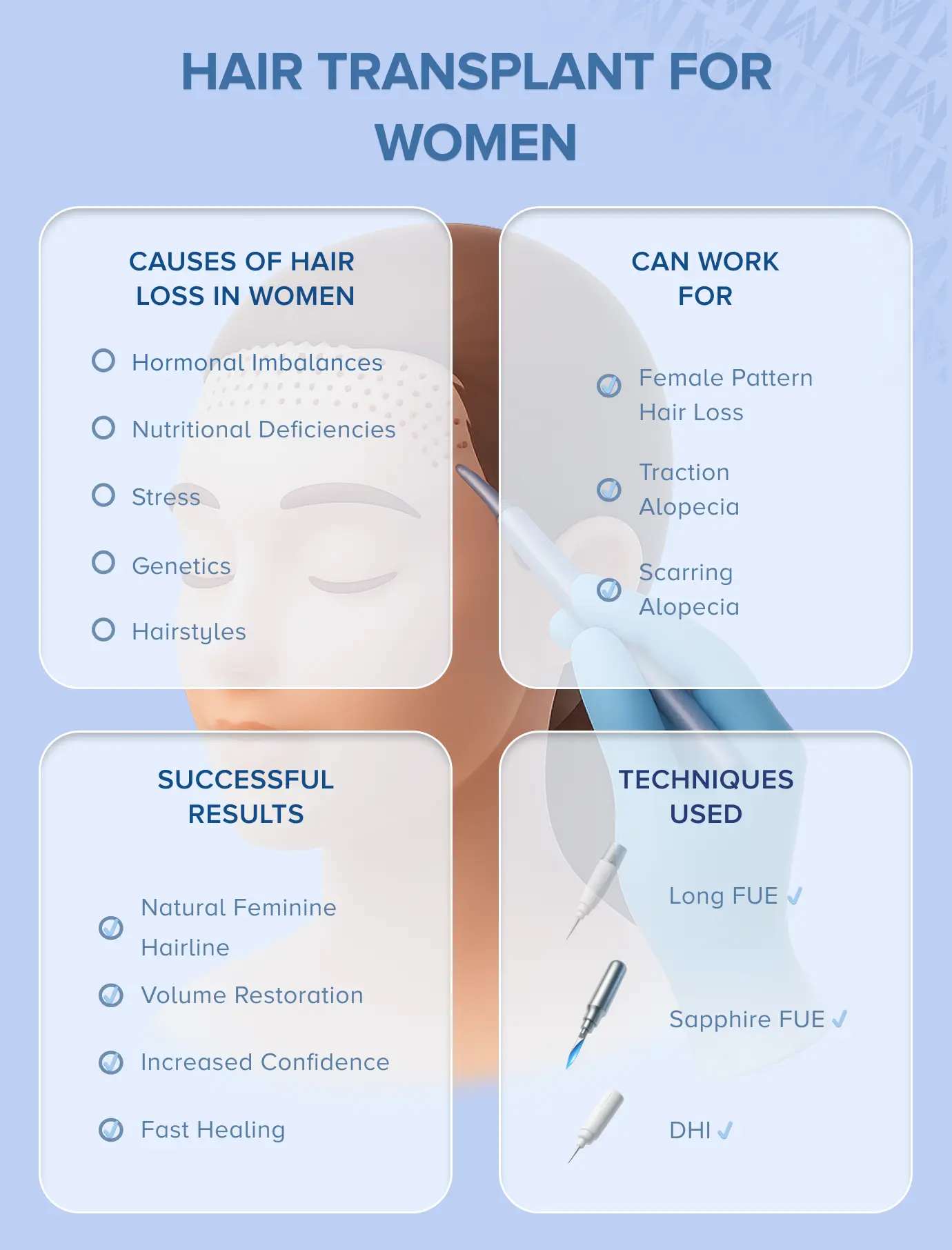
Hair loss in women can be caused by genetic predisposition, hormonal imbalances, physical or emotional stress, nutritional deficiencies, and hair-care practices that damage follicles.
Common causes:
1. Female pattern hair loss (androgenetic alopecia): hereditary sensitivity to androgens leading to diffuse thinning.
2. Hormonal fluctuations: menopause, PCOS, postpartum changes, thyroid disorders.
3. Telogen effluvium: shock to the system from illness, surgery, crash diets, severe stress.
4. Nutritional deficiencies: low iron, vitamin D, and protein deficits.
5. Traction alopecia: chronic tension from tight hairstyles damaging follicle roots.
Women’s hair transplants can effectively treat these hair loss types:
Female pattern (androgenetic) alopecia when donor hair is stable.
Traction alopecia affecting hairline or temples.
Localized scarring alopecia (once scarring is inactive).
Diffuse thinning if donor zone density is sufficient.
Hairline recession or high forehead (cosmetic lowering).
Hair transplants cannot treat active diffuse unpatterned alopecia or ongoing autoimmune shedding.
The following hair transplant techniques are the most popular among women:
Long-Hair FUE (No-Shave FUE) : Doesn’t require shaving the donor or the recipient area, immediate cosmetic results, no sign of surgery.
DHI (No-Shave DHI) : The donor area is shaved, and the recipient area is unshaven. Percise.
Sapphire FUE : Both donor and recipient areas are shaved.
Yes, hair transplant for women can have particularly increased effects when combined with PRP or stem cell hair transplant .
Yes, women can get a body hair transplant, especially over areas of scarring where the lack of hair draws unwanted attention.
Yes, women can get eyebrow transplants to change the shape of the eyebrows, add fullness, or cover scarring.
Yes, women can get eyelash transplant if they have no eyelashes. Eyelash transplants are very rare, and usually have lower success rates compared to other types of hair transplants.
You are a good candidate for a hair transplant if you:
Are between the ages of 18-65
Have stable donor hair
Have patterned hair loss (Ludwig I–IV), traction alopecia, or localized scarring alopecia that is inactive
Have realistic expectations
In good general health
Are committed to aftercare
Women with diffuse unpatterned donor thinning, active autoimmune scalp disease, or unrealistic goals are not suitable candidates.
The best age for a woman’s hair transplant is after age 25, once her hair-loss pattern has stabilized, and before age 60, when wound healing remains strong.
Thin donor hair can be used for a women’s hair transplant if enough healthy, non-miniaturized follicles remain, but it limits the total grafts and may yield less density than thicker donor hair.
Yes. Women with curly hair can undergo any transplant technique (FUE, FUT, DHI, etc.), but the surgeon must account for curl pattern when harvesting and implanting.
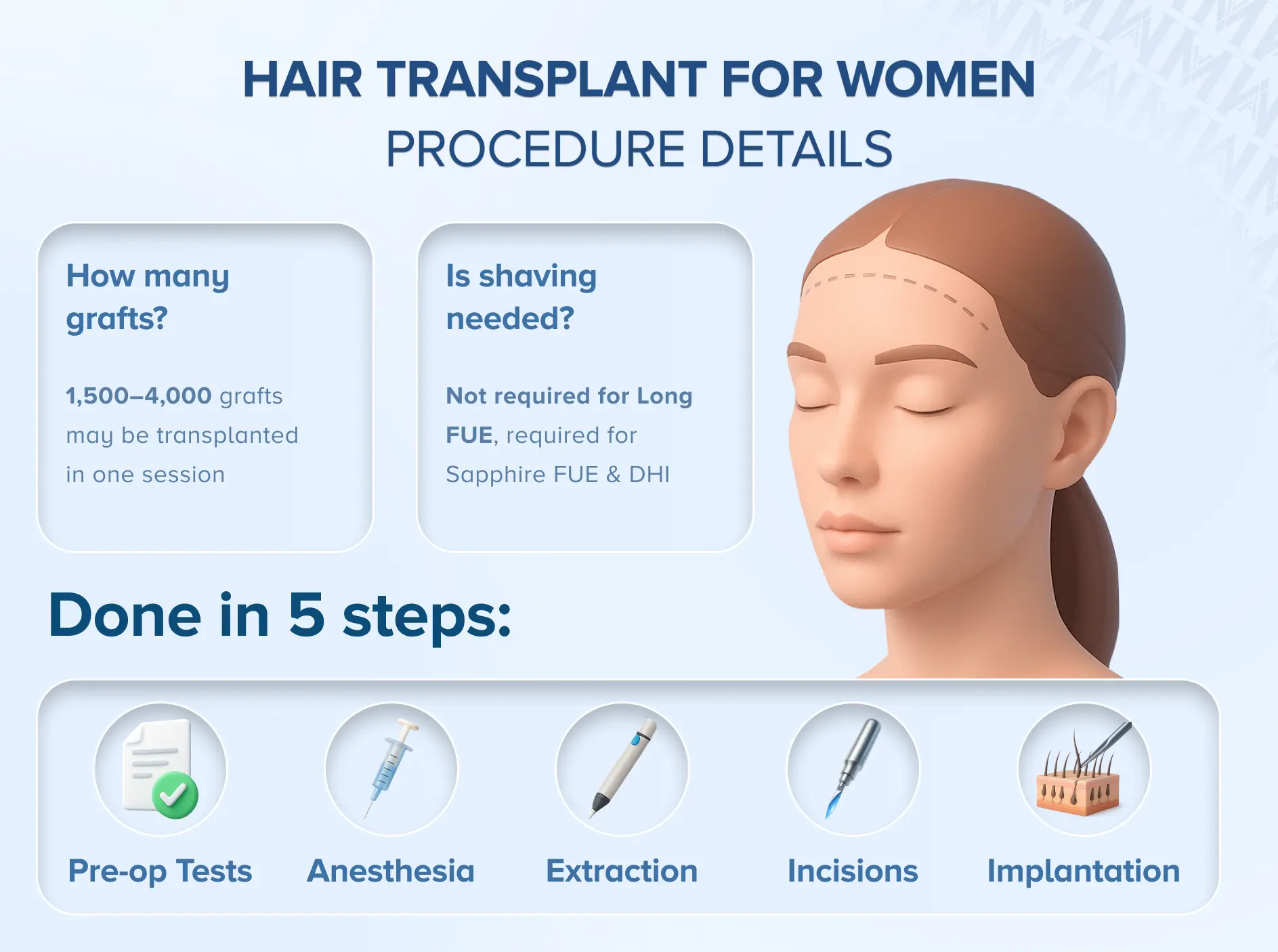
To perform the hair-transplant procedure for women, the surgeon carries out a staged process, from donor harvest and graft prep to precise recipient incisions and implantation, under local anesthesia with the patient awake.
1. Pre-op assessment and scalp analysis (hair density, donor evaluation)
2. Hairline design & surgical planning to match feminine contours
3. Local anesthesia of donor and recipient zones
4. Shaving the hair (For Sapphire FUE and DHI only)
5. Donor harvesting: Long FUE — extract long hair strands; Sapphire FUE/DHI — extract individual follicular units with micro-punch
6. Graft preparation: microscope dissection into 1–4-hair units, storage in temperature-controlled solution
7. Recipient site creation & implantation
8. First wash and application of post-op dressings
9. Recovery instructions: head elevation, gentle cleansing, activity restrictions
Each step is carefully executed by our experienced medical team to ensure optimal results and patient comfort throughout the entire hair transplant procedure.
A women’s hair transplant session lasts 4–8 hours, depending on graft count and technique.
The donor area’s capacity for a hair transplant is assessed through a detailed pre-operative hair and scalp analysis. This examination involves using microscopic evaluation to check the health of the donor hair and accurately measure how much usable graft material is available.
Designing the hairline for women’s hair transplants begins with outlining a low, softly rounded frontal border that suits the patient’s facial proportions and aesthetic goals. This involves measuring the face in thirds, from glabella to chin, and placing the new hairline about one-third of the way down. The outline is shaped with gentle, irregular “micro-points” rather than a straight edge, using single-hair grafts at the front for a natural, tapered look.
To ensure a seamless result, grafts are implanted at a shallow angle of 10°–15° so the hair lies flat and blends with the existing growth pattern. Depending on the patient’s preference, the design may preserve a natural widow’s peak. Final adjustments are made with the patient seated upright, accounting for forehead height, brow placement, and overall facial width before graft extraction begins.
Women’s transplants may require shaving only the donor area; the recipient zone can remain unshaven depending on the technique. The Long FUE technique is the only technique that does not require shaving.
Grafts are grouped into three categories based on the number of follicles they contain: single, double, and triple follicle grafts. This approach increases the total number of transplanted hairs. Single follicle grafts are mainly placed along the hairline for a natural, detailed look, while two- and three-follicle grafts are used behind the hairline to boost overall density.
A single-session women’s hair transplant can safely transplant around 3,000–5,000 grafts.
Hair transplant Incisions go 3–4 mm deep into the scalp to reach the dermal layer where follicle roots reside.
Grafts in women’s hair transplants are implanted at low, acute angles, typically between 10° and 20° at the frontal hairline, 15°–25° in the mid-scalp, and up to 35°–45° in the crown, to mimic natural hair exit and lay-flat direction.
Women’s hair transplants cost between $1,500 and $15,000 depending on technique and location.
To find the best clinic for a female hair transplant, first, verify surgeon credentials and society membership (ISHRS, ESHRS). Confirm team experience with female procedures (Long-Hair FUE, DHI). Review before/after photos of women with similar thinning patterns. Ensure on-site lab for graft dissection and proper storage. Compare package inclusions—graft count, post-op care, follow-up. Check transparent pricing per graft and any hidden fees.
Here are some questions you can ask during your hair transplant consultation:
“What is my donor density and safe graft limit?”
“Which technique do you recommend for my hair-loss type and why?”
“Can I see female patient before/after images with similar profiles?”
“What graft survival rate do you achieve in women?”
“How do you minimize visible signs (shaving, scars) for female patients?”
“What is the detailed aftercare plan and timeline for recovery?”
“What additional medical treatments do you recommend post-transplant?”
Before your hair transplant , only stop medications if instructed by your doctor. Avoid smoking, alcohol, and recreational drugs for at least two days before the procedure, though a two-week break is ideal. Discontinue finasteride seven days prior and minoxidil ten days prior. Speak with your physician about temporarily pausing blood thinners like aspirin or NSAIDs one week before surgery.
Additionally, stop using hair dyes or chemical treatments at least two weeks in advance. On the day of the procedure, wear loose, comfortable clothing and arrange for transportation and post-operative support.
The recovery process after a women’s hair transplant has three phases: immediate postoperative care, early healing, and long-term regrowth.
During the first three days after surgery, it’s important to keep your head elevated at a 30° to 45° angle while sleeping to minimize swelling. To protect the grafts, wear loose, button-up clothing that doesn’t require pulling over the head.
In the early healing phase between days 4 and 14, scabs will form around the grafts and begin to shed on their own; do not pick or scratch them. Some mild redness and swelling may continue during this time; cold compresses can help relieve discomfort.
Light activities can typically be resumed by day 5, but strenuous exercise, bending, and lifting should be avoided until at least day 14. When washing your hair, follow your surgeon’s guidance carefully, use a gentle water flow, and avoid applying direct pressure to the grafts.
In the long-term regrowth phase (weeks 3 to 12 and beyond), the transplanted hairs typically shed between weeks 2 and 6 due to shock loss, while the follicles gradually enter the growth phase around week 12.
Medical treatments such as minoxidil, PRP, or stem-cell injections may be started or resumed at this stage if recommended by your surgeon.
Early regrowth usually begins by the third month, with around 50% of the final density visible by month 6 and full results achieved between months 12 and 18. To protect the healing scalp, wear a hat or apply SPF 30+ sunscreen whenever exposed to sunlight for the first three months.
The donor area takes about 7-10 days to heal after FUE extractions.
Women’s transplant sites generally heal slightly faster than men’s because female scalp skin is thinner and has quicker wound-healing properties.
After a hair transplant, it’s important to avoid caffeine for the first two days and refrain from smoking for at least two weeks. To help minimize inflammation, try to reduce your intake of very salty or spicy foods.
During the first ten days, wash your hair and body separately and avoid shaving the transplanted area. Use a neck pillow to keep your head elevated while sleeping, and wear loose, button-up clothing to avoid disturbing the scalp. To protect your results, stay out of direct sunlight for two months and avoid physical activities, exercise, and heavy sweating for at least one month.
You can resume haircuts, coloring, and styling in stages as your scalp heals:
Haircut: gentle scissor trim at 2–3 weeks; full clipper cut of transplanted area at 2 months; any cut after 3–4 months is safe for all techniques.
Coloring (dye/bleach): avoid chemical dyes for at least 4 weeks; organic/peroxide-free color after month 1 if scalp shows no redness or scabs.
Styling (heat, perms): no heat-styling tools or perms for 3–6 months; you may use gentle, loose styling (e.g., soft clips, loose ponytails) after 4–6 weeks once grafts are stable.
Early trims protect young grafts; waiting 1–2 months for color prevents chemical irritation; delaying heat and tight styles until 3+ months ensures full graft anchoring and optimal long-term results.
Side effects from hair transplant are uncommon but may include swelling, mild discomfort, itchiness, and scab formation.
Some patients might experience shock loss in the transplanted area; however, serious issues like infection, visible scarring, or poor graft survival are extremely rare.
Swelling after a hair transplant typically lasts between 3 and 5 days.
Hair transplant for women leaves almost invisible scars if the Sapphire FUE, Long FUE, or DHI techniques are used.
Yes, hair transplants for women can cause shock loss in about 5% to 10% of patients, similar to other transplant techniques.
Shock loss happens when the surgical procedure stresses the scalp, pushing hairs into the catagen (shedding) phase. Although shedding is visible, the hair roots stay healthy, and new growth typically begins within approximately 120 days.
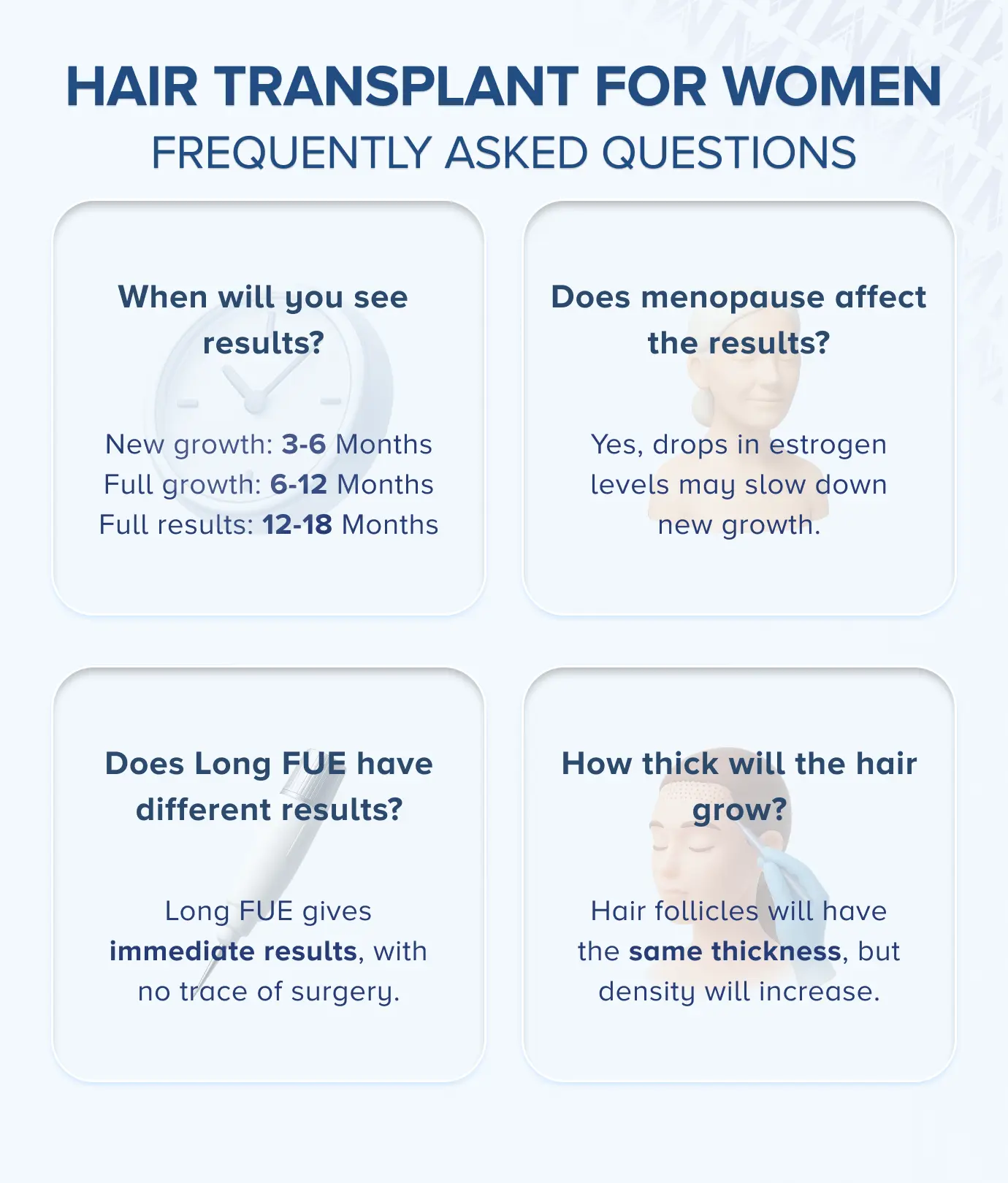
Women will start experiencing hair growth around 3-4 months after surgery, and will have full growth around 12-18 months. After that period, women can grow their hair as long as they’d like.
If the Long FUE technique was used, there would be immediate cosmetic results, but the transplanted hair would fall in a few weeks, and start growing around the 6th month mark after surgery.
Menopause affects hair transplant results by altering the hormonal environment that supports transplanted follicle growth. Estrogen decline and relative androgen increase during menopause slow the anagen (growth) phase, reduce hair shaft diameter, and can diminish graft survival and regrowth density if not medically managed.
Post-menopausal women often experience more diffuse thinning and slower wound healing, so transplanted follicles may take longer to enter robust growth and achieve final density (often by 12–18 months rather than 6–12 months). To optimize results, surgeons recommend pre- and post-op hormonal evaluation, consider hormone replacement therapy or anti-androgen medications, and combine transplant with adjuvant treatments (minoxidil, PRP, stem-cell injections) to counteract the low-estrogen environment and support graft survival.
No, transplanted follicles in women and men follow the same growth cycle and regrow at a similar rate. Both typically see initial hair emergence at 3 months, 50% density by 6 months, and full results by 12–18 months. Individual variation depends on age, health, and adjuvant therapies, not gender.
Transplanted hair grows in the same thickness as the hairs on the back of the head. The growth from single hair grafts may seem thinner, and growth from grafts with 2-4 hairs may appear thicker.
Yes, transplanted hair can eventually turn grey just like natural hair, but the hair transplant procedure itself does not speed up the graying process.
During extraction, the hair follicle, including the bulb where pigment is produced, remains intact. Over time, as part of the natural aging process, pigment production at the hair bulb decreases, leading to the gradual graying of hair.
Yes, hair transplant for women is a permanent solution to hair loss.
It’s normal to lose about 5% to 15% of the transplanted hair following a hair transplant. A few weeks after the procedure, transplanted hairs often shed in a process called “shock loss” as they transition into a new growth phase. This expected shedding is factored into the planning of the transplant. However, if you continue to experience hair loss afterward, it is likely your original, non-transplanted hair that is thinning.
Yes, hair transplants for women can be repeated if more coverage or density is needed.
If a hair transplant is not for you, you can try out the following treatments:
Stem cell hair transplant: Autologous micrograft preparations injected into the scalp can promote follicle regeneration; early studies show 40–60% density improvement over 6–12 months.
Topical minoxidil (5% foam): FDA-approved to increase female pattern hair density by 15–30% over 6 months, applied once a day.
Oral anti-androgens (spironolactone): Reduce androgen-driven thinning in PCOS or menopausal women.
Platelet-rich plasma (PRP): Autologous growth factors injected monthly for 3–4 sessions yield 70–90% improvement in hair thickness.
Low-level laser therapy (LLLT): Helmet or cap devices used 3×/week for 12–26 weeks stimulate follicles and improve shedding rates.
Scalp micropigmentation: Tattooing thousands of micro-dots to mimic follicle shadows; results are visible immediately and last 3–5 years, costs $1,000–$5,000.
Hair replacement systems (toppers, wigs): Custom-made, non-surgical prosthetics providing instant density; price range $200–$1,000.
Concealing fibers and sprays: Keratin or cotton fibers that adhere to hair shafts for temporary fullness.
The pros and cons of hair transplant for women are listed in the table below:
Advantages of Hair Transplant for Women |
Disadvantages of Hair Transplant for Women |
|---|---|
Restores natural density |
Costly procedure |
Permanent solution |
Requires stable donor hair |
Minimal visible signs (no-shave options) |
Recovery time and temporary downtime |
Improves hairline shape |
Possible scarring |
Boosts confidence and appearance |
Not suitable for diffuse donor thinning |
Thank you! Your information has been sent successfully.