Hair Transplant Crown & Vertex: Challenges, Grafts Needed, and Realistic Results

A detailed guide to crown (vertex) hair restoration, explaining why this area is one of the most challenging zones for hair loss treatment due to its spiral growth pattern and limited blood supply. It covers modern techniques like FUE and DHI, graft planning, expected growth timelines, and how natural density is achieved for long-term, realistic results.
Crown Hair Transplant_ What to Expect

Table of Contents

You've spent weeks — maybe months — researching hair transplants. Perhaps you've already had your hairline restored, or you're deep into planning it. But every time you catch your reflection under harsh bathroom lighting, or a colleague snaps a group photo from behind, there it is: that widening circle at the top of your head, the one no hairstyle quite conceals.

If this sounds familiar, you're far from alone. And you're right to research the crown separately — because it plays by entirely different rules.

A crown hair transplant addresses one of the most common yet misunderstood areas of hair restoration. The vertex — the circular region at the top-back of your scalp — presents unique anatomical challenges, demands meticulous graft planning, and follows a slower results timeline than the hairline. Too many patients (and even some clinics) treat it as a simple fill-in-the-blank zone. It isn't. The crown is a distinct surgical challenge that requires its own strategy.

This guide covers everything you need to make an informed decision:

  • Why the crown is harder to transplant than the hairline

  • How many grafts you'll realistically need based on your degree of loss

  • What results to expect — and why patience is non-negotiable

  • How to plan strategically for long-term, natural-looking coverage

Turkey is a global leader in hair transplant surgery, with experienced surgeons handling complex crown cases daily. But your satisfaction depends as much on your understanding as on your surgeon's skill. That understanding starts with anatomy.

Understanding the Crown (Vertex) Area

Before discussing surgery, it helps to understand exactly what the crown is, how it loses hair, and why that matters for your transplant plan.

What Is the Crown in Hair Transplant Terms?

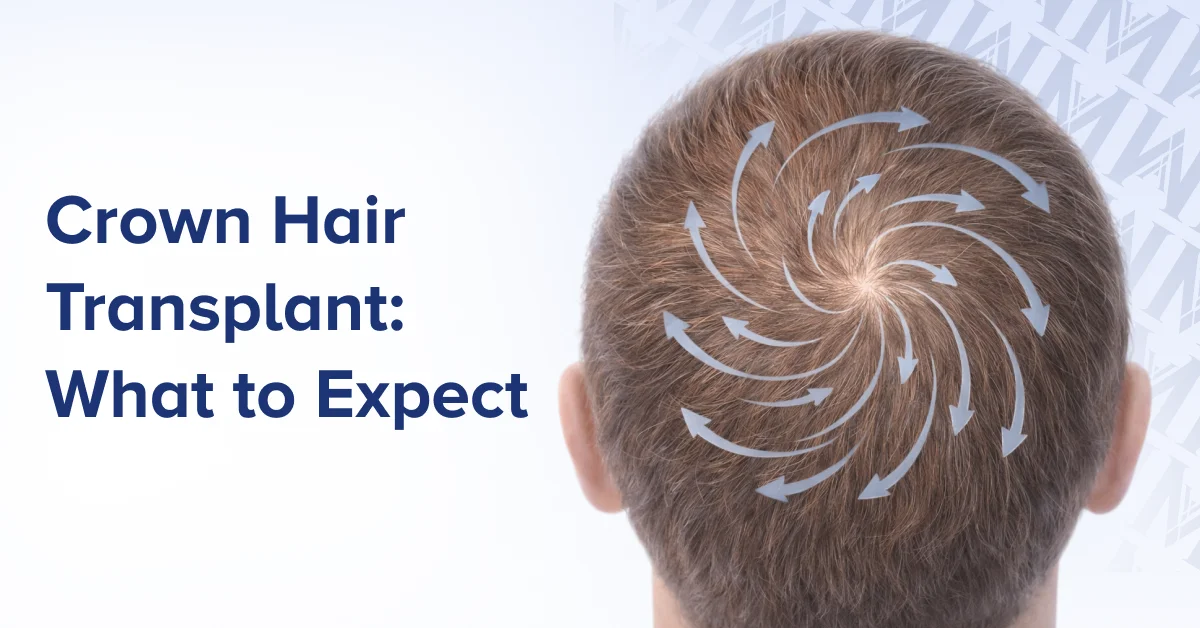
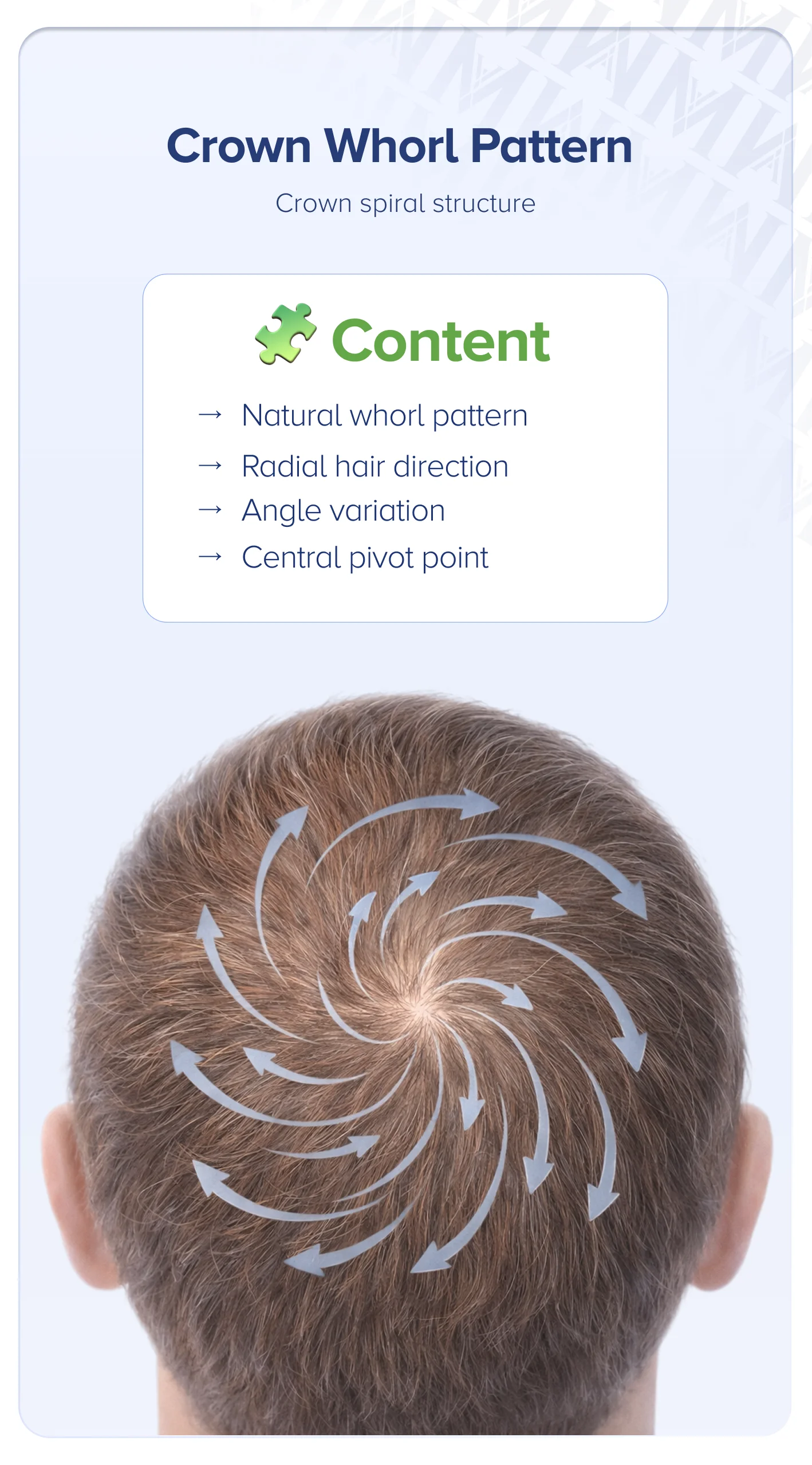
The crown — known medically as the vertex — is the circular area at the top-back of your scalp. Place your hand on the highest point of your head and slide it slightly backward. That's the crown. It's the spot where your hair naturally radiates outward in a spiral pattern.

This spiral is called the whorl pattern. Unlike the hair along your sides or front, which grows in roughly parallel lines, crown hair fans out from a central point — rotating either clockwise or counterclockwise. This pattern is unique to each individual, almost like a fingerprint.

It's important to distinguish the crown from the mid-scalp, the area between the hairline and the vertex. Many patients conflate the two, but surgeons treat them as separate zones with different graft requirements.

Crown-specific loss typically becomes prominent starting at Norwood 3 Vertex on the Norwood scale, the most widely used classification system for male pattern baldness. By Norwood 5 and beyond, the crown and mid-scalp often merge into a single large zone of thinning or baldness. Knowing your Norwood stage is the first step toward estimating what your crown procedure will involve.

Why the Crown Loses Hair Differently Than the Hairline

The crown is one of the most DHT-sensitive regions of the scalp. DHT (dihydrotestosterone) is the hormone primarily responsible for androgenetic hair loss. While the hairline is also affected, crown hair tends to thin more gradually and diffusely — creating a radial pattern of loss that expands outward over time.

This progressive nature makes the crown a moving target. Frontal hair loss often stabilizes earlier, but crown thinning can continue well into a patient's 40s and 50s. The result is an area that looks larger and more exposed than it may actually be, because the thinning is diffuse rather than sharply defined.

The psychological impact is real. The crown is visible from behind and above — in elevators, on escalators, in meeting rooms, in photos you didn't pose for. Many patients report that the crown is the area that bothers them most in daily life, even if the hairline dominates transplant discussions.

Who Is a Good Candidate for a Crown Hair Transplant?

Not every patient experiencing crown thinning is ready for surgery. The strongest candidates for a vertex hair transplant generally share several characteristics:

  • ●  Stabilized hair loss pattern — either naturally or through medication, so the surgeon can predict the final extent of loss

  • ●  Adequate donor supply — enough grafts available to cover the crown without compromising future procedures

  • ●  Realistic expectations — understanding that transplanted density won't match original native thickness

  • ●  Age 25 or older — younger patients with active crown thinning may not yet have a fully established loss pattern, making surgical planning unreliable

If you're under 30 with active crown thinning, many surgeons recommend trying medication for 6–12 months before committing to surgery. This stabilizes the area and paints a clearer picture of your long-term graft needs. A consultation with a qualified surgeon is the best way to determine whether you're ready to proceed.

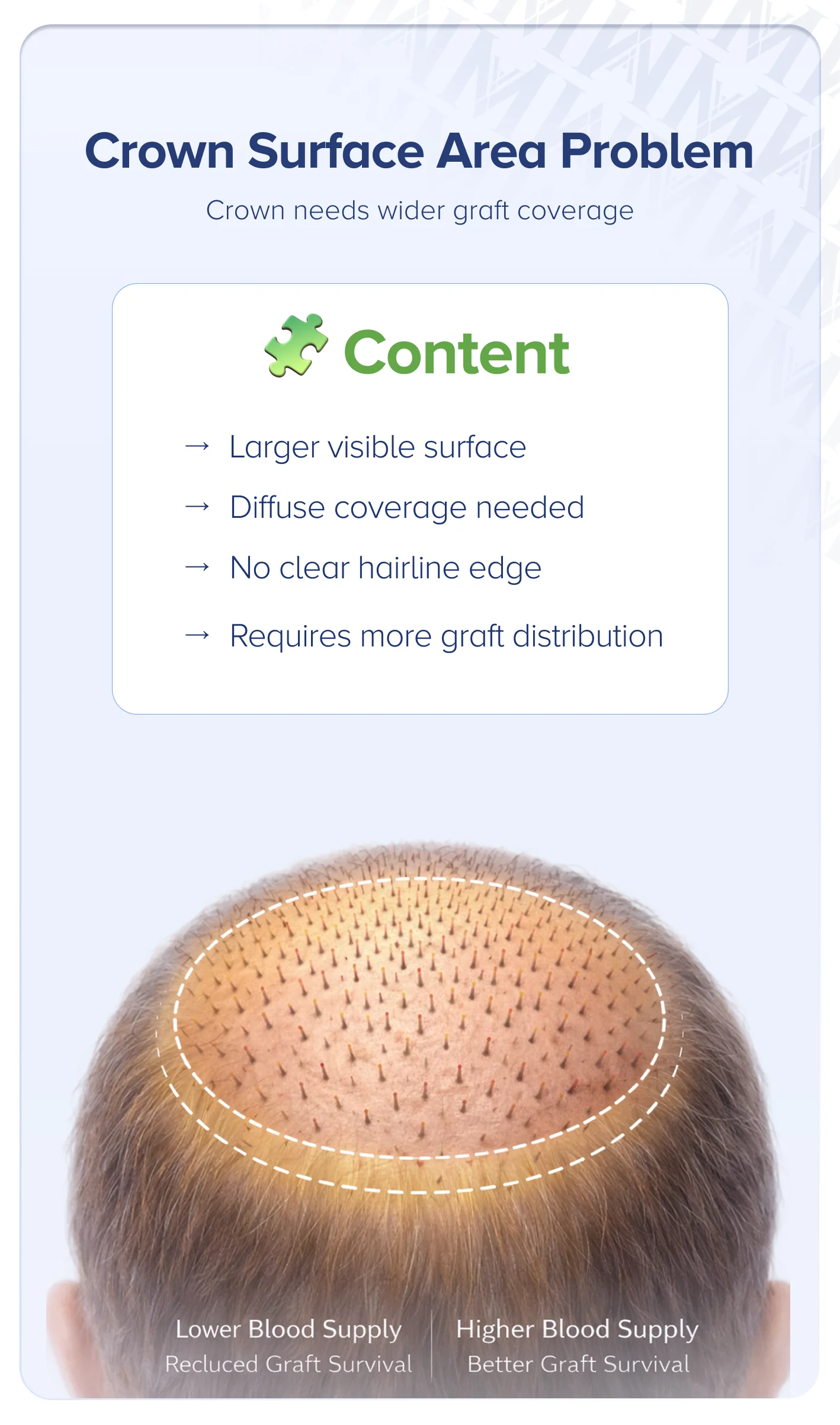
Crown Surface Area Problem

Why Crown Hair Transplants Are More Challenging

The crown isn't just another zone on the scalp. It presents four distinct challenges that make it more technically demanding than hairline restoration — and understanding these will help you set realistic expectations and evaluate surgeons more effectively.

The Whorl Pattern Problem

At the hairline, grafts are placed in roughly parallel rows at a forward angle. The crown is fundamentally different. Here, the surgeon must replicate that natural spiral growth direction — placing each graft at a precise angle and orientation that radiates outward from the central whorl point.

Get this wrong, and the result looks flat, unnatural, or creates an awkward "starburst" effect where hairs stick up instead of lying smoothly. Whorl replication is one of the most demanding aspects of crown surgery, requiring meticulous pre-operative mapping and steady, experienced hands during graft placement. This is artistry as much as it is surgery.

Lower Blood Supply and Graft Survival

The scalp at the vertex has slightly lower blood supply (vascularity) compared to the frontal region. According to published clinical data, graft survival rates — the percentage of transplanted follicles that take root and grow — are generally reported at 85–92% at the crown, compared to 90–95% for frontal areas. The difference sounds small. Over hundreds or thousands of grafts, it adds up.

Experienced clinics mitigate this through careful graft handling, optimized recipient site density, post-operative protocols, and sometimes PRP (platelet-rich plasma) therapy. Some emerging evidence suggests PRP may support graft survival, though long-term data is still being established. The key takeaway: technique and clinic protocols matter more at the crown than almost anywhere else on the scalp.

Larger Surface Area, Higher Graft Demand

Think of the difference between painting a flat wall and painting a dome. The crown is a convex surface, which means it has a larger visible area than it appears when measured flat. Depending on the degree of loss, the crown can span 80–120+ square centimeters.

Unlike the hairline — where even one to two centimeters of dense coverage creates a dramatic visual frame — the crown demands broader, more diffuse coverage across this entire surface. There's no single "edge" to define. You need enough grafts distributed across the whole area to eliminate that visible bald spot, and that requires careful planning.

Crown Blood Supply & Survival

Ongoing Hair Loss — The Moving Target

This is arguably the most critical challenge. The crown is often the last area to stabilize in male pattern baldness. If you transplant grafts into the crown while the surrounding native hair is still thinning, you risk creating an "island" effect — a patch of transplanted hair surrounded by progressively thinner native hair that looks unnatural over time.

This is the primary reason many surgeons advise caution with crown transplants in younger patients, and why medication plays such a pivotal role in crown restoration strategy.

These challenges directly shape one of the most practical questions patients ask: how many grafts will the crown actually need?
Quick Quote in 5 Minutes

Talk to an experienced patient coordinator for your hair transplant in Turkey.
Please enter a valid phone number.
Crown Whorl Pattern 

Crown Hair Transplant Graft Requirements by Norwood Stage

This is the section most readers came here for — and it deserves a thorough, specific answer. Your crown hair transplant graft count depends on several individual factors, but the ranges below provide a concrete starting point.

Factors That Determine Your Graft Count

No two crowns are identical. The question of how many grafts for crown coverage is the most common one patients ask, and the answer depends on a combination of factors a qualified surgeon will assess during consultation:

  • ●  Degree of crown baldness — as classified on the Norwood scale

  • ●  Size of the bald or thinning area — measured in square centimeters

  • ●  Desired density — native crown density averages 60–80 follicular units (FUs, the natural groupings of 1–4 hairs) per cm²; transplanted density typically targets 30–45 FU/cm²

  • ●  Hair characteristics — thick, wavy, or curly hair provides significantly more visual coverage per graft than fine, straight hair

  • ●  Skin-to-hair color contrast — low contrast (e.g., dark hair on dark skin) is more forgiving than high contrast

  • ●  Donor area capacity — your donor area, the band of DHT-resistant hair at the back and sides of your scalp, and whether the hairline also needs grafts

Crown Graft Estimates by Norwood Stage

The following table provides general estimates based on typical clinical ranges. These are starting points for your research, not prescriptions.

Classification

Crown Area Size (approx.)

Estimated Grafts for Crown

Notes

Norwood 3 Vertex

Small, localized thinning

800–1,200

Often combined with a hairline session

Norwood 4

Moderate crown and mid-scalp thinning

1,200–2,000

May require two zones addressed

Norwood 5

Large crown connecting to mid-scalp

1,800–2,500

Donor budgeting becomes critical

Norwood 6

Extensive crown and top of scalp

2,500–3,500+

Often staged over two sessions

Norwood 7

Near-total vertex loss

3,000–4,000+

Realistic density expectations essential

These are general estimates. Individual assessment by a qualified surgeon is essential.

For a Norwood 5 hair transplant, the crown and mid-scalp typically merge into one large treatment zone — making donor budgeting a central part of the surgical plan. For a more personalized estimate, try our hair transplant graft calculator — it takes less than two minutes.

Why "More Grafts" Isn't Always the Answer

Here's where many patients make a critical planning error. It's tempting to think that maximizing graft count will produce the best result. But your donor area holds a finite supply.

💡 Key Takeaway: Think of your donor area as a savings account. It holds approximately 6,000–8,000 extractable FUE grafts over your lifetime. Every graft placed at the crown is one unavailable for future needs. Strategic graft budgeting — not maximum density — produces the best long-term outcomes.

This is the concept of graft budgeting, and it's one of the most important conversations to have with your surgeon. Strategic distribution — prioritizing the zones with the highest visual impact — often produces better overall results than chasing maximum density in a single area.

For younger patients especially, a conservative approach preserves options. If your hair loss progresses, you'll want grafts available for future procedures. Over-harvesting the donor area leads to visible thinning or scarring in that region, creating a new cosmetic problem.

With these graft realities in mind, the next strategic question becomes clear: should you address the crown or the hairline first?

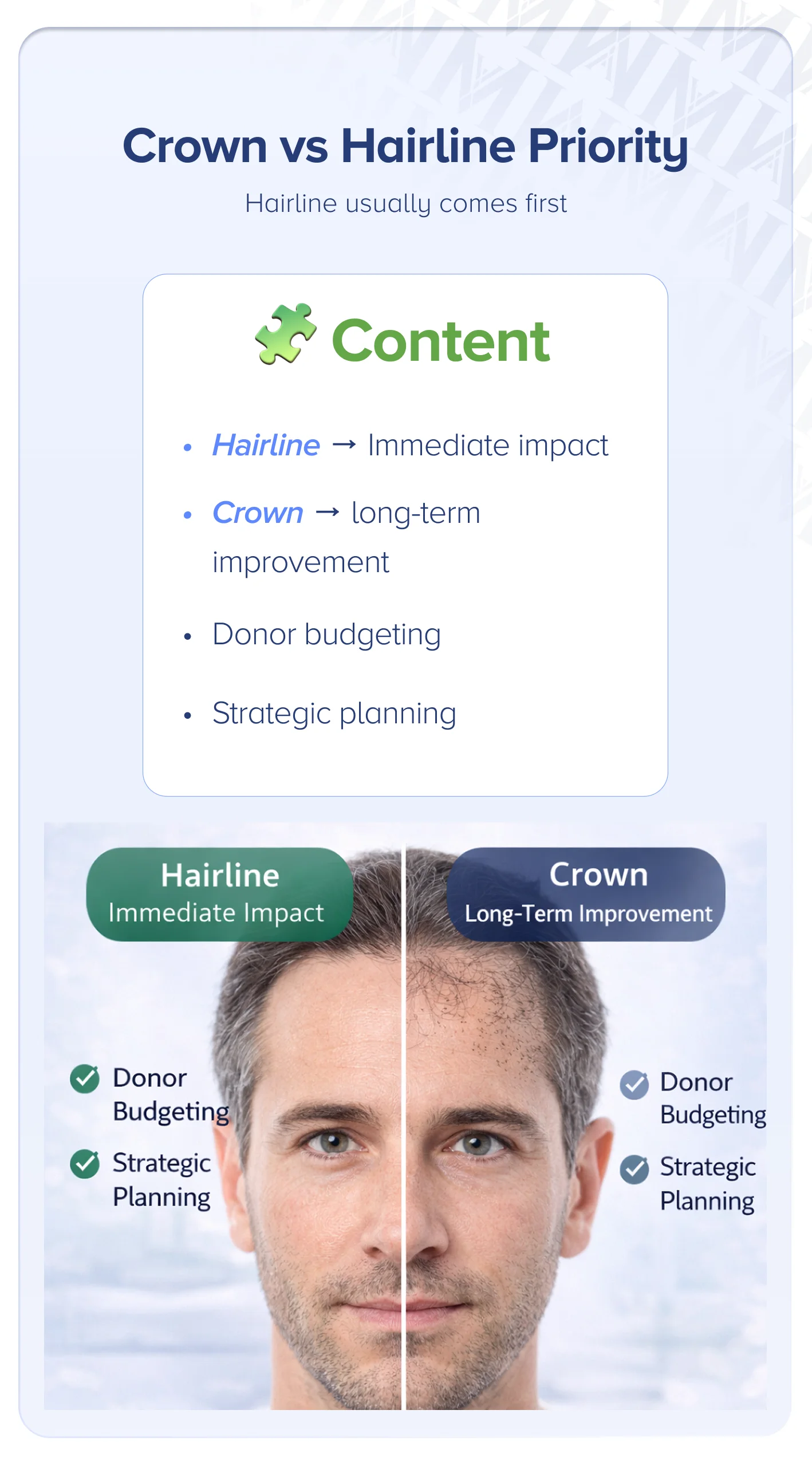
Crown vs Hairline Priority

Crown vs. Hairline: Prioritization Strategy

Which should come first — the hairline or the crown? This is one of the most consequential decisions in hair transplant planning, and the answer depends on your pattern of loss, your priorities, and your donor supply.

The Case for Hairline First

Most surgeons and patients agree: the hairline creates the most dramatic visual transformation. It frames the face, defines the forehead, and is what you see every time you look in a mirror. Even modest hairline restoration can fundamentally change how you perceive your appearance.

The hairline area is also more "stable." Frontal hair loss often stabilizes earlier than crown loss, so transplanted grafts at the hairline are less likely to end up as isolated islands surrounded by continued thinning.

When the Crown Should Come First

There are situations where addressing the crown first makes sense:

  • ●  Your hairline is relatively intact, but crown loss is severe

  • ●  Your primary concern is the view from behind or above — common for patients in professional settings where they're frequently seen from those angles

  • ●  Combined sessions are possible when donor supply is sufficient and the surgeon determines both areas can be addressed effectively in a single procedure

The Strategic Approach: Planning for Both

The best outcomes come from a long-term master plan — not a single-session, fix-everything approach. Consider a composite patient scenario that illustrates why.

A Norwood 5 patient in his mid-30s has significant hairline recession and a large area of crown thinning connecting to the mid-scalp. His surgeon maps out a two-session roadmap. Session one addresses the hairline and mid-scalp with approximately 3,000 grafts. The patient starts finasteride to stabilize his crown.

Twelve months later, once the hairline result has matured and the crown has been monitored, session two places 2,000–2,500 grafts at the crown. The result: natural, comprehensive coverage with donor supply preserved for the future.

This staged approach is common at experienced clinics in Turkey, where surgical teams routinely create multi-session plans that account for the patient's total lifetime graft needs — not just what looks good today. Medication often plays a central role in "holding" the crown while the hairline is addressed first.

The challenges and staging decisions above explain why crown transplants demand careful planning. The next step is understanding the techniques surgeons use to execute that plan.

Techniques Used for Crown Hair Transplants

Two techniques dominate modern crown hair restoration. Understanding both helps you ask better questions during consultations — and avoid choosing a clinic based on marketing buzzwords alone.

FUE for Crown Transplants

FUE (follicular unit extraction) is the most widely used technique for crown procedures globally and in Turkey. Individual follicular units are extracted from the donor area one by one, then placed into tiny recipient sites created at the crown.

The advantages are significant: no linear scar, precise graft selection, and the ability to harvest from optimal donor zones. For the crown specifically, the critical factor is recipient site creation — the surgeon must create sites at the correct angle, depth, and direction to match the natural whorl pattern.

DHI for Crown Procedures

DHI (direct hair implantation) uses specialized Choi implanter pens that combine site creation and graft placement into a single step. The surgeon loads each graft into the pen and implants it directly, controlling angle and direction with precision.

For the crown, DHI offers a potential advantage: more precise control over spiral placement. It can also be valuable for adding density between existing hairs in partially thinned crowns, since the implanter pen creates smaller sites that may cause less disruption to surrounding native hairs. This makes DHI particularly worth considering for patients with diffuse crown thinning rather than complete baldness.

Which Technique Produces the Best Crown Results?

Both FUE and DHI can produce excellent crown hair transplant results in skilled hands. The surgeon's experience with crown-specific placement matters far more than the technique name on the brochure.

When evaluating clinics, focus less on whether they offer FUE or DHI and more on substance: Does the surgeon personally create the recipient sites at the crown? Can they show you crown-specific before-and-after results at 12+ months? Do they have a clear approach to replicating the whorl pattern?

The right technique is the one your surgeon executes best. A consultation is the best way to determine which approach suits your individual anatomy.

Scalp Micropigmentation as a Complementary Option

For patients with limited donor supply or those seeking additional visual density, scalp micropigmentation (SMP) deserves mention. SMP uses tiny pigment deposits to create the illusion of hair follicles on the scalp.

It's not a replacement for transplant surgery, but it can complement a crown transplant by reducing the contrast between skin and hair, making thinner areas appear denser. For patients with extensive loss (Norwood 6–7) who may not have enough donor grafts for full coverage, SMP can bridge the gap. Discuss this option with your surgeon if donor supply is a concern.

With the right technique and surgeon selected, the next question is the one that requires the most patience: what should you actually expect from your results?

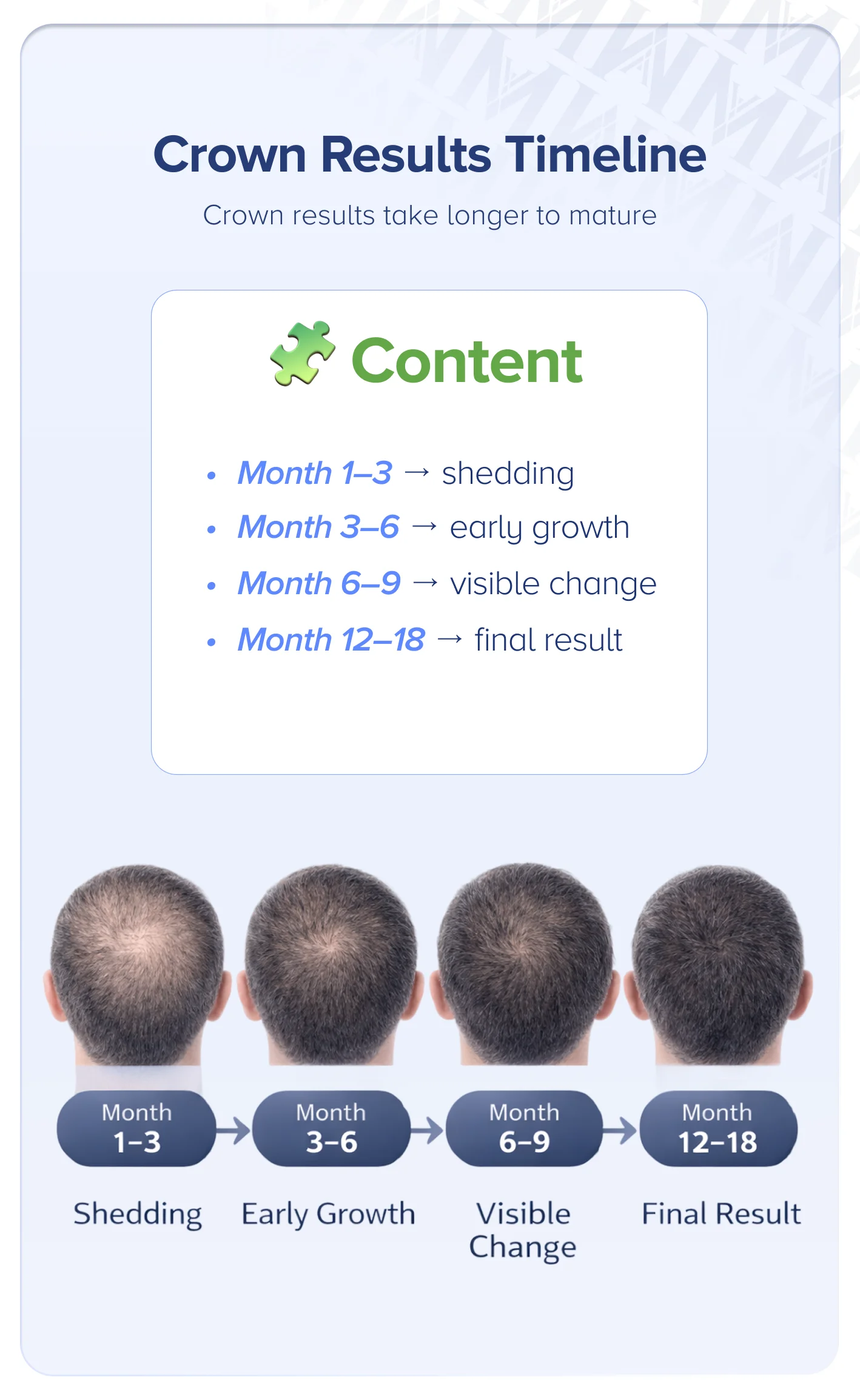
Crown Results Timeline

Crown Hair Transplant Results: What to Realistically Expect

The results timeline for a vertex hair transplant is consistently longer than for the hairline. Setting the right expectations now will save you months of unnecessary worry.

The Crown Results Timeline

Crown results unfold gradually. Here's what the typical progression looks like:

  • 1.  Months 1–3: The transplanted hairs enter a shock loss phase and fall out. This is completely normal — the follicles are alive beneath the surface, resetting their growth cycle. Your crown may look similar to (or even slightly worse than) before surgery during this period.

  • 2.  Months 3–6: Early regrowth begins. Fine, thin hairs start to emerge. The crown is typically slower to show progress than the hairline at this stage. Many patients feel like "nothing is happening." Growth is underway — it's just not visible yet.

  • 3.  Months 6–9: Noticeable improvement becomes visible. Hairs are thickening and lengthening. The bald spot starts to look less defined. You're not at the finish line, but the trajectory is encouraging.

  • 4.  Months 9–18: Significant density becomes visible. Hairs continue to thicken and mature. The crown often takes the full 12–18 months to show its best outcome — several months longer than the hairline.

⚠️ Important: Crown results typically take 12–18 months to fully mature, compared to 9–12 months for hairline results. If you're at month 6 and feel disappointed, you're likely not even halfway to your final result. Patience isn't just recommended — it's essential.

To anchor this in real time: if your procedure is in January, expect early signs of growth by April or May, noticeable improvement by fall, and your final result by the following spring or summer.

Why Crown Results Take Longer Than Hairline Results

The lower blood supply at the vertex means a slightly slower growth cycle initiation for transplanted follicles. Additionally, the crown's convex surface and typical viewing angle — from above or behind — makes thinness more visible for longer. At the hairline, even modest early growth creates a visible frame. At the crown, you need more widespread coverage before the improvement registers visually.

Remember the composite Norwood 5 patient from earlier? At month 5 after his crown session, he was concerned. His hairline had looked noticeably improved by this point after his first session. But his surgeon reassured him that the crown follows its own schedule. By month 14, the result was clear: the visible bald spot was gone, replaced by natural-looking coverage that blended with his surrounding hair.

Realistic Density Expectations

This is where honesty matters most. Transplanted crown density typically reaches 40–60% of original native density, according to reported clinical outcomes. That number might sound underwhelming on paper — but in practice, it's enough to eliminate the visible bald spot and create a natural appearance in the vast majority of cases.

A transplanted density of 35–40 FU/cm² creates the appearance of a full — though not thick — head of hair at the crown. Hair characteristics make a meaningful difference. Patients with thick, wavy, or curly hair often achieve excellent visual coverage at lower graft densities. Those with fine, straight hair and high skin-to-hair color contrast may need more grafts for a similar visual effect.

Here's the realistic frame: "visible bald spot eliminated" is an achievable and common outcome. "Thick, youthful crown fully restored to teenage density" is typically not. Setting your expectations around the former leads to satisfaction. Chasing the latter often leads to disappointment.

When reviewing crown hair transplant before and after photos, focus on images taken at 12+ months — anything earlier doesn't reflect the final outcome.

Factors That Influence Your Results

Several variables shape your final outcome:

  • ●  Surgeon skill — particularly with whorl replication and radial graft placement

  • ●  Graft survival rate — influenced by clinic protocols, graft handling, and post-operative care

  • ●  Medication use — finasteride and minoxidil can meaningfully support both transplanted and native hair

  • ●  Hair characteristics — color, texture, caliber, and curl all affect perceived density

  • ●  Post-operative care adherence — following your clinic's instructions during healing directly impacts graft survival

Individual results vary based on all of these factors. A consultation with a qualified hair transplant surgeon is the best way to understand what's achievable for your specific case. And for crown patients specifically, what happens after surgery — particularly regarding medication — can be just as important as the surgery itself.

Post-Operative Care Specific to Crown Transplants

The crown's position on the scalp creates a few unique post-operative considerations worth understanding before your procedure.

Key Crown-Specific Care Instructions

Your clinic will provide detailed post-op instructions, but crown transplant patients should be prepared for these specifics:

  • ●  Sleeping position — you'll need to sleep elevated and avoid pressing the crown against a pillow for the first 7–10 days, typically meaning you sleep on your back at a reclined angle

  • ●  Washing protocols — gentle washing usually begins 48–72 hours post-procedure, with extra care around the crown's curved surface to avoid dislodging grafts

  • ●  Minoxidil resumption — most clinics recommend restarting topical minoxidil two to four weeks after surgery, once recipient sites have healed

  • ●  Sun protection — the crown is directly exposed to overhead sunlight, making hat-wearing or sunscreen application essential during the first several months

  • ●  Activity restrictions — strenuous exercise is typically limited for 2–4 weeks to protect graft survival, particularly given the crown's lower blood supply

Following these instructions closely isn't optional — it directly affects your graft survival rate and final outcome.

The Role of Medication in Crown Hair Transplant Success

If there's one section of this guide that could save you from a disappointing outcome, it's this one. For most crown transplant patients, medication isn't an optional add-on. Many surgeons consider it a strategic necessity.

Why Medication Is Especially Important for the Crown

The crown is the area most vulnerable to ongoing DHT-driven hair loss. Without medication, the native hairs surrounding your transplanted grafts may continue to thin and fall out over the years. The result? An unnatural "island" of transplanted hair surrounded by progressively bare scalp.

Medication serves two critical purposes for crown patients: it helps stabilize existing native hairs (preventing the island effect), and it can improve the density of thinning native hair — potentially reducing the number of grafts needed surgically.

💡 Key Takeaway: Medication is arguably more important for crown transplant patients than for any other group. Many surgeons strongly recommend finasteride and/or minoxidil as a core part of the crown treatment plan. Discuss medication options with your physician before and after your procedure.

Finasteride and the Crown

Finasteride is an oral medication that blocks the conversion of testosterone to DHT. According to long-term clinical data (Kaufman et al., Journal of the American Academy of Dermatology), up to 66% of men show increased hair count at the crown with finasteride — a statistic specific to the vertex, where finasteride tends to be most effective.

For patients under 30 with active crown thinning, many surgeons recommend trying finasteride for 6–12 months before committing to surgery. The medication may improve your crown enough to reduce the grafts needed, or it may stabilize the area enough to make surgical planning more predictable.

Finasteride does carry potential side effects, including sexual dysfunction in a small percentage of users (reported at 2–4% in clinical trials). These side effects are typically reversible upon discontinuation, though a small number of patients report persistent effects. Discuss the risks and benefits thoroughly with your physician before starting any medication.

Minoxidil as a Crown Transplant Companion

Minoxidil is a topical solution that stimulates hair growth and extends the growth phase of the hair cycle. It's available over the counter and commonly used both before and after crown transplant surgery.

Before surgery, minoxidil can help thicken existing crown hair, giving your surgeon a better baseline to work with. After surgery, it supports graft growth and helps maintain native hairs in the surrounding area. Most clinics recommend resuming minoxidil two to four weeks post-procedure, once the recipient sites have healed.

Minoxidil can cause side effects including scalp irritation, initial shedding, and in some cases unwanted hair growth where the solution contacts skin. As with any medication, discuss its use with your physician.

For mild to moderate crown thinning, medication alone can produce meaningful improvement. But for moderate to advanced loss, the combination of medication and transplant surgery typically delivers the most satisfying result.

Risks and Potential Complications Specific to Crown Transplants

Every surgical procedure carries risks. Crown transplants have specific concerns worth understanding before you commit. Individual outcomes vary based on genetics, health, surgeon skill, and post-operative care.

Lower Graft Survival Rate and How to Mitigate It

As discussed earlier, graft survival at the crown is generally reported at 85–92% in published clinical data — slightly lower than the 90–95% typical of frontal transplants. The lower blood supply at the vertex is the primary factor.

Experienced clinics minimize this gap through meticulous graft handling (keeping grafts hydrated and cool outside the body), optimized recipient site density (not overcrowding, which can compromise blood flow), and supportive treatments like PRP. When evaluating clinics, ask specifically about their crown graft survival protocols.

Unnatural Appearance from Poor Whorl Replication

When the natural spiral growth pattern isn't respected during graft placement, the result can look obviously artificial. Hairs may stick up at odd angles, create visible lines, or fail to lie flat and blend with surrounding hair.

This is why crown-specific experience matters. When evaluating a surgeon's work, ask to see crown-specific before-and-after photos — not just hairline results. A surgeon who produces beautiful hairlines may not have the same expertise with the vertex's unique demands.

The Island Effect from Progressive Hair Loss

If native hair continues thinning around your transplanted grafts, you can end up with an isolated patch of dense transplanted hair surrounded by bare or thin scalp. This looks unnatural and may require additional procedures to correct.

Prevention strategies include medication (to slow ongoing loss), conservative graft placement (leaving room to address future thinning), and a staged approach that monitors progression between sessions. Patients under 25 with active crown thinning should consult a specialist before committing to surgery, as their hair loss patterns may not yet be fully established.

Consider a second illustrative example. A 24-year-old with early Norwood 3 Vertex thinning wants to address his crown immediately. An experienced surgeon would typically recommend starting finasteride, monitoring for 12 months, and reassessing. In many cases, medication alone provides enough improvement to delay surgery — and when surgery does happen later, the loss pattern is stable enough for confident planning.

The Island Effect from Progressive Hair Loss

Donor Area Depletion

Large crown procedures require significant graft numbers. If you've already had a hairline procedure — or plan to have one — the total demand on your donor area can be substantial. Over-harvesting leads to visible thinning or scarring in the donor region.

For patients with extensive loss (Norwood 6–7), body hair transplant (BHT) — harvesting grafts from the chest or beard — can serve as a supplementary donor source. Body hair has different characteristics than scalp hair, and results vary. This option is worth discussing with your surgeon if donor supply is a concern.

Choosing the Right Clinic in Turkey for a Crown Hair Transplant

Turkey's reputation in hair transplant surgery is well-earned — the country performs more procedures annually than any other nation, and many clinics have deep experience with complex crown cases. But choosing a clinic abroad requires extra due diligence, especially for a procedure as technique-dependent as a crown hair transplant in Turkey.

What to Look for in a Crown Specialist

Not every clinic that excels at hairline work is equally skilled at the crown. Look for these indicators:

  • ●  Surgeon involvement in recipient site creation — the surgeon, not just technicians, should be creating the sites at the crown where grafts will be placed

  • ●  A portfolio of crown-specific before-and-after photos — at 12+ months post-procedure, showing results from directly above

  • ●  Willingness to discuss graft budgeting — and long-term planning across multiple sessions

  • ●  Transparency about limitations — including the potential need for medication and realistic density expectations

  • ●  Verified credentials and accreditation — confirming the surgeon's qualifications and the clinic's regulatory standing

Questions to Ask Before Booking

These five questions will reveal a clinic's true crown expertise:

  • ●  "How do you handle the whorl pattern at the crown?"

  • ●  "How many crown-specific procedures have you performed?"

  • ●  "What is your graft survival rate for crown transplants specifically?"

  • ●  "Do you recommend medication alongside the procedure?"

  • ●  "Can I see crown-specific results at 12 months or longer?"

A confident, experienced clinic will answer these readily and in detail. Hesitation or vague responses are worth noting.

Red Flags to Watch For

Be cautious if you encounter any of these warning signs:

  • ●  Promises of "full density" at the crown in a single session — this is rarely achievable without depleting the donor area

  • ●  No surgeon involvement in the planning or recipient site creation process

  • ●  Unwillingness to show crown-specific results — only displaying hairline transformations

  • ●  Pressure to maximize graft count without discussing donor sustainability or long-term planning

The right clinic will treat your crown procedure as a strategic decision, not a transaction. They should be as invested in your long-term outcome as you are.

Frequently Asked Questions About Crown Hair Transplants

How many grafts do I need for a crown hair transplant?

Crown graft needs range from 800–1,200 for minor vertex thinning (Norwood 3V) to 3,000–4,000+ for extensive crown loss (Norwood 6–7). The exact number depends on the size of the bald area, desired density, hair characteristics, and available donor supply. Use our graft calculator for a personalized starting estimate, and consult a qualified surgeon for a definitive assessment.

Is a crown hair transplant more painful than a hairline transplant?

Most patients report similar comfort levels for both areas. Local anesthesia is used throughout the procedure, and the crown is no more sensitive than the frontal scalp during surgery. Post-operative discomfort is generally mild and manageable with prescribed medication.

Can I get a hairline and crown transplant at the same time?

Yes, combined procedures are possible when donor supply is sufficient. However, many surgeons recommend a staged approach — addressing the hairline first and the crown 6–12 months later — to optimize graft distribution and monitor ongoing hair loss patterns. Your surgeon can advise which approach suits your situation.

How long until I see results from a crown hair transplant?

Early growth begins around months 3–6, with noticeable improvement by months 6–9. Final results typically take 12–18 months to fully mature — longer than the 9–12 months typical for hairline results. The lower blood supply at the vertex contributes to this extended timeline.

Will my crown hair transplant look natural?

In the hands of an experienced surgeon who correctly replicates the natural whorl pattern, crown transplants can look very natural. The key factors are proper graft angle, direction, and density distribution. Ask to see crown-specific before-and-after photos when evaluating any surgeon.

Do I need to take finasteride after a crown transplant?

Many surgeons strongly recommend finasteride (and/or minoxidil) for crown transplant patients. The crown is highly susceptible to ongoing DHT-driven hair loss, and medication helps preserve native hairs around transplanted grafts. Discuss the benefits and potential side effects with your physician to make an informed decision.

What is the success rate of crown hair transplants?

Graft survival rates at the crown are generally reported at 85–92% according to published clinical data, slightly lower than the 90–95% typical for frontal transplants. With experienced surgical teams, optimized protocols, and proper post-operative care, the vast majority of crown transplant patients achieve meaningful, visible improvement.

Can a crown hair transplant fail?

Complete failure is rare with a qualified surgeon, but suboptimal results can occur. The most common causes are poor whorl pattern replication, insufficient graft count, low graft survival due to technique issues, or progressive native hair loss creating an unnatural appearance over time. Choosing an experienced surgeon and committing to post-operative medication significantly reduces these risks.

What age is best for a crown hair transplant?

Most surgeons prefer patients to be at least 25–30 years old before performing crown surgery. Younger patients often have actively progressing hair loss, making it difficult to plan graft placement strategically. Waiting until the loss pattern stabilizes — often with the help of medication — leads to more predictable, longer-lasting results.

What are the alternatives to a crown hair transplant?

Medication (finasteride and minoxidil) can produce meaningful improvement for mild to moderate crown thinning without surgery. Scalp micropigmentation (SMP) creates the visual illusion of density and can be used alone or alongside a transplant. PRP therapy is another non-surgical option, though its long-term efficacy is still being studied. For many patients, a combination of approaches produces the best outcome.

Conclusion

The crown is a fundamentally different transplant zone — and now you understand exactly why. From the spiral whorl pattern that demands surgical artistry, to the lower blood supply that affects graft survival, to the progressive nature of vertex hair loss that makes long-term planning essential, a crown hair transplant requires a level of strategic thinking that goes beyond simply placing grafts.

But here's what matters most: excellent results are achievable. With the right surgeon, a realistic graft budget, a commitment to supporting medication, and the patience to wait 12–18 months for full maturity, a vertex hair transplant can eliminate that visible bald spot and restore a natural, confident appearance — from every angle.

The key is approaching this as a strategic decision, not an impulsive one. Estimate your graft needs using our graft calculator, research clinics that demonstrate crown-specific expertise, and ask the hard questions before you commit.

Your next step is a practical one: start a conversation with a surgical team that understands the crown's unique demands, and move forward with the clarity this decision deserves. You've done the research. Now you're ready to plan.

This article is for informational and educational purposes only and does not constitute medical advice. Individual results vary based on numerous factors including genetics, health, surgeon skill, and post-operative care. Consult with a qualified hair transplant surgeon for a personalized assessment and treatment recommendations.

Contact with Us!

Please enter a valid phone number.
WhatsApp
Graft Calculator WhatsApp WhatsApp