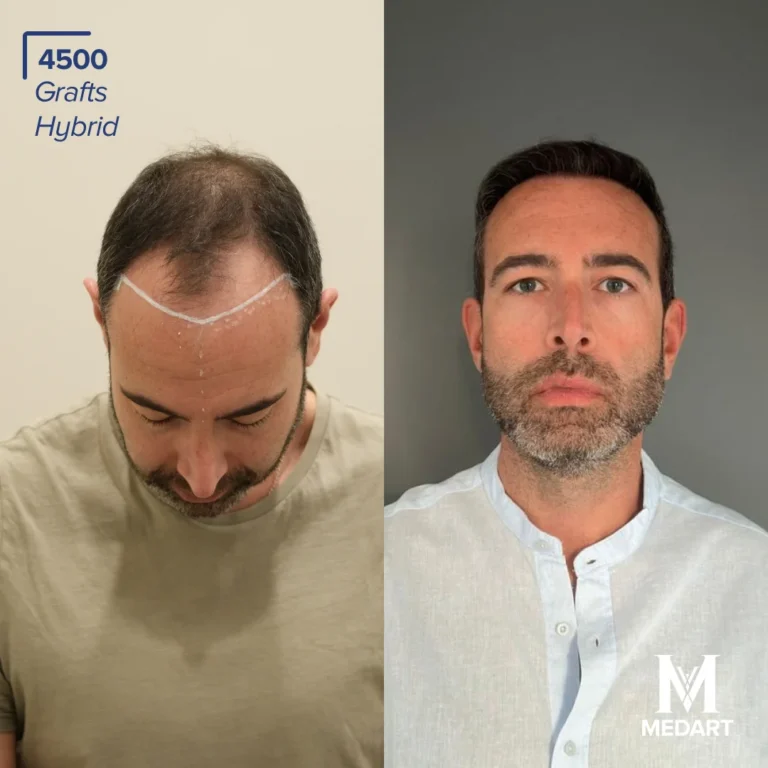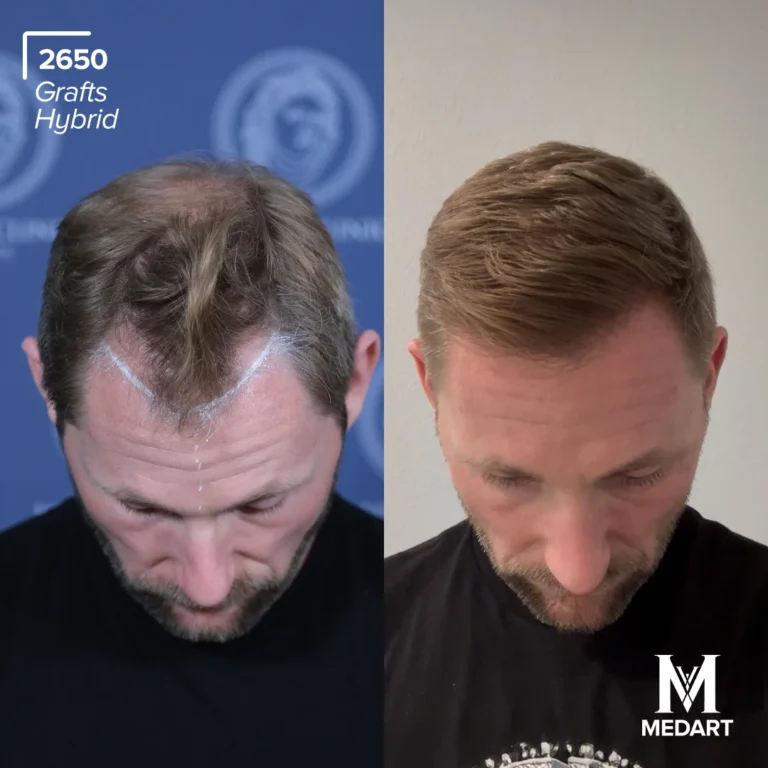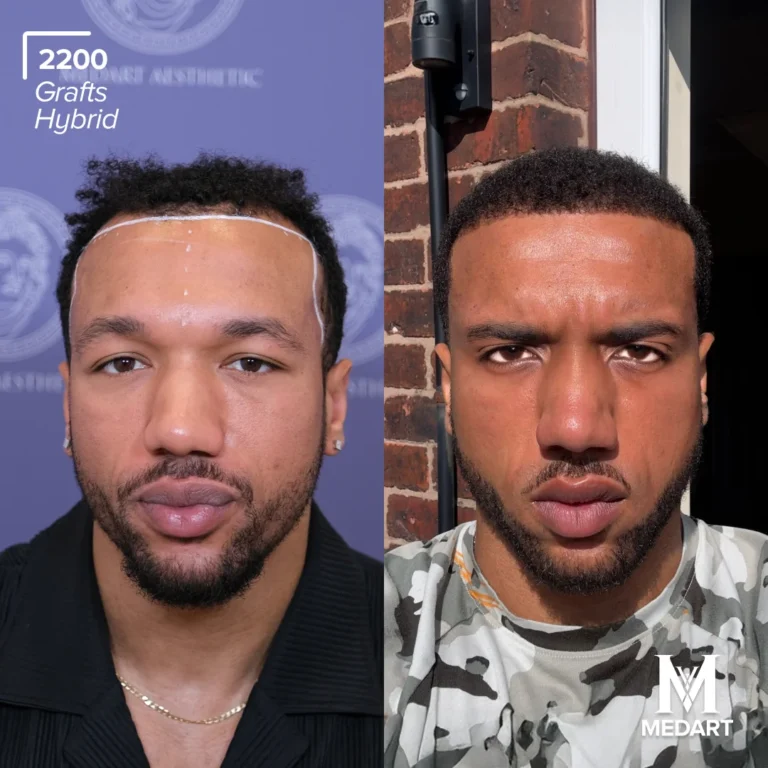
Understand what a "hybrid" hair transplant really involves, how it compares with Sapphire FUE and DHI, and how to judge the surgical plan behind the label before you travel to Istanbul.
A hybrid hair transplant in Turkey usually combines FUE harvesting with both sapphire-created recipient channels and DHI-style implanter placement. It may offer flexibility for different scalp zones, but "hybrid" is not a standardized technique. Suitability depends on donor supply, hair-loss pattern, surgical planning, and who performs each stage.
Medical disclaimer: This article provides general educational information and does not replace an individual medical assessment. Hair-transplant suitability, technique, graft requirements, risks, and expected results vary by diagnosis, donor supply, medical history, and surgical plan.
If three clinics recommend "hybrid," "Sapphire FUE," and "DHI" for the same scalp, are they offering different extractions—or simply different ways of placing the grafts? In many cases, the main difference is not how grafts are harvested but how recipient sites are created and grafts are implanted.
That distinction matters more than the marketing name on a clinic's website. A hybrid hair transplant in Turkey can be a thoughtful, zone-specific plan. It can also be a label stuck onto a routine operation. This guide separates the surgery from the sales language. You will learn what "hybrid" actually means, how it compares with Sapphire FUE and DHI, who it suits, what drives the cost, and how to verify a clinic in Istanbul before you commit.
What Is a Hybrid Hair Transplant in Turkey?
A hybrid hair transplant is a clinic-defined workflow that combines more than one recipient-site or graft-placement method, usually after grafts have been harvested using FUE. It mixes techniques inside a single operation rather than using one method across the whole scalp.
Here is the part most websites skip. "Hybrid" is not a formally standardized surgical category the way an appendectomy is. No single agreed protocol exists. Each clinic decides what its own "hybrid" means, so the same word can describe very different operations. That is why the label alone tells you almost nothing.
To follow any of this, you need to separate three stages that people constantly confuse.
The three stages people often confuse
Removing a graft and placing a graft are separate steps, a little like choosing a plant from a nursery and then deciding exactly where to plant it. The follicle needs careful, gentle handling at every stage.
● Graft extraction (harvesting). Follicular Unit Excision (FUE), a method of removing naturally grouped hair follicles one by one from the donor area, is a commonly used harvesting method today. The donor area sits mainly at the back and sides of the scalp, where follicles may be more resistant to pattern hair loss. Donor stability is examined during assessment rather than assumed. Follicular Unit Transplantation (FUT), which removes a strip of scalp, remains a valid harvesting option for selected patients.
● Recipient-channel creation. The clinical team creates tiny sites in the recipient area (the thinning or bald zone) that control the angle, depth, and direction of each follicular unit graft, following the physician-approved plan.
● Graft implantation. The prepared grafts are placed into those sites, either by hand with forceps or with an implanter device.
According to the International Society of Hair Restoration Surgery (ISHRS), FUE refers to the excision of follicular units and describes harvesting, not implantation. That single fact clears up most of the confusion in this field.
Why "hybrid" is not one standardized technique
Because no governing body defines "hybrid," two clinics can use the word for two different plans. One may mean sapphire channels in the frontal zone plus implanter placement at the hairline. Another may mean something else entirely.
At Medart Hair Transplant, the term "hybrid" is defined by the exact extraction and implantation plan written for each patient, not by a fixed template. Ask any clinic to put its own hybrid protocol in writing before you agree to anything.
How Hybrid FUE and DHI Work Together
In a typical hybrid procedure, all grafts may be harvested by FUE, while sapphire blades and implanter pens are used selectively in different recipient zones. Once you separate extraction from implantation, as the previous section did, this logic falls into place: the harvesting stays the same, and the placement adapts to the scalp.
A sapphire blade is a small, hard blade made from or marketed as synthetic sapphire, used to create recipient channels. Sapphire FUE usually refers to using these blades for recipient-channel creation, while the grafts themselves are still harvested by FUE. A Choi-type implanter pen is loaded with a graft and can assist recipient-site creation and placement in one controlled motion. This pen is the tool behind Direct Hair Implantation (DHI), which is a placement method, not a separate way of harvesting.
Before anything is placed, grafts should be sorted by hair count into single-, double-, and multi-hair grafts. Single-hair units suit a soft, natural hairline. Multi-hair units add density behind it.
Example zone-by-zone plan
The table below is a Medart clinical planning framework based on our surgical experience in Istanbul, reviewed by the article's clinician. It is not comparative trial evidence, and it does not mean every patient needs every approach.
Recipient zone |
Possible approach |
Clinical reason to consider it |
Limitation or caution |
|---|---|---|---|
Hairline |
Controlled channel placement or implanter-assisted placement |
Precise direction, angle, irregularity, and single-hair graft selection |
Tool choice cannot compensate for poor hairline design |
Frontal core |
Sapphire channel creation plus forceps placement, or implanter placement |
Efficient coverage and sensible density distribution |
Overpacking can compromise blood supply |
Mid-scalp |
Method chosen by area size and existing hair |
Balance coverage with donor preservation |
Progressive loss must be considered |
Crown (vertex) |
Strategic channel and graft placement |
Manages whorl direction and visual coverage |
The crown or vertex can consume many grafts |
Between native hairs |
Implanter-assisted placement may be considered |
May help when working around existing follicles |
Existing follicles can still be traumatized |
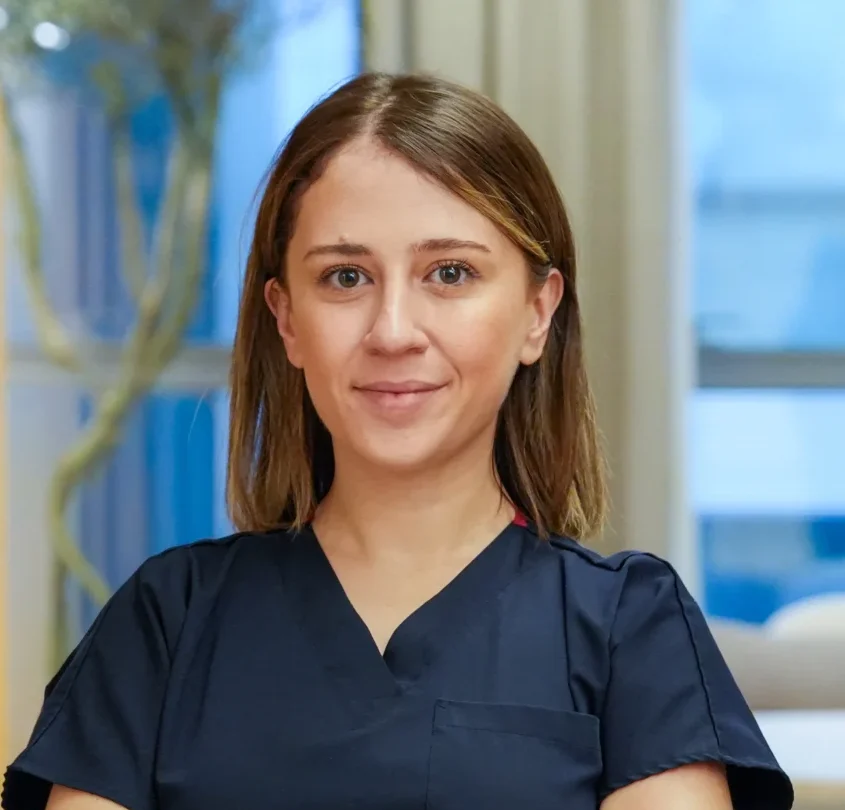
As Dr. Busra Yakupoglu, Hair Transplant Physician at Medart, puts it: "We choose a placement method because a zone demands it, not because it markets well. At the hairline that usually means single-hair grafts placed at a shallow, natural angle in an irregular pattern. Across the mid-scalp it means efficient, well-angled coverage that still protects the donor for the years ahead." (Clinical experience, not trial evidence.)
What the implanter pen does—and does not do
The implanter pen assists placement. It does not, on its own, produce a natural result. Hair direction and angle, gentle graft handling, depth control, and the underlying design decide how the outcome looks.
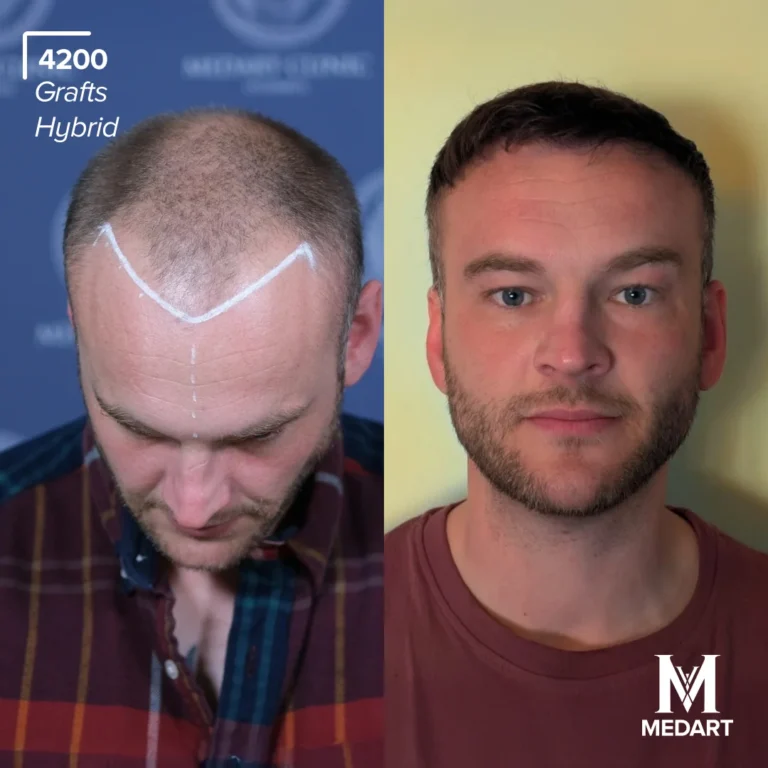
Consider an anonymized, medically reviewed case. A patient came to our Istanbul clinic with a receding hairline, thinning but surviving frontal hair, and broader mid-scalp thinning behind it. Assessment showed adequate donor density but a limited lifetime reserve, so the plan had to protect grafts for future use. Around the surviving frontal hairs, implanter-assisted placement was selected because the team needed to work among existing follicles. Across the wider mid-scalp, sapphire-created channels supported efficient coverage. At the six-month interim follow-up, early growth was visible in both zones, though final density had not settled. The limiting factor throughout was donor supply: no tool creates more follicles, so coverage always has a ceiling set by the donor.
Who Is a Good Candidate?
A good candidate has an adequate, healthy donor area, a treatable diagnosis, realistic expectations, and a plan that accounts for future hair loss. Building on the donor-limit theme above, this section helps you judge whether surgery fits you before you weigh any technique.
Most hair transplant candidates have androgenetic alopecia, an inherited, hormone-related pattern of hair loss known as male-pattern hair loss or female-pattern hair loss. It usually follows a fairly predictable path. A proper assessment includes a scalp examination and trichoscopy (magnified imaging of the scalp and follicles). The physician checks donor density (how many follicles sit in a given area), hair caliber (the thickness of each hair), overall follicular-unit density, and signs of donor miniaturization (follicles shrinking, producing finer hairs, and losing long-term stability). The safe donor zone is the band of stable hair used for grafts.
Pattern staging uses the Norwood-Hamilton scale for men and the Ludwig or Sinclair scale for women. According to the American Academy of Dermatology, the cause of hair loss should be identified before any treatment is planned, because not all hair loss suits surgery. Diffuse, unpatterned thinning and unstable female-pattern loss in particular need a clear diagnosis first, since they can affect both the recipient plan and donor reliability.
A quick pre-consultation self-check
Before you weigh hybrid, Sapphire FUE, or DHI, run through these questions. They will not diagnose you, but they will sharpen your consultation.
1. Is your hair loss stable or reasonably predictable, or still changing fast?
2. Does the hair at the back and sides look thick and dense, or thin and patchy?
3. Are you under 25, where a decades-long loss pattern is still unfolding?
4. Do you want a natural, age-appropriate result, or the lowest possible hairline?
5. Would you accept a staged plan to protect your donor for later?
6. Are you on anticoagulants or managing a condition that affects healing?
If several answers point toward instability, thin donor hair, or unrealistic goals, an in-person assessment matters more than choosing a technique.
Online tools can help you begin that conversation. You can estimate a preliminary graft range to frame your questions, but an online calculator can provide only a preliminary range; only an in-person donor and scalp assessment can determine a responsible graft plan.
Possible candidate |
Delay, reconsider, or seek further assessment |
|---|---|
Stable or reasonably predictable hair loss |
Insufficient donor supply for the coverage you want |
Good donor density and healthy hair caliber |
Diffuse donor thinning or unpatterned alopecia |
A treatable diagnosis such as androgenetic alopecia |
Active inflammatory, scarring, or cicatricial alopecia |
Realistic expectations about coverage and density |
Sudden or patchy loss suggesting alopecia areata or telogen effluvium |
No active scalp inflammation or infection |
Significant donor miniaturization or previous transplant complications |
A medical history that supports safe surgery and healing |
Active anticoagulant use or uncontrolled conditions affecting healing |
Disclose everything relevant, including smoking, bleeding risk, and any medication. Anticoagulants and medication review matter because they affect bleeding and wound healing, so active anticoagulant use warrants an in-person clinical assessment. Contraindications must be screened before you consent. Never start, stop, or change finasteride and minoxidil, or any other medication, without your prescribing clinician's advice. Finasteride considerations differ by sex and pregnancy status, so any decision belongs with the prescriber, not a website.
Why younger patients require long-term planning
Donor hair is finite. A follicle moved today is gone from the donor for life. In a young patient whose progressive hair loss may continue for decades, a very low, dense hairline can look impressive early on and then isolated or disproportionate later, as the native hair behind it recedes. Responsible long-term planning favours a conservative design and careful graft allocation that preserves donor supply for the future.
Not sure whether your donor area can support the coverage you want? Tap the WhatsApp button in the bottom-right corner to request a free preliminary assessment from Medart Hair Transplant. A photo review can guide the conversation, but final suitability requires a clinical assessment.
Quick Quote in 5 Minutes
Talk to an experienced patient coordinator for your hair transplant in Turkey.Hybrid Hair Transplant Turkey, Before & After
Turkey is the hair transplant capital of the world. You can be assured that your hair transplant in Turkey will be performed by highly experienced surgeons who adopt the newest hair technologies quickly and offer their expertise at affordable prices.


Benefits and Limitations of a Hybrid Approach
The main potential advantage of a hybrid approach is flexibility, not proven universal superiority over DHI or Sapphire FUE. Now that candidacy is clear, it helps to weigh what a mixed workflow genuinely offers against what it cannot do.
Published evidence does not establish one implantation workflow as best for every patient. Direct comparative studies between recipient-site and placement techniques remain limited, so any claim of a universal "winner" deserves caution.
Where the evidence stands
● Established: FUE describes graft harvesting, not implantation.
● Common practice: implanter pens and pre-made sapphire channels are both widely used.
● Limited evidence: no implantation workflow is proven best for every patient.
● Unknown or undefined: "hybrid" has no standardized protocol and no direct comparative-trial evidence naming it superior.
Potential advantages
● Zone-specific rationale. Different scalp areas can receive the method that suits them.
● Implanter-assisted placement may help in selected zones with existing hair.
● Pre-made sapphire channels may support efficient coverage across larger areas.
● A tailored plan can respect donor preservation while distributing density sensibly.
Limitations and marketing claims to question
● Hybrid treatment may add complexity, operating time, or cost.
● No tool overcomes poor donor selection, weak hairline design, rough graft handling, or careless aftercare.
● Be cautious of any promise of universal density, certainty, or a wholly natural result. These are marketing claims, not clinical facts.
● The label alone does not improve graft survival.
A hybrid workflow can be a smart, individualized plan. It is not automatically better than a well-executed single-method procedure. Planning, graft handling, donor management, and accountable clinical care generally matter more than the branded name of the placement tool.
Hybrid vs Sapphire FUE vs DHI
Hybrid, Sapphire FUE, and DHI often differ more in recipient-site creation and graft placement than in how the grafts are harvested. Building on the benefits above, this comparison lets you evaluate the workflow instead of the marketing label.
As the ISHRS notes, FUE describes follicular-unit excision, the harvesting stage, so all three approaches below can share the same extraction method. This is the single point most comparison pages get wrong. "Sapphire" describes a blade material used for channels, and DHI describes placement with an implanter pen. Neither is a separate way of removing grafts.
The table below scrolls horizontally on smaller screens.
Approach |
How grafts are harvested |
How recipient sites are created |
How grafts are placed |
Situations where it may be considered |
Potential limitations |
Evidence caveat |
Main cost drivers |
|---|---|---|---|---|---|---|---|
Sapphire FUE |
FUE |
Channels made with a sapphire blade |
Placed by hand with forceps |
Broad coverage across frontal and mid-scalp zones |
Depends on skill in channel design |
No proof sapphire raises survival or density |
Graft number, clinical time, staffing |
DHI |
FUE |
Site creation and placement combined in the implanter step |
Implanter (Choi-type) pen |
Working among existing hair; controlled placement |
May need more loading time or staffing, depending on graft number and workflow |
Not proven superior for all patients |
Graft requirement, staffing, clinical time |
Hybrid |
FUE |
More than one method across zones |
Mix of forceps and implanter placement |
Scalps where zones have different needs |
Added complexity and possibly cost |
No comparative trial names it best overall |
Complexity, mixed workflow, facility, time |
DHI vs Sapphire FUE ultimately comes down to how sites are made and grafts placed, not a difference in harvesting. If you want the detail on the sapphire component, read how Sapphire FUE works in Turkey.
A combined hair transplant technique like hybrid is only worth choosing when a physician can explain the zone-specific reason for it. Suitability depends on your anatomy and goals, not on which name sounds most advanced.
What Happens During the Procedure in Istanbul?
A hybrid transplant typically includes in-person assessment, hairline planning, local anesthesia, FUE harvesting, graft preparation, zone-specific implantation, and written aftercare. Now that you can compare the methods, knowing the sequence helps you tell a well-run clinic from a rushed one.
A photograph-based estimate is preliminary and cannot replace an in-person scalp and donor examination. The real plan is confirmed in person, in Istanbul, before you consent.
Consultation and hairline planning
In-person assessment. The surgical team examines your scalp, donor, and pattern. Remote photo estimates are only a starting point.
Design and consent. The physician approves the diagnosis, the hairline design, and the plan. You give informed consent after risks and alternatives are explained.
Donor harvesting and graft preparation
Local anesthesia. Local anesthesia numbs the donor and recipient areas. A safe process depends on reviewing your medical and allergy history, checking current medication, monitoring during the procedure, and clear consent. Risks and options are discussed beforehand.
FUE harvesting. Grafts are removed one by one from the safe donor zone. Careful technique reduces transection (accidental cutting of a follicle). FUE leaves many small wounds, which can produce fine, usually inconspicuous scarring.
Sorting and storage. Grafts are inspected, sorted by hair count, and kept in a graft-holding solution. Handling, time out of the body, temperature, and hydration all affect graft condition, so protocol matters.
Recipient-channel creation and implantation
Site creation. Recipient sites are made to control angle, depth, and direction, using a sapphire blade, an implanter, or both, depending on the zone.
Implantation. Grafts are placed according to the zone plan by the surgical team, following the physician-approved design.
Discharge and first-night instructions
Discharge. You receive written aftercare and a follow-up pathway before you leave.
At Medart Hair Transplant in Istanbul, a physician leads the assessment, diagnosis, and hairline design, and patients leave with written instructions and a defined route for questions after they return home. Careful graft handling and correct storage are widely recognised as among the factors that most influence graft survival.
Recovery and Results Timeline
Most patients see healing over days to weeks, but visible growth develops gradually over several months and final maturation can take about a year or longer. After the procedure sequence above, setting these expectations early prevents the panic that many patients feel around month two.
Transplanted hair growth rarely arrives on a neat schedule. Temporary shedding of the transplanted shafts commonly occurs before new hairs push through. The transplanted follicles enter a resting phase, then regrow over the following months. Timelines vary by health, scalp, hair cycle, treatment area, and aftercare.
Time period |
What may happen |
What is usually expected |
When to contact the clinic |
|---|---|---|---|
First 72 hours |
Tenderness, redness, swelling or edema, crusting |
Gradual settling; follow washing instructions |
Heavy bleeding, spreading redness, or fever |
Days 4–14 |
Crusts clearing; itching |
Crusts fall away; the donor heals |
Pus, worsening pain, or signs of infection |
Months 1–3 |
Transplanted shafts shed; possible shock loss |
Temporary thinning before regrowth |
Persistent inflammation or folliculitis |
Months 4–9 |
Early regrowth, often fine at first |
Gradual thickening and coverage |
Growth clearly behind the clinic's written timeline |
Months 10–18 |
Density and caliber mature, especially the crown |
A fuller, more settled result |
Ongoing concerns about final coverage |
First 72 hours
Expect the scalp to feel tight and tender. Sleep semi-upright if instructed, and protect the grafts. Follow the washing routine your clinic provides.
Days 4–14
Crusts clear and the first wash is completed, sometimes in the clinic before you fly home, though protocols vary. Many people return to desk work within this window, but that depends on the individual and the job. Be guided by your aftercare sheet.
Months 1–3
This can be a discouraging phase. Transplanted hairs shed and the scalp may look thinner than before surgery. That is expected, not failure.
Months 4–9
New hairs emerge, usually fine and gradually thickening. Improvement is measured month by month, not week by week. Tell your clinic if you notice prolonged redness, worsening swelling, persistent numbness, or recurring pustules.
Months 10–18
The result matures. The crown or vertex is often the slowest zone to fill. Recovery and final density vary according to donor supply, diagnosis, planning, graft handling, healing, and ongoing hair loss. Contact the clinic if healing differs materially from its written timeline, if inflammation persists, or if you are worried about delayed growth.
Risks, Side Effects, and Red Flags
Hair transplantation is surgery, so temporary redness and crusting may be expected, while infection, scarring, poor growth, overharvesting, and other complications remain possible. After understanding recovery, this section helps you act quickly if something is wrong rather than waiting and hoping.
Most side effects are short-lived, but serious complications, though uncommon, do occur. The NHS notes that follow-up and management of complications can be more complex after cosmetic surgery abroad, which is one reason to plan your aftercare before you travel. Your personal risk profile varies with medical history, procedure extent, facility standards, technique, and access to follow-up.
Use the triage guide below to judge what to do.
Usually expected |
Contact the clinic promptly |
Seek urgent local medical care |
|---|---|---|
Discomfort, redness, itching |
Persistent or spreading redness beyond the treated area |
Worsening or spreading pain |
Crusting around grafts |
Signs of folliculitis or infection |
Fever with pus or wound discharge |
Swelling or edema on the forehead |
Shock loss or persistent numbness |
Heavy bleeding that will not settle |
Temporary numbness in treated areas |
Small cysts, hypertrophic or keloid scarring |
Breathing difficulty or chest symptoms |
Mild tightness in the donor |
Growth clearly behind the written timeline |
Signs of a severe allergic reaction |
Less common complications include infection, folliculitis (inflamed follicles), visible scarring, poor growth, an unnatural design, prolonged sensory change, and cysts. Overharvesting can permanently thin the donor, and donor depletion from taking too many grafts over time can limit future options. Existing native hair can be affected, especially where placement is poorly planned, which is why zone design matters as much as the tools.
Seek urgent local medical care if you develop worsening or spreading pain, spreading redness, fever, pus, heavy bleeding, breathing difficulty, chest symptoms, or signs of a severe allergic reaction. Scalp necrosis (death of scalp tissue) is uncommon but serious and requires urgent medical assessment. Do not wait for an online reply—contact a doctor where you are.
See an in-person dermatologist or hair-restoration physician before surgery if you have sudden or patchy hair loss, suspected alopecia areata, scarring alopecia or cicatricial alopecia, persistent scalp inflammation, an unclear diagnosis, significant donor miniaturization, previous transplant complications, active anticoagulant use, a significant medical condition affecting healing, or a history of hypertrophic or keloid scarring.
Be wary of any clinic that describes this surgery as free of scarring or without meaningful risk. That language is a warning sign, not a reassurance.
Hybrid Hair Transplant Cost in Turkey
The cost of a hybrid hair transplant in Turkey depends on the treatment plan, medical team, procedure complexity, facility, aftercare, and package inclusions, not only the quoted graft number. Understanding the drivers protects you from paying for a label rather than a plan.
Quoted prices can differ substantially between countries and clinics. Turkish clinics are often far more affordable than UK or US providers, largely because of lower overheads rather than lower standards. Rather than chasing the lowest headline figure, compare who performs each stage, the facility, the aftercare, the complication support, and every package exclusion.
Factors that affect the quote
● Clinical complexity and graft allocation
● Who performs extraction, site creation, and implantation
● Procedure duration and graft requirement
● Facility standards and the surgical team
● Aftercare and follow-up included
● Cost per procedure versus package pricing
A higher graft quote is not automatically a better plan. More grafts do not guarantee a better result, and overharvesting to hit a number can harm the donor.
For a broader breakdown, see the current factors affecting hair transplant costs in Turkey.
What a package may or may not include
Commonly included |
May be extra or variable |
What to confirm in writing |
|---|---|---|
Procedure and anesthesia |
Flights |
Who performs each surgical stage |
Some accommodation nights |
Extra hotel nights |
Planned graft range and what could change it |
Airport and clinic transfers |
Travel insurance |
Aftercare and follow-up details |
First wash and basic aftercare |
Medication beyond the pack |
Complication-management responsibility |
Interpreter or language support |
Treatment of complications |
The clinic's definition of "hybrid" |
To compare inclusions properly, review what a Turkey hair transplant package may include.
Questions to ask before paying a deposit
Ask for a written treatment plan and an itemized quote rather than a price-only offer. Confirm who does the extraction, the site creation, and the implantation. Any hybrid hair transplant cost in Turkey should reflect a specific plan, not a generic number.
To understand what may affect your individual treatment plan and package, send clear scalp and donor-area photographs through the WhatsApp button in the bottom-right corner. The Medart team can give a personalized preliminary assessment without assuming that hybrid treatment is your best option.
How to Choose a Safe Clinic in Turkey
Choose a clinic by verifying the physician, facility, surgical roles, complication pathway, and follow-up, not by comparing package prices alone. Having looked at cost, this is where patient safety and physician accountability separate a good clinic from a risky one.
The ISHRS has warned patients about procedures performed by unlicensed personnel and unregulated operations. Verifying who does what, and where, is your best protection.
12-Question Clinic Checklist
1. Who is the operating physician, and what are their physician credentials?
2. Which named clinician is responsible for each stage of the operation?
3. Who performs graft extraction, site creation, and implantation?
4. Where can the facility's authorization be independently checked through the appropriate Turkish health authority?
5. What is the clinic's written definition of "hybrid"?
6. How many patients will the physician and team manage at the same time?
7. What is the emergency and complication protocol?
8. What does the follow-up pathway look like after I return home?
9. Can I see before-and-after cases with hair loss similar to mine?
10. Are results shown under consistent lighting, angle, and time points?
11. Is a written treatment plan and itemized quote provided?
12. Is the plan based on an in-person assessment, not just messaging-app photos?
For facility checks, Turkey's health services are overseen by the Republic of Türkiye Ministry of Health, and authorized international patient services fall under its HealthTürkiye framework; ask the clinic where its authorization can be independently confirmed.
Marketing red flags
● Promises of assured outcomes or a wholly risk-free procedure
● Time-limited pressure to pay a deposit
● Plans based solely on WhatsApp photos
● Reluctance to name the operating physician
● Refusal to define "hybrid" in writing
Questions specifically about hybrid treatment
Ask why a hybrid plan suits your scalp, which zones receive which method, and how the plan protects your donor for the future. Clear, written answers make the plan easier to evaluate, but they do not replace credential and facility checks. A clinic that only repeats "hybrid is more advanced" is selling a label.
Choosing a hair transplant clinic in Turkey, or any Istanbul provider, should rest on verified answers, not price alone.
Planning Your Trip to Istanbul
Medical-travel planning should include enough time for assessment and early review, written aftercare, complication support, and realistic insurance arrangements. After choosing a clinic, good logistics protect both your result and your peace of mind.
International travel can make postoperative assessment and complication management more difficult, even when logistics are carefully planned. That is the trade-off of medical tourism. Allow time for the in-person assessment, the procedure, any first wash your clinic requires, and an initial review before you fly home.
Before travel |
In Istanbul |
After returning home |
|---|---|---|
Confirm the written plan and quote |
Attend the in-person assessment |
Follow written aftercare precisely |
Review travel-insurance exclusions |
Complete the procedure and any first wash |
Keep copies of consent forms and records |
Arrange enough recovery days |
Get written flying and activity advice |
Know who answers your questions |
Disclose all medications |
Confirm follow-up contact details |
Keep a medication list and emergency contacts |
Note local urgent-care options |
Take home procedure and graft details |
Watch for red-flag symptoms and access local care |
Obtain written guidance on flying, exercise, sun exposure, hats, and sleeping position. Carry copies of your consent forms, procedure records, and medication list, and know how to reach urgent local care once home. The NHS advises reviewing insurance carefully, as many policies exclude planned cosmetic procedures abroad, and the CDC offers similar medical-tourism guidance on continuity of care. Do not combine surgery with rushed sightseeing, alcohol, or strenuous activity.
Is a Hybrid Hair Transplant in Turkey Worth It?
A hybrid transplant may be worth considering when its zone-specific rationale is clear, but it should not be chosen simply because it is marketed as more advanced. After weighing candidacy, safety, and cost, the decision comes down to plan quality rather than technique branding.
A hybrid procedure in Istanbul can make sense when a physician explains exactly why different zones need different workflows. It is not automatically better than well-planned Sapphire FUE or DHI. The donor plan and an accountable medical team matter more than the marketing term.
Consider it if |
Pause if |
|---|---|
A physician explains a clear zone-specific rationale |
The only reason given is "it's more advanced" |
Your donor supply supports the plan |
Donor supply is being stretched to hit a graft number |
The physician's role is verified |
You cannot confirm who performs each stage |
You have a written plan and follow-up pathway |
You are pressured to pay before assessment |
You accept that the design must still look right if native hair loss progresses |
You are promised assured density or a certain result |
You understand donor limits may require staged treatment |
You expect one session to solve all future loss |
Price should be weighed alongside safety, continuity of care, and realistic graft allocation. A personalized assessment must come before any method is recommended.
Frequently Asked Questions
Key Takeaways
● "Hybrid" is a clinic-defined workflow, not a standardized medical technique.
● FUE harvesting can underpin both Sapphire FUE and DHI workflows.
● No implantation method is proven universally best for every patient.
● Donor preservation and long-term planning matter more than the label.
● Verify the physician, facility, and who performs each stage.
● Results develop over months and vary between individuals.
● An individualized assessment must come before any method is chosen.
Conclusion
A hybrid hair transplant in Turkey is not automatically better than well-planned Sapphire FUE or DHI; it is one way of matching placement methods to different scalp zones. What decides your result is the quality of the donor plan and the accountability of the medical team, not the marketing term on a website. When you evaluate a clinic, ask it to define "hybrid," name the physician responsible for each stage, and explain the zone-by-zone rationale in writing.
Choose the plan that protects your donor supply and explains every step—not the label that sounds most advanced.
If you would like help comparing hybrid, Sapphire FUE, and DHI for your hair-loss pattern, use the WhatsApp button in the bottom-right corner to request a free consultation with Medart Hair Transplant in Istanbul.
Full disclaimer: Results vary and cannot be guaranteed. A remote photograph-based estimate is preliminary and does not replace an in-person scalp and donor examination. Hair transplantation does not necessarily stop ongoing native hair loss. Do not start, stop, or change medication without advice from the prescribing clinician. Urgent symptoms require local medical care rather than waiting for an online response. Cosmetic surgery abroad can complicate follow-up and management of complications.
Conflict of interest: Medart Hair Transplant provides hair-transplant services, including consultations for procedures described in this article. Clinic-specific observations are clearly labeled and do not replace independent medical evidence.
References
- International Society of Hair Restoration Surgery (ISHRS). Follicular Unit Excision (FUE): terminology and patient information. Accessed August 2026. https://ishrs.org
- International Society of Hair Restoration Surgery (ISHRS). Consumer alert: risks of unlicensed clinics and unqualified personnel. Accessed August 2026. https://ishrs.org
- American Academy of Dermatology (AAD). Hair loss: diagnosis and treatment. Accessed August 2026. https://www.aad.org
- American Academy of Dermatology (AAD). Hair transplants: what to expect. Accessed August 2026. https://www.aad.org
- NHS. Cosmetic surgery abroad. Accessed August 2026. https://www.nhs.uk
- NHS. Cosmetic procedures: hair transplant. Accessed August 2026. https://www.nhs.uk
- Centers for Disease Control and Prevention (CDC). Medical tourism – Travelers' Health. Accessed August 2026. https://wwwnc.cdc.gov/travel
- Republic of Türkiye Ministry of Health. Health services and international patient (HealthTürkiye) information. Accessed August 2026. https://www.saglik.gov.tr
- British Association of Dermatologists. Patient information leaflets: hair loss. Accessed August 2026. https://www.bad.org.uk
- NHS. Male-pattern baldness and female-pattern hair loss. Accessed August 2026. https://www.nhs.uk
Peer-reviewed literature on follicular unit excision, recipient-site creation, graft handling, and hair-transplant complications is indexed in PubMed and in journals such as Dermatologic Surgery and the Journal of Cutaneous and Aesthetic Surgery. Specific studies should be verified and cited with full author, title, year, and DOI or PMID details before final publication.