
Get a Free Consultation
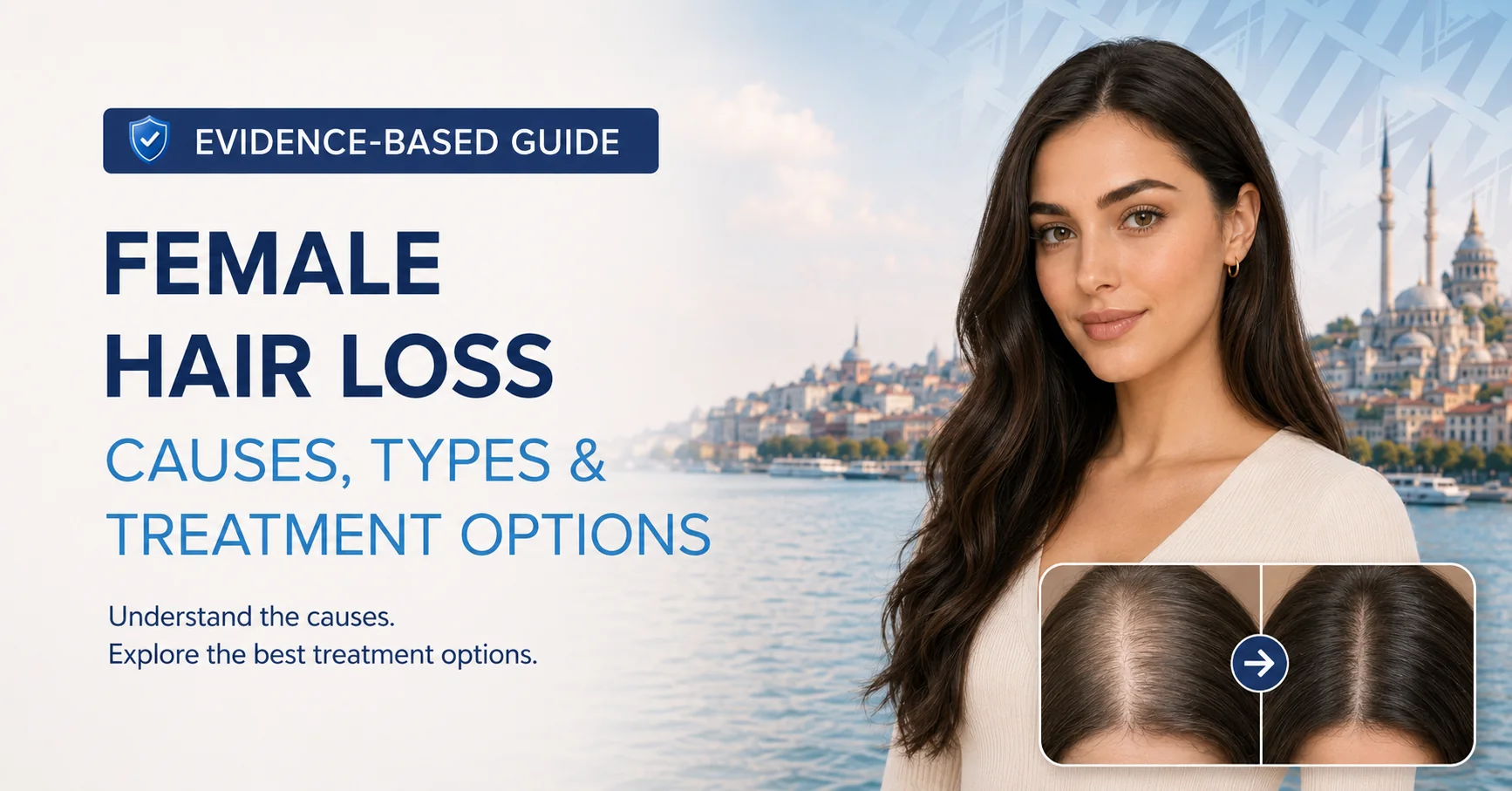
Talk to an experienced patient coordinator for your beard transplant in Turkey.By age 50, up to four in ten women notice significant hair thinning, according to the American Academy of Dermatology. If you are starting to see more scalp through your part, or finding extra strands in the shower, it can feel frightening and isolating. The good news: hair loss in women is common, medically understood, and in most cases manageable.
In our work at Medart Hair Transplant in Istanbul, we routinely meet women who have spent months panic-buying shampoos and biotin gummies before anyone checked their iron levels or hormones. This guide gives you a clear, clinically grounded roadmap to the real female hair loss causes, how to recognise what is happening on your own scalp, and which evidence-based treatments can realistically help.
This article is for general information and does not replace a consultation with a qualified doctor. Never start, stop or change prescription medications without medical advice.
Can Female Hair Loss Be Stopped or Reversed?
Many causes of female hair loss can be improved or even reversed, and even long-term conditions like female pattern hair loss can usually be slowed and partly reversed with the right treatment started early.
Many triggers of hair loss in women — iron deficiency, thyroid disease, major illness, crash dieting, childbirth — cause shedding that often resolves once the underlying issue is treated. Female pattern hair loss (also called female pattern baldness or androgenetic alopecia) is a chronic, genetic condition. It can usually be stabilised, and sometimes partly reversed, with treatments like minoxidil and, in some cases, anti-androgen medications.
● Quick truth: Most women will not go completely bald, but untreated female pattern hair loss usually becomes slowly worse over time.
According to the American Academy of Dermatology, female pattern hair loss affects up to 40% of women by age 50. Early diagnosis, realistic expectations and consistent treatment for at least 6–12 months are critical. Hair transplant is an option for selected women once the condition is stable, but it is never the first step. If your hair is thinning, a medical evaluation is far more useful than trying random products in hope.
Read on to move from "is this normal shedding?" to recognising patterns, identifying likely female hair loss causes, and planning your next step.
Understanding Female Hair Loss: How Much Shedding Is Normal?
For most women, losing about 50–100 hairs per day is normal, but noticeable thinning, scalp visibility or a shrinking ponytail can signal abnormal hair loss.
Every hair on your head sits somewhere in the hair growth cycle, and some daily shedding means that cycle is working as it should. Problems begin when more hairs exit the growth phase than enter it, or when follicles shrink and start producing thinner strands.
The Hair Growth Cycle in Simple Terms
Think of your scalp as a garden. Some plants are sprouting, some are resting, and some are falling away to make space for new growth. That is exactly what your follicles are doing, every day.
● Anagen (growth phase): About 80–90% of scalp hairs are in anagen, actively growing for 2–7 years. Longer anagen means longer hair.
● Catagen (transition phase): A short 1–2 week phase when the hair stops growing and detaches from its blood supply.
● Telogen (resting and shedding phase): Roughly 10–15% of hairs rest for 2–4 months, then shed. This accounts for most of the hair you see in the brush or shower drain.
According to the American Academy of Dermatology, losing around 50–100 hairs per day is typical for a healthy scalp. If you wash your hair less often, you may notice more hairs on wash days simply because they have built up.
Early Warning Signs Women Often Miss
Normal shedding does not change how your hair looks. Abnormal hair loss in women usually shows up in one or more of these ways:
● Your ponytail feels thinner, or the elastic now wraps around more times.
● Your part looks wider, especially on the top or crown.
● You can see more scalp under bright light or in photos than you used to.
● You find clumps of hair on your pillow, in the shower or on your clothes.
● Your fringe or front hair looks see-through, or your hairline looks uneven.
According to the NHS, gradual thinning on the top of the head is the most common pattern of hair loss in women. Age matters too: hair naturally becomes a little finer and less dense after midlife, even without any disease.
If you recognise visible thinning, not just extra hairs on your brush, the next step is to understand which type of hair loss might be affecting you.
Main Types of Hair Loss in Women
The four most common types of hair loss in women are female pattern hair loss, telogen effluvium, alopecia areata and traction alopecia. Each has a distinct pattern and cause.
Doctors first divide hair loss into non-scarring alopecia (follicles are still alive and regrowth is possible) and scarring or cicatricial alopecia (follicles are destroyed, so loss is usually permanent). Most hair loss in women is non-scarring, which is good news for treatment.
Comparison: Main Types of Hair Loss in Women
Type |
Typical pattern |
Common triggers |
Reversible? |
|---|---|---|---|
Female pattern hair loss (FPHL) |
Diffuse thinning on top, widening part |
Genetics, androgens, ageing, hormones |
Partly (chronic) |
Telogen effluvium |
Diffuse shedding all over scalp |
Stress, illness, childbirth, deficiencies, drugs |
Usually yes (temporary) |
Alopecia areata |
Sudden smooth bald patches |
Autoimmune reaction |
Often, but unpredictable |
Traction alopecia |
Hairline and temples from tight styles |
Braids, tight ponytails, extensions |
Early yes; late no |
Scarring alopecia |
Patches with scarring, redness, scaling |
Autoimmune, inflammatory, burns, infections |
No (needs urgent care) |
Clinical reviews in dermatology journals report that female pattern hair loss is the most common cause of permanent hair loss in women, while telogen effluvium is the most common cause of sudden diffuse shedding.
Female Pattern Hair Loss (FPHL)
Female pattern hair loss, female pattern baldness and androgenetic alopecia all describe the same genetic, hormone-sensitive condition.
FPHL causes gradual thinning, mainly over the top of the head and crown, rather than complete bald patches. The Ludwig scale is the classification used to grade severity in women, from mild widening of the part (Ludwig I) to extensive thinning with only a thin band of hair remaining (Ludwig III).
Typical features include:
● Diffuse thinning on the crown and mid-scalp.
● A widening part, sometimes described as a "Christmas tree" pattern.
● A frontal hairline that is often partly preserved, especially in early stages.
According to the AAD, female pattern hair loss is driven by a mix of androgens (male-type hormones present in both sexes), especially dihydrotestosterone (DHT), plus genetics and age. It is chronic, but it usually progresses slowly, and early treatment can stabilise or partly reverse it.
Telogen Effluvium: Sudden Shedding After a Trigger
Telogen effluvium is a type of non-scarring alopecia in which many hairs shift into the telogen (resting) phase and shed more than usual.
The shedding typically appears two to three months after a trigger such as:
● Significant physical or emotional stress.
● High fever, COVID-19 or another major illness.
● Surgery or major blood loss.
● Crash dieting or rapid weight loss.
● Stopping or starting certain medications.
● Childbirth (postpartum hair loss).
Women often notice a sudden increase in shedding across the whole scalp, sometimes with thinning of eyebrows or body hair. According to the Cleveland Clinic, telogen effluvium is usually temporary, resolving within 6–12 months once the trigger is removed — though it can also unmask underlying female pattern hair loss.
Alopecia Areata and Autoimmune Causes
Alopecia areata is an autoimmune form of non-scarring alopecia in which the immune system mistakenly attacks hair follicles.
It usually shows as:
● Smooth, round or oval bald patches on the scalp.
● Sometimes loss of eyebrows, eyelashes or body hair.
● "Exclamation mark" hairs (short broken hairs) at the edges of patches.
Autoimmune diseases such as vitiligo, thyroid disease and lupus can be associated with alopecia areata. The National Institutes of Health (NIH) notes that many people experience regrowth, but the pattern is unpredictable, and some cases progress to more extensive forms. Treatment usually involves topical corticosteroids or injections from a dermatologist to calm the immune reaction.
Traction and Scarring Alopecia: When Hairstyles or Inflammation Cause Permanent Loss
Traction alopecia is hair loss caused by chronic pulling on the hair follicles.
Common culprits include:
● Tight ponytails or buns.
● Braids, cornrows or weaves.
● Hair extensions or tight headscarves.
The pattern typically affects the frontal hairline and temples first. Caught early, with a change of styling habits, it is often reversible. If the pulling continues for years, follicles can be destroyed and replaced with scar tissue, leading to permanent loss.
Trichotillomania is different from traction alopecia. It is a hair-pulling disorder in which a person repeatedly pulls out their own hair — often from the scalp, brows or lashes. It causes patchy areas with broken hairs and usually requires psychological or psychiatric support alongside hair care, because it is a compulsive behaviour rather than a primary scalp disease.
Scarring or cicatricial alopecia refers to a group of conditions where inflammation or injury destroys the hair follicles. Causes include:
● Autoimmune inflammation (for example, lichen planopilaris).
● Severe scalp infections.
● Burns or radiation.
● Advanced, untreated traction alopecia.
Warning signs include redness, pain, burning, scaling, visible scarring or a "shiny" scalp where pores seem absent. The European Academy of Dermatology and Venereology emphasises that scarring alopecias require urgent specialist treatment to stop progression, because lost hair usually cannot regrow.
Now that you can recognise the main patterns, the next question is why they are happening to you at your age and life stage.
Common Causes of Hair Loss in Women by Life Stage
In women, hair loss is usually driven by a mix of genetics, hormones, life events like pregnancy or menopause, medical conditions such as thyroid disease, and nutritional or stress-related triggers.
The same pattern can have very different triggers at different ages. A 23-year-old with thinning at the crown is not the same case as a 58-year-old with similar thinning, even if both technically have female pattern hair loss.
Hormones, Genetics and Female Pattern Baldness
Female pattern hair loss is strongly influenced by genetics and hormones.
Key players:
● Estrogen: Supports hair growth and lengthens the anagen phase. Hair often feels fuller during high-estrogen states such as pregnancy.
● Progesterone: Has a balancing effect on estrogen and androgens.
● Androgens: Hormones like testosterone that both men and women produce.
● DHT (dihydrotestosterone): A more potent androgen derived from testosterone that can shrink genetically sensitive follicles.
In female pattern baldness, follicles in the central scalp are genetically more sensitive to DHT. Over time, they miniaturise, producing shorter, finer hairs until the follicle becomes almost invisible. Perimenopause and menopause, when estrogen and progesterone decline, can unmask this genetic tendency and make hair thinning in women much more obvious.
If several women in your family developed thinning at the part or crown, you may be watching the same pattern unfold in yourself.
Hair Loss in Your Teens and 20s
In younger women, visible thinning is a warning sign that deserves attention, not dismissal.
Common causes in this age group:
● Polycystic ovary syndrome (PCOS): A hormonal condition causing irregular periods, acne, weight gain and increased androgens. The Mayo Clinic notes that PCOS can lead to androgenetic alopecia in women, especially at the crown. In our experience at Medart Hair Transplant, women in their 20s with PCOS-related diffuse thinning often improve significantly once PCOS is treated and anti-androgen therapy is considered.
● Crash diets and eating disorders: Rapid weight loss or severe calorie restriction can trigger telogen effluvium through lack of protein, iron and other nutrients.
● Tight hairstyles and traction alopecia: Long-term braids, extensions, very tight buns or ponytails can gradually thin the temples and hairline.
● Hormonal contraceptives: Starting, stopping or switching the combined pill, progestin-only pill or some IUDs can trigger temporary shedding. According to the NHS, certain contraceptives with more androgenic progestins are more likely to worsen hair thinning in susceptible women.
● Stress and chronic illness: University exams, relationship strain, chronic infections or inflammatory diseases can tip the hair growth cycle into telogen effluvium.
Case example: Elif, 24, came to our clinic worried about a widening part and increased facial hair. Her periods were irregular and she had gained weight. Blood tests showed high androgens, and ultrasound confirmed PCOS. With endocrine treatment, lifestyle changes and later spironolactone, her shedding slowed and density improved over 12–18 months. This is illustrative, not a guaranteed outcome.
Pregnancy, Postpartum and Breastfeeding
Pregnancy and the months after birth are classic times for women to notice dramatic changes in their hair.
During pregnancy:
● High estrogen and progesterone keep hairs in an extended anagen phase.
● Many women notice thicker, fuller hair.
After birth (and sometimes after stopping breastfeeding):
● Estrogen levels fall, and many hairs enter telogen together.
● Postpartum hair loss (a form of telogen effluvium) typically starts two to four months after delivery.
● Shedding can feel dramatic, with handfuls of hair in the shower.
The American Academy of Dermatology explains that postpartum telogen effluvium usually improves within 6–12 months as hormone levels stabilise. Persistent thinning beyond a year, or a pattern that looks like FPHL, can indicate underlying female pattern hair loss that pregnancy had temporarily masked.
Menopause and Beyond
After about age 45–50, perimenopause and menopause introduce new hormonal shifts that affect hair.
Key points:
● Estrogen and progesterone decline, while relative androgen levels can rise.
● Hair often becomes finer, drier and less dense, even without overt disease.
● Female pattern hair loss tends to accelerate around and after menopause.
Mayo Clinic resources note that menopause hair loss often appears as diffuse thinning on the crown and widening of the part, matching Ludwig patterns. Some women also experience increased facial hair. Treatment at this stage often combines topical minoxidil, correction of iron or thyroid issues, and anti-androgen therapy when appropriate.
Case example: Maria, 52, noticed her scalp showing through in family photos. She had had heavy periods for years and then entered perimenopause. Blood tests showed low ferritin and borderline hypothyroidism. With iron supplements, thyroid treatment and 5% topical minoxidil, her shedding reduced and density modestly increased over 9–12 months. She later chose a small hair transplant to refine her frontal density.
Medical Conditions, Medications and Nutritional Deficiencies
Several medical problems and treatments can cause or worsen hair loss in women.
Important categories:
● Thyroid disease: Both hypothyroidism (underactive thyroid) and hyperthyroidism (overactive) can cause diffuse thinning, brittle hair and eyebrow loss. NHS guidance notes that treating thyroid disease often improves hair over several months.
● Iron deficiency and anemia: Low iron stores, measured by ferritin, are common in menstruating women. Iron deficiency can cause telogen effluvium and worsen FPHL, according to reviews indexed by the NIH. Iron-rich foods and supplements under medical guidance are crucial.
● Other nutritional deficiencies: Low vitamin D, vitamin B12 and zinc are all associated with increased shedding. Severe protein deficiency can also impair growth.
● Autoimmune disease: Conditions such as lupus, alopecia areata, psoriasis or autoimmune thyroiditis can affect follicles or scalp health.
● Chronic illness and major surgery: Long hospital stays, chronic infections, inflammatory diseases or big operations are well-known triggers for telogen effluvium.
● Medications: Some antidepressants, beta-blockers, blood thinners, retinoids, chemotherapy drugs and high-dose vitamin A can cause hair loss. Chemotherapy-induced alopecia is usually temporary but can be deeply distressing, and some women later notice a change in texture or coverage.
Life-stage and medical factors often overlap. A woman in her 30s might have PCOS, iron deficiency and postpartum telogen effluvium all interacting at once. Recognising this layered picture is why your hair problem deserves proper medical evaluation — not just another shampoo.
With a sense of likely female hair loss causes at your age, the next useful question is how female pattern baldness actually differs from the male version, and why most women will not lose all their hair.
How Female Pattern Baldness Differs from Male Pattern Baldness
Unlike men, most women with pattern hair loss thin across the top of the scalp and develop a wider part rather than receding to a bald forehead or crown.
Both men and women can develop androgenetic alopecia, but the visual pattern and the emotional impact look very different.
● Women (Ludwig pattern): Thinning is usually diffuse on the top with a widening central part. The frontal hairline often remains relatively preserved, especially in early and middle stages. Complete baldness is rare.
● Men (Norwood pattern): Hair loss often starts with receding temples and a thinning crown, which can merge into a large bald area. The hairline may recede far back, leaving a horseshoe of hair around the sides and back.
Dermatology textbooks describe these as the Ludwig scale for women and the Norwood scale for men. The underlying role of DHT and genetic sensitivity is shared, but estrogen and progesterone help protect female hair to some extent.
According to the AAD, it is uncommon for women with FPHL to go completely bald in the way men often do. That is reassuring — but even partial thinning can be profoundly upsetting, because long, full hair is closely tied to self-image in most cultures.
Because women usually keep more frontal hair and thin diffusely, hair transplant planning must blend carefully with existing fragile hairs and respect female styling patterns, rather than recreate a male-style hairline. Understanding this difference is the foundation for setting realistic goals when you start thinking about treatment.
Next, let's look at how doctors actually diagnose female hair loss, and which tests are worth asking for.
Diagnosis: When to See a Doctor About Female Hair Loss Causes
You should see a doctor promptly if your hair loss is sudden, patchy, painful, associated with scalp changes, or accompanied by symptoms like fatigue, weight changes or menstrual irregularities.
Many women wait months — sometimes years — trying products and diets before getting a single test. That delay can allow treatable conditions to progress quietly.
Red-Flag Symptoms You Shouldn't Ignore
Red-flag symptoms — seek urgent medical evaluation if you notice:
- Sudden, patchy bald spots or complete loss of eyebrows or lashes
- Pain, burning, itching, redness, sores or pus on your scalp
- Areas of scalp that look shiny, scarred or permanently smooth
- Hair loss with fever, weight change, severe fatigue or joint pain
- Hair breaking off at the scalp with visible scaling (possible fungal infection)
These can signal alopecia areata, scarring alopecias, severe psoriasis or infections. The NHS and AAD both state that such cases should be assessed by a GP or dermatologist without delay.
Typical Blood Tests for Female Hair Loss
A thorough evaluation starts with a detailed history and scalp examination. From there, doctors usually order blood tests to look for reversible causes. Common tests include:
● TSH (thyroid-stimulating hormone), sometimes with T3/T4, to assess thyroid function.
● Ferritin and iron studies to detect iron deficiency.
● Complete blood count (CBC) to check for anemia or infection.
● Vitamin D and vitamin B12 levels.
● Androgen levels (total and free testosterone, DHEAS) if there are signs of PCOS such as irregular periods, acne or excess hair.
Guidance from the American Academy of Dermatology and the NHS notes that these tests often uncover reversible contributors like thyroid disease and iron deficiency in women with hair loss.
How Specialists Confirm Your Diagnosis
A dermatologist or trichologist (a doctor or specialist focusing on hair and scalp disorders) will:
● Examine the pattern of thinning (Ludwig vs patchy vs diffuse).
● Perform a hair pull test to see how easily hairs come out.
● Look at hairs and scalp through a dermatoscope (a magnifying light).
● Ask about your medications, periods, pregnancies, weight changes and stress.
In unclear or scarring cases, they may recommend a scalp biopsy, where a small piece of skin is removed under local anaesthetic and examined under a microscope. The NIH notes that biopsies are especially useful for diagnosing cicatricial alopecias, where aggressive early treatment can prevent further permanent loss.
If you feel overwhelmed by which tests or referrals you need, start by asking your GP for a referral to a dermatologist who sees a lot of hair loss. That is usually the safest way to clarify your female hair loss causes before you spend money on products that may not help.
Still unsure where to begin? You can send photos and a short history via the WhatsApp button in the bottom-right corner. Our team at Medart Hair Transplant will give you a free, personalised view on which investigations and next steps make sense for your situation — no hard sell, and no substitute for seeing your own GP or dermatologist.
If you have sudden, patchy, scarring or painful hair loss, or notice scalp redness, sores or systemic symptoms, seek urgent medical evaluation.
With the type of hair loss and likely causes identified, you can start to make sense of the different women hair loss treatment options — starting with evidence-based medical therapies.
Some treatments discussed, such as oral minoxidil and finasteride or dutasteride in women, are used off-label and require careful medical supervision. If you are pregnant, planning pregnancy or breastfeeding, consult your doctor before using any hair loss medication.
Evidence-Based Medical Treatments for Female Hair Loss Causes
Topical minoxidil is the only medication formally approved in many countries for female pattern hair loss, and it typically needs at least 3–6 months of consistent use before you see visible results.
Effective women's hair loss solutions almost always combine two things: treating any underlying medical issue, and using hair-specific therapies with real evidence behind them.
Minoxidil: First-Line Treatment for Female Pattern Hair Loss
Minoxidil is a vasodilator that, when applied to the scalp, extends the anagen (growth) phase and helps enlarge miniaturised follicles.
● Available as 2% or 5% topical solution or foam.
● Over-the-counter in many countries for women.
● Applied once or twice daily to a dry scalp.
According to the AAD and reviews summarised by the NIH, most women with FPHL who use minoxidil consistently for 6–12 months see slowing of loss and some regrowth — especially when started early.
Key points to expect:
● An initial shedding phase in the first 4–8 weeks is common as resting hairs fall out to make way for new growth. Don't panic; this is the drug working.
● Visible improvement usually starts around 3–6 months, with full benefit at 12 months or more.
● Side effects can include scalp irritation, dryness, flaking, and (rarely) unwanted facial hair if the solution drips onto the face.
● Results require ongoing use. Stopping minoxidil allows hair to gradually return to its untreated state over 6–12 months.
Low-dose oral minoxidil is an off-label option where small doses are taken by mouth. Dermatology reviews suggest it can help women who cannot tolerate the topical version. Doses are much lower than those used for blood pressure, but the drug can still cause side effects such as lowered blood pressure, swelling or a faster heartbeat. Oral minoxidil is not recommended in pregnancy or breastfeeding unless a specialist specifically advises and monitors it.
Oral Medications and Anti-Androgens
Some women with FPHL — particularly those with PCOS or high androgens — benefit from anti-androgen medications that reduce the effect of DHT on hair follicles.
Common options:
● Spironolactone: A diuretic that also blocks androgen receptors.
● Used off-label for women with FPHL, especially when PCOS signs are present.
● Clinical experience and reviews referenced by the NIH suggest many women see reduced shedding and mild regrowth over 6–12 months.
● Side effects can include low blood pressure, increased urination, breast tenderness and menstrual irregularities.
● Because spironolactone can cause birth defects in male fetuses, reliable contraception is essential, and it is contraindicated in pregnancy and usually avoided in breastfeeding.
● Finasteride and dutasteride: These drugs block the enzyme that converts testosterone to DHT.
● Widely used and approved for male pattern baldness, but their use in women is off-label and more debated.
● Some clinical reports and small studies show benefit in postmenopausal women, and in premenopausal women using effective contraception, especially at higher doses.
● They are absolutely contraindicated in pregnancy because of the risk of serious birth defects, and women of reproductive age should handle crushed tablets with care.
● They require close supervision by a dermatologist or endocrinologist.
Other oral options, such as cyproterone acetate (available in some countries) or combined oral contraceptives with low-androgenic progestins, may be considered as part of managing PCOS-related hair loss — always under gynecological and endocrine guidance.
Correcting Underlying Medical and Nutritional Problems
For many women, the most powerful interventions are not hair lotions at all. They are the medical fixes that quietly let your follicles work properly again.
Key approaches:
● Treating thyroid disease: Adequate thyroid hormone replacement for hypothyroidism, or treatment for hyperthyroidism, often lets hair gradually recover over several months, as noted by the NHS and Mayo Clinic.
● Iron supplementation: If ferritin is low, doctors often recommend iron supplements alongside iron-rich foods (red meat, leafy greens, legumes) for several months at minimum. NIH summaries indicate that raising ferritin above deficiency levels can reduce shedding in many women.
● Correcting vitamin D, B12 and zinc levels: Supplements and dietary changes can support hair growth where deficiencies are proven on blood tests.
● Adjusting medications: If a prescribed drug is suspected to be the culprit, your doctor may switch you to a safer alternative.
● Topical corticosteroids and other immunomodulators: In conditions like alopecia areata or scalp psoriasis, steroid creams, lotions or injections can reduce inflammation and allow follicles to regrow.
Over-the-counter multivitamins, biotin supplements and "hair, skin and nails" formulas can help if you are deficient, but the evidence for benefit in well-nourished women is limited. According to the AAD and the US Food and Drug Administration, biotin is mainly useful when true deficiency is present — which is relatively rare — and high doses can interfere with certain lab tests, including thyroid and heart markers. Vitamins alone cannot fully reverse the androgen-driven miniaturisation of female pattern hair loss.
Treatment Summary Table
Treatment |
Who it's for |
Evidence level |
Time to see effect |
Key cautions |
|---|---|---|---|---|
Topical minoxidil |
FPHL, some chronic telogen effluvium |
High |
3–6+ months |
Scalp irritation; ongoing use needed |
Low-dose oral minoxidil |
FPHL intolerant of topical (off-label) |
Moderate |
3–6+ months |
Blood pressure, oedema; avoid in pregnancy |
Spironolactone |
FPHL with androgen excess or PCOS (off-label) |
Moderate |
6–12+ months |
Needs contraception; not in pregnancy |
Finasteride/dutasteride |
Selected women with FPHL (off-label) |
Limited–moderate |
6–12+ months |
Strictly avoid in pregnancy; specialist-only |
Iron, vitamin D, B12, zinc |
Telogen effluvium with proven deficiency |
High |
3–6+ months |
Monitor levels; avoid excessive self-dosing |
According to the American Academy of Dermatology and NIH-reviewed studies, combination therapy — for example, minoxidil plus correction of deficiencies, plus an anti-androgen in selected cases — often delivers better results than any single treatment alone.
Once your medical plan is in place, the next question is whether procedures and advanced therapies like PRP, low-level laser or hair transplant belong in your treatment story.
Procedures and Advanced Therapies: PRP, Laser & Hair Transplant in Women
Procedures like PRP, low-level laser therapy and, in selected cases, hair transplant can enhance or restore density in women — but they should come after a proper diagnosis and optimisation of medical treatment.
In our experience at Medart Hair Transplant in Istanbul, outcomes are noticeably better when women arrive with their scalp health and underlying conditions already addressed, or when we coordinate those treatments alongside any procedure.
PRP for Female Hair Loss
PRP (platelet-rich plasma) therapy uses a concentration of your own platelets, injected into the scalp to stimulate follicles.
The process:
● A small amount of your blood is drawn.
● It is spun in a centrifuge to isolate the platelet-rich plasma.
● The PRP is injected into thinning areas of the scalp.
Platelets release growth factors that can signal dormant follicles to re-enter the growth phase. Studies summarised by the NIH and professional dermatology societies describe PRP as having promising but still limited evidence for improving density in FPHL and chronic telogen effluvium, especially in early or moderate stages.
Typical protocols involve three or four monthly sessions, then maintenance every 6–12 months. Side effects are usually mild — tenderness, temporary swelling — since the substance comes from your own blood.
Laser Caps and Low-Level Laser Therapy
Low-level laser therapy (LLLT) uses red or near-infrared light at specific wavelengths to stimulate hair follicles.
Options include:
● In-clinic hood devices.
● At-home laser caps, helmets or combs.
According to the AAD and several systematic reviews, LLLT offers modest improvements in hair density when used regularly for several months, especially in combination with minoxidil. It is generally safe, but devices must be medical-grade and used as directed. LLLT is an adjunct — not a stand-alone cure for female pattern hair loss.
Microneedling as an Adjunct
Microneedling uses tiny needles to create micro-injuries in the scalp, which may help increase blood flow and absorption of topical treatments like minoxidil.
Clinical studies show that combining microneedling with minoxidil can outperform minoxidil alone in some patients. However:
● It must be done with sterile technique to avoid infection.
● Overuse can cause inflammation or scarring.
● At-home rollers should be used cautiously and cleaned carefully — or, better, the procedure should be performed by professionals.
When Is a Hair Transplant Right for a Woman?
Hair transplant in women can be highly effective in the right circumstances. But it is not suitable for everyone.
Key criteria for considering a transplant:
● Stable pattern hair loss for several years, not rapid active shedding.
● A good donor area at the back and sides of the scalp.
● Realistic expectations about achievable density and the need for ongoing medical therapy.
● Medical causes like thyroid disease and iron deficiency evaluated and controlled.
When it is appropriate:
● Rebuilding or lowering a slightly high hairline in a woman with stable FPHL.
● Filling in scarred areas once scarring alopecia is inactive.
● Addressing patchy loss after injuries or surgeries.
When it is not appropriate:
● Severe, ongoing diffuse thinning over the whole scalp with a weak donor area.
● Uncontrolled scarring alopecia with active inflammation.
● Women expecting transplantation to "stop" FPHL without continuing medical treatment.
Female transplants differ from male ones in important ways. Surgeons usually need to protect and work around existing fragile hairs, plan to match female styling patterns and parting, and avoid over-harvesting the donor area, which may also be thinning.
If you want more detail on techniques, recovery and candidacy, you can explore our dedicated page on hair transplant options for women , which goes deeper into women-specific transplant design and planning.
Case example: Aylin, 45, had long-standing FPHL stabilised on minoxidil and spironolactone for three years. She still felt her frontal third looked thin and limited her styling options. After careful assessment at Medart Hair Transplant, we performed a focused transplant to the frontal zone using grafts from a strong donor area. Over 12 months, she saw a visible improvement in how her hair framed her face, while medical therapy maintained the rest. Individual results vary — this is not a guarantee.
Procedures work best inside a stepwise plan, after you have addressed health factors and tried first-line medical treatments. Alongside these, lifestyle and hair care play a real supporting role — though you should know what they can and cannot do on their own.
Lifestyle, Nutrition and Hair Care: What Helps and What Doesn't
Healthy nutrition, gentle hair care and stress management support hair growth, but they cannot replace medical treatment if you have female pattern hair loss or a medical cause.
That said, lifestyle changes are an important foundation — especially for telogen effluvium and overall scalp health.
Nutrition and Supplements for Healthy Hair
Hair is mostly made of keratin, a protein. It needs adequate building blocks and micronutrients.
Helpful nutritional habits:
● Eat enough protein each day from sources like eggs, fish, lean meat, dairy, legumes and tofu.
● Include iron-rich foods such as red meat, lentils, spinach and fortified cereals — especially if you have heavy periods.
● Ensure sources of vitamin D (safely from sunlight, oily fish, fortified foods) and vitamin B12 (animal products, or supplements if you are vegan).
● Include zinc from meat, shellfish, nuts and seeds.
According to the NIH, crash dieting and eating disorders are strongly linked with telogen effluvium in women. Addressing any nutritional deficiency through food and, where needed, supplements under medical guidance is a core part of supporting regrowth.
On hair supplements:
● A standard multivitamin can help if your diet is limited.
● Biotin is mainly useful when there is proven deficiency, which is uncommon. Regulatory warnings note that high doses can interfere with some lab tests, including thyroid and heart markers.
● "Hair, skin and nails" supplements may add extra vitamins, but they are not a substitute for treating FPHL or medical disease.
Everyday Hair-Care Habits That Protect Your Hair
Daily care can either support or undermine fragile follicles. Think of it like thinning fabric — the gentler you handle it, the longer it lasts.
Practices to avoid or reduce:
● Tight hairstyles that cause traction alopecia (tight buns, braids, extensions, very tight ponytails).
● Frequent heat styling with straighteners or curling irons at high temperatures.
● Harsh chemical treatments like bleaching, perming or relaxers repeated closely together.
● Aggressive brushing of wet hair or rough towel-drying.
Hair-friendly habits:
● Use a gentle shampoo suited to your scalp, and wash often enough to keep the scalp clean.
● Use conditioner and a wide-tooth comb to detangle gently, starting from the ends.
● Alternate hairstyles and keep braids or ponytails looser to reduce traction.
● Treat scalp conditions such as dandruff (seborrheic dermatitis) or scalp psoriasis under medical guidance, since inflammation and scratching can worsen shedding.
Many women enjoy oils, masks and scalp massages. These can improve scalp comfort and hair shine, but according to the AAD, they do not reverse female pattern hair loss without medical treatment.
Styling, Wigs and Toppers While You Treat the Cause
Cosmetic options matter. They are how you live well while treatments take effect.
Useful strategies include:
● Volumising products and root-lift sprays to increase apparent thickness.
● Hair fibres (keratin powders) that cling to existing hair and conceal visible scalp.
● Toppers or partial wigs that blend with your hair to add coverage at the crown.
● Full wigs for more advanced loss, or during chemotherapy-induced alopecia.
Psychologically, these tools can be life-changing while you follow a medical plan. Research summarised in dermatology and psychiatry journals indexed by the NIH finds that protecting self-esteem during treatment reduces anxiety and depression in women with alopecia.
Lifestyle and cosmetics are supportive, not curative — especially for female pattern hair loss. To cope well, it also helps to address the emotional impact head-on.
Emotional Impact and Coping With Female Hair Loss
Female hair loss often has a powerful emotional impact, and addressing your mental health and self-image is just as important as treating your scalp.
Hair is deeply tied to identity, femininity and culture. Losing it can feel like losing a part of yourself, even when others insist they "hardly notice".
Studies in the Journal of the American Academy of Dermatology and other research summarised by the NIH show that women with alopecia have higher rates of anxiety, depression and social withdrawal than women without hair loss. Some avoid photos, intimacy or social events altogether.
Ways to cope with the emotional side:
● Share your feelings with a trusted friend, partner or therapist.
● Join support groups, online communities or patient organisations for women with hair loss.
● Use cosmetic options like wigs, toppers or microblading for eyebrows to feel more like yourself.
● Focus on what you can control — attending appointments, following your treatment, practising healthy habits.
Case example: Sara, 34, developed postpartum telogen effluvium and then noticed underlying FPHL. She felt guilty for caring so much about her hair while caring for a newborn. Combining minoxidil, iron supplements, a supportive online group and a well-fitted topper during the worst months significantly improved her mood and confidence — while the medical treatment took effect underneath.
Knowing your emotional response is normal is the first step. The next is to follow a step-by-step plan so you are not tackling this alone or at random.
Step-by-Step Plan: What to Do If You Notice Thinning Hair and Suspect Female Hair Loss Causes
If you notice thinning hair, the best approach is to document the changes, gently adjust your hair-care habits, and seek a medical evaluation within a few weeks — not wait in hope it will pass.
Here is a practical roadmap you can follow:
1. Note when the hair loss started and any recent triggers. Write down when you first noticed changes and any major events in the previous 3–6 months: illness, surgery, crash diet, pregnancy, new medications, major stress.
2. Take clear photos of your scalp in good light. Capture front, sides, parting and crown. Repeat monthly to track changes — your eyes will lie to you, photos won't.
3. Review your hair-care and lifestyle habits. Loosen tight styles, reduce heat and harsh chemicals, improve your diet with protein and iron-rich foods, and aim for regular sleep.
4. Book an appointment with your GP or dermatologist. Mention you are concerned about female hair loss causes such as female pattern hair loss, thyroid problems or deficiencies. Bring your notes and photos, and ask about blood tests like TSH, ferritin, CBC, vitamin D, B12 and, where appropriate, androgens.
5. Discuss evidence-based treatment options. Ask whether topical minoxidil is suitable, how to use it, and whether you need further evaluation for PCOS, thyroid disease or scarring alopecia. Clarify which treatments are over-the-counter (like minoxidil foam) and which are prescription-only (like spironolactone or finasteride).
6. Start the agreed treatment and commit to 6–12 months. Set reminders to apply minoxidil or take medications, and resist the urge to judge results in a few weeks. Reassess with your doctor at 3, 6 and 12 months.
7. Consider referral to a specialist hair clinic if progress is limited. If your loss is advanced, scarring is suspected, or medical treatment plateaus, ask about referral to a dermatologist who specialises in hair, or a reputable hair transplant clinic with real experience in female patients.
A Simple Checklist to Bring to Your Doctor
Write down:
● All medications, supplements and contraceptives you use.
● Period pattern, pregnancies, miscarriages or menopause status.
● Family history of hair loss (men and women).
● Any medical conditions (thyroid, anemia, PCOS, autoimmune disease).
● Hair-care routines and any recent major life events.
This information helps your doctor narrow down whether your main issue is FPHL, telogen effluvium, alopecia areata, traction alopecia, trichotillomania — or a combination.
When to Consider a Specialist Hair Clinic Like Medart
Consider a specialist hair clinic if:
● Your GP or dermatologist has ruled out major disease, but you still have distressing thinning.
● You are wondering whether a hair transplant in women might help your case.
● You want to discuss advanced therapies such as PRP, or detailed transplant planning.
For a personalised opinion, tap the WhatsApp button in the bottom-right corner and send the Medart team a few clear photos and a short description of your history. You'll receive an honest assessment of likely causes and options — not a hard sell.
With your next steps at home and with your doctor in hand, you may also be weighing whether treatment abroad, particularly in Turkey, is right for you if surgery becomes part of the conversation.
When to Consider Treatment Abroad: The Role of Hair Transplant Clinics in Turkey
For women who are suitable candidates for hair transplant, reputable clinics in Turkey — especially Istanbul — can offer high-quality care at competitive prices, but only after a thorough medical evaluation confirms that surgery is appropriate.
Turkey has become a major hub for medical tourism, particularly for hair transplant, attracting hundreds of thousands of international patients each year according to international health-tourism analyses. Istanbul concentrates many of the most experienced clinics.
If you are considering having a female hair transplant in Turkey (Istanbul) , think carefully about:
● Timing. Make sure your diagnosis is clear and underlying issues — thyroid disease, iron deficiency, active autoimmune inflammation — are treated or stable.
● Clinic quality. Look for board-certified surgeons, clear information about who will actually perform your surgery, and plenty of before-and-after photos of female patients.
● Individual assessment. Avoid one-size-fits-all package deals that skip proper medical evaluation. Good clinics will assess your donor area, pattern of loss and future progression — not just promise maximum grafts.
● Follow-up. Ask exactly how post-operative care and communication will be handled once you return home.
How to choose a hair transplant clinic abroad:
- Verified medical qualifications and accreditations
- Demonstrated experience with female patients
- Personalised planning, not generic packages
- Clear, honest discussion of limitations and aftercare
At Medart Hair Transplant in Istanbul, we routinely see women from Europe, the Middle East and beyond. Our approach emphasises conservative, female-focused transplant planning that respects existing hair and coordinates with medical therapy and, when useful, PRP.
Unsure whether a transplant is even right for your case? Use the WhatsApp button in the bottom-right corner to request a free, no-obligation assessment. Share your photos and your story — you'll get an honest opinion on suitability, and on the alternatives, even if surgery isn't the answer.
With all this in mind, here are the points most worth holding onto before we move into the most common questions women ask.
Key Takeaways
● Most female hair loss is treatable or manageable when you act early and follow a plan.
● Female pattern hair loss is chronic, but can usually be slowed and partly reversed with consistent treatment.
● Sudden, patchy, painful or scarring hair loss needs urgent medical evaluation — not home remedies.
● Blood tests for thyroid, iron and vitamin levels often uncover reversible contributors to shedding.
● Topical minoxidil is the first-line women hair loss treatment; supplements alone are rarely enough.
● Hair transplant in women is for selected, stable cases and must be planned differently than in men.
● Emotional support, gentle styling and cosmetic options matter while medical treatments take effect.
FAQ: Female Hair Loss
Conclusion: From Panic to a Plan
Most female hair loss causes can either be treated directly or kept under control when they are identified early and managed with evidence-based care. Your next step can be small and specific: start a hair diary, take clear scalp photos in good light, and book a GP or dermatologist appointment to discuss tests like TSH, ferritin, CBC, vitamin D, B12 and androgens.
Ready to move from research to a tailored plan? Tap the WhatsApp button in the bottom-right corner and share your photos and concerns with a Medart Hair Transplant specialist. You'll get personal, honest feedback — not a sales pitch.
The key is to act early and follow a clear, stepwise plan. Not panic. Not random products. A plan.