
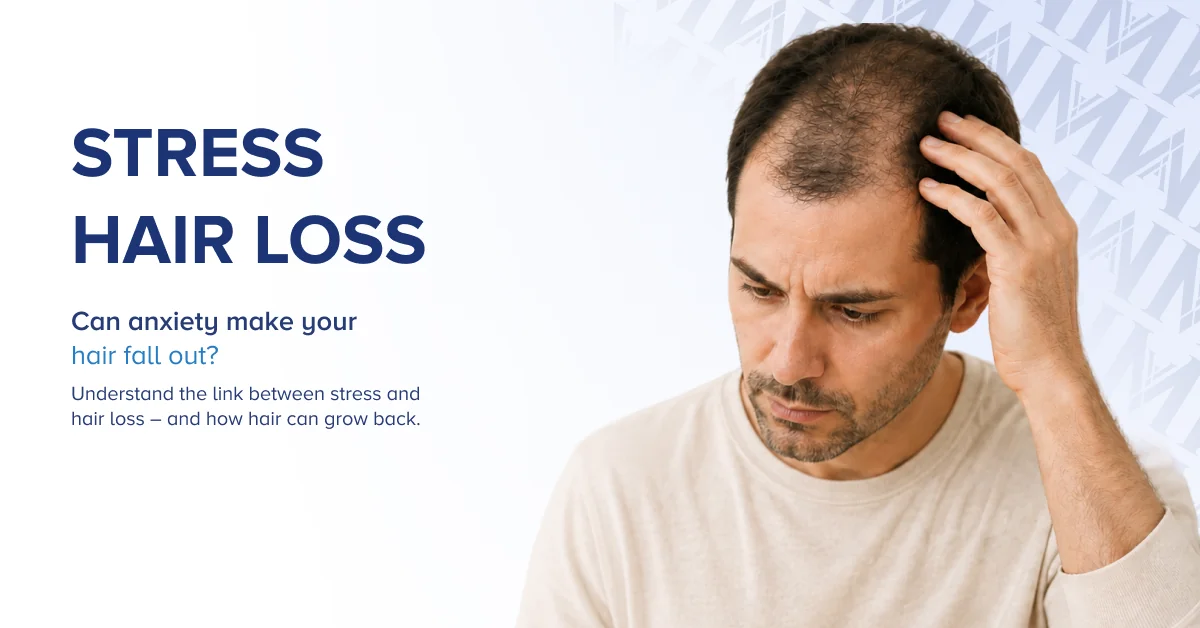

You wake up to a pillow speckled with hair. By evening, the shower drain looks like a small bird's nest. You think back to the last few brutal months — the illness, the job change, the sleepless nights — and a quiet panic sets in: am I going bald?
Take a breath. Stress hair loss is real, but in most people it's a temporary disruption of the hair cycle — not the end of your hair. Follicles aren't dying; they're reacting.
This article is for general information only and does not replace a consultation with a qualified healthcare professional. Always speak to your doctor about new or sudden hair loss.
You'll learn how stress reshapes the hair cycle, the three main stress-linked conditions, how to tell stress shedding from genetic pattern baldness, realistic regrowth timelines, and what to do next — including when a hair transplant is, and is not, the right answer.

How Stress Affects the Hair Growth Cycle
Stress affects the hair growth cycle by pushing more hairs out of the active growth phase into the resting and shedding phases, so the fallout shows up weeks or months after the stressful event.
Every hair on your scalp grows in a repeating cycle. Under normal conditions, individual hairs are in different stages of that cycle at the same time, so you lose a small, steady number each day without noticing. When stress hits the system, that rhythm changes, and many hairs "decide" to rest — and then shed — together.
The Normal Hair Growth Cycle in Plain Language
Picture your scalp as a field of crops, with different patches at different stages: sprouting, growing, ripening, and being harvested. Your hair cycle works the same way:
● Anagen (growth phase): Hairs actively grow from the hair follicles. This phase lasts several years for scalp hair, and around 85–90% of scalp hairs are usually in anagen at any given time (AAD).
● Catagen (transition phase): A short "switching off" period of a few weeks where growth slows and the follicle shrinks.
● Telogen (resting phase): The hair sits in the follicle, not growing, for roughly two to three months.
● Exogen (shedding phase): The old hair is released and falls out — often when you wash or brush your hair.
On a healthy scalp, only about 10–15% of hairs are in telogen at any moment. That balance is why your hair looks full even though you naturally shed 50–100 hairs a day.
What Stress Hormones Do to Hair Follicles
When you experience acute stress (surgery, high fever, bereavement) or chronic stress (months of work pressure, caregiving, or ongoing anxiety), your body releases stress hormones such as cortisol and adrenaline. These chemicals are helpful in the short term, but they can interfere with non-essential functions — and growing hair, biologically speaking, is non-essential.
Research in hair follicle biology has shown that experimentally induced stress can shorten the anagen phase and increase the number of follicles entering telogen. In clinical practice, dermatologists see the same pattern in people, especially after major illness, surgery, or life events.
Here's a simple overview of how stress changes the cycle:
Phase |
What Normally Happens |
What Stress Can Do |
|---|---|---|
Anagen |
Hair actively grows |
Shortens this phase |
Catagen |
Transition phase |
May start earlier |
Telogen |
Hair rests before shedding |
More hairs pushed into this phase |
Exogen |
Old hairs shed |
Noticeable increased daily shedding |
Stress may also:
● Increase low-grade inflammation around follicles
● Affect blood flow to the scalp
● Worsen behaviors like scratching, tight styling, or over-brushing
The result is stress and hair shedding that can feel dramatic but usually represents a temporary disruption of the hair cycle — not breakage of the hair shaft itself.
The delay between stress and shedding catches almost everyone off guard. Like a tree that looks fine during a dry spell and drops its leaves weeks later, your hair often reacts after the storm, not during it.
That biology sets the stage for the three main types of stress-related hair loss seen in clinics.

Three Main Types of Stress-Related Hair Loss
The three main ways stress shows up as hair loss are telogen effluvium (diffuse shedding), alopecia areata (patchy bald spots), and trichotillomania (hair pulled out as a coping behavior).
They differ in cause, appearance, and prognosis. Stress plays a triggering or worsening role in each, but is not always the sole cause. Recognizing which pattern fits your situation helps you predict regrowth and choose the right kind of help.
Quick comparison of the main types
● Telogen effluvium: diffuse shedding two to three months after stress, usually reversible
● Alopecia areata: round or oval bald patches, autoimmune in origin, stress as a trigger
● Trichotillomania: irregular patches with broken hairs from repeated pulling
Dermatologists consider telogen effluvium one of the most common causes of diffuse, non-scarring hair loss they see in practice (AAD). Alopecia areata is an autoimmune disease. Trichotillomania is classified as a body-focused repetitive behavior in psychiatric manuals.
Telogen Effluvium from Stress
Telogen effluvium — a type of temporary hair shedding that happens when many hairs enter the resting phase at once — is the classic form of temporary hair loss from stress.
Common triggers include:
● Major illness or high fever
● COVID-19 infection
● Surgery or hospitalization
● Childbirth (postpartum telogen effluvium)
● Crash dieting or rapid weight loss
● Severe psychological stress: bereavement, breakup, job loss, exam stress
In our clinical experience at Medart Hair Transplant in Istanbul, we often see young adults who develop heavy shedding two to three months after university finals or an intense work crunch. They arrive afraid of permanent baldness. On examination, the scalp shows evenly distributed thinning with many short regrowing hairs — the classic signature of resolving telogen effluvium.
Key features of stress-related telogen effluvium:
● Timing: Shedding usually starts about two to three months after the trigger.
● Pattern: Diffuse thinning across the whole scalp; the hairline often stays intact.
● Symptoms: More hairs than usual on the brush, pillow, or shower drain.
● Prognosis: In most acute cases, shedding slows within three to six months once the trigger has passed, and density improves over six to twelve months or more.
The AAD notes that acute telogen effluvium typically resolves within six months after the cause is removed. When shedding persists beyond six months, doctors look for ongoing triggers such as iron deficiency, thyroid disease, medications, or chronic stress.
Alopecia Areata and Emotional Stress
Alopecia areata is an autoimmune condition in which the immune system mistakenly attacks hair follicles, leading to well-defined bald patches. The exact cause is not fully understood, but current evidence suggests a combination of genetic predisposition, immune dysregulation, and environmental triggers — including infections and emotional stress (NIH/NIAMS).
Stress does not "cause" alopecia areata on its own, but many patients report a stressful event before patches appear. Alopecia areata is autoimmune and unpredictable: some people develop one small patch that regrows on its own, while others experience multiple or recurring patches.
Typical signs include:
● Round or oval smooth bald patches on the scalp or beard
● "Exclamation mark" hairs at the edges (short broken hairs)
● Occasionally, nail changes such as pitting
Some patches regrow spontaneously within months; others expand or recur over time. Dermatologists often use treatments like topical or injected corticosteroids to calm the immune attack and encourage regrowth. Because alopecia areata reflects an underlying autoimmune tendency, stress management alone is rarely enough — though it can help reduce flares.
Trichotillomania: When Anxiety Leads to Hair Pulling
Trichotillomania is a condition in which a person repeatedly pulls out their own hair — typically from the scalp, eyelashes, or eyebrows — in response to anxiety, tension, or intrusive urges. It belongs to a group of conditions called body-focused repetitive behaviors.
Unlike telogen effluvium or alopecia areata, the central problem here is behavioral, not hormonal or immune. Hair loss happens because the hair is physically removed, sometimes many times a day.
Common features:
● Irregular, patchy hair loss with broken hairs of different lengths
● Hairs missing from easily reachable areas (frontal scalp, eyelashes)
● A sense of relief or satisfaction after pulling, followed by shame or distress
● Attempts to hide or deny the behavior
Long-term pulling can damage follicles and lead to more permanent thinning in some areas. Effective management almost always involves a psychologist or psychiatrist, using approaches such as cognitive behavioural therapy (CBT) or habit reversal training (WHO mental-health guidance). Medications for anxiety or depression can also help some people.
For trichotillomania, surgery alone is not a solution. Without addressing the underlying urges, transplanted hairs would likely be pulled out too — which is why psychological treatment must come first.
Now that you've seen the main types of stress-linked hair loss, the next step is working out whether your shedding is more likely from stress, genetics, or a mix of both.

How Long Does Stress-Related Hair Loss Last — and Will It Grow Back?
In most cases of stress-related telogen effluvium, the shedding phase lasts three to six months, and new hair growth becomes visible within several months after the trigger has settled.
Think of the whole process as a delayed echo. The hair cycle shifts first, silently. Only later does the shedding appear. And then regrowth follows its own quiet timeline.
Typical timeline for stress-related telogen effluvium:
● 0–3 months after stress: The hair cycle silently shifts; more hairs move into telogen. You may not notice anything.
● ~2–3 months onward: Shedding becomes obvious — more hairs in the shower, on your pillow, on your brush.
● 3–6 months: Shedding gradually slows if the trigger has resolved or been treated.
● 6–12+ months: Density improves as new hairs grow in and thicken. Some people need up to 18 months for substantial recovery.
Dermatology references describe acute telogen effluvium as a self-limited process that usually settles within about six months once the cause is removed (AAD). When shedding persists beyond six months, it's labelled chronic telogen effluvium, and doctors will look harder for ongoing triggers — nutritional deficiencies, thyroid disorders, chronic stress, or medication effects.
For the other stress-linked conditions:
● Alopecia areata: Some patches regrow spontaneously within months; others persist or recur. The course is unpredictable, with possible cycles of remission and flare.
● Trichotillomania: Hairs can regrow if pulling stops and follicles are not badly damaged. Years of pulling in the same area can lead to more permanent thinning in some patches.
Signs that your hair is regrowing include:
● Short, soft "baby hairs" along the part and hairline
● Less hair on your pillow and in the shower
● A gradual increase in ponytail thickness or overall volume
If months pass with no improvement, or if shedding continues relentlessly, that's a reason to see a doctor and re-evaluate the diagnosis and possible triggers.
Knowing that recovery takes time can feel frustrating. It's also freeing. You can't force the cycle to reset overnight — but there are real, practical steps you can start this week to support regrowth.

What You Can Do Now: Managing Stress-Related Hair Loss at Home
You can't instantly stop stress-related shedding, but you can support recovery by managing stress, protecting your hair, and ruling out missing key nutrients.
Before any specifics, a safety note:
Check with your doctor or pharmacist before starting new medications or supplements, especially if you have other health conditions.
Most self-care strategies for stress hair loss focus on two things: calming your stress system, and giving your follicles a healthy environment to grow in.
Evidence-informed steps you can take:
● Prioritize 7–9 hours of sleep
● Regular moderate exercise most days of the week
● Gentle scalp care (no tight hairstyles or harsh treatments)
● A balanced diet with adequate protein, iron-rich foods, and vitamin D sources
Observational studies have linked chronic sleep deprivation and high perceived stress with increased hair shedding and poorer hair quality. Evidence is still evolving, but the pattern matches what dermatologists see in practice.
What to Do This Week if You Notice Sudden Shedding
If you've just noticed a big increase in shedding, this simple plan can help you respond calmly instead of catastrophising:
1. Track, don't obsess. Note roughly how much shedding you see over a week (more hair in the brush, on your pillow) instead of counting every strand.
2. Look back two to three months. Write down any major events: illness, COVID-19, surgery, childbirth, rapid weight loss, intense emotional stress.
3. Gently adjust your routine. Loosen tight hairstyles, cut back on heat styling, and aim for a regular sleep schedule of at least seven hours per night.
4. Check your general health. If you have fatigue, weight changes, menstrual changes, or other new symptoms, book a check-up with your doctor and ask about basic blood tests.
5. Set a review point. Reassess shedding in six to eight weeks. If it's still heavy or worsening, plan to see a dermatologist.
That structure gives you something to do — without feeding constant anxiety about every hair that falls.
Calming the Body: Practical Stress-Reduction Habits
You don't need a perfect wellness routine. Small, consistent changes can lower your baseline stress and help normalize cortisol levels over time.
Helpful options include:
● Sleep hygiene: A regular sleep schedule, a dark, cool bedroom, and limiting screens for an hour before bed.
● Exercise: Brisk walking, cycling, or yoga 4–5 times per week supports mood and stress regulation.
● Mindfulness and relaxation: Mindfulness meditation, breathing exercises, and progressive muscle relaxation are recommended by the World Health Organization as low-risk, useful tools for managing stress and anxiety.
● Therapy: Cognitive behavioural therapy (CBT) can help you manage anxiety, rumination, and behaviors such as hair pulling or constant mirror checking.
● Reduce stimulants: Cutting back on caffeine and nicotine may help if they worsen your anxiety or disturb your sleep.
If you're experiencing significant anxiety or depression, or if hair loss is dominating your thoughts, consider seeing a psychologist or psychiatrist. Treating underlying mood and anxiety disorders often reduces physical stress symptoms — including, in some cases, hair shedding.
Supporting Hair Health: Scalp and Nutrition Basics
No diet or product can guarantee regrowth. But you can focus on the fundamentals that support hair production:
● Avoid harsh hair practices:
● Minimize tight hairstyles such as braids, slick ponytails, or buns.
● Reduce heat styling and chemical treatments (bleach, relaxers, strong dyes) during periods of shedding.
● Gentle scalp care:
● Wash regularly with a mild shampoo to keep the scalp clean.
● Avoid vigorous scrubbing or scratching that can irritate follicles.
● Balanced nutrition:
● Include adequate protein, since hair is made of keratin.
● Eat iron-rich foods (red meat, lentils, spinach) and sources of vitamin D and vitamin B12.
● The U.S. National Institutes of Health notes that deficiencies in iron, vitamin D, and some B vitamins have been associated with diffuse hair shedding.
● Be cautious with supplements:
● Multivitamins and biotin supplements are heavily marketed for hair, but evidence of benefit in people without a deficiency is limited (NIH).
● High-dose biotin can interfere with some blood tests, including thyroid and heart tests, so always discuss supplements with your doctor.
● Topical treatments:
● Minoxidil solutions or foams are most strongly supported for androgenetic alopecia, and may be used in selected telogen effluvium cases to support regrowth by prolonging the growth phase. It typically takes several months of consistent daily use to see effects, and a temporary uptick in shedding when first starting is common.
● Finasteride is an oral medication that reduces levels of DHT, used mainly for male pattern baldness — not pure stress shedding. It is not recommended for women who are pregnant or may become pregnant because of potential risks to a male fetus.
Minoxidil is not mandatory for every case of telogen effluvium. It should never replace identifying and addressing the real trigger — whether that's illness, thyroid disease, or a nutritional issue. Always discuss minoxidil or finasteride with a doctor before starting them, especially if you have scalp conditions or other health problems.
What you should not do:
● Don't start an extreme diet to "detox" or "reset" your body. Rapid weight loss is itself one of the most common triggers for telogen effluvium.
● Avoid expensive "miracle cures" or unproven injections without a clear diagnosis.
● Don't start prescription medications like finasteride without medical supervision.
These home strategies can make a real difference. They are not, however, a substitute for medical assessment when red flags appear.

When to See a Doctor — and What to Expect at the Clinic
You should see a doctor if your hair loss lasts longer than six months, leaves bald patches, comes with other symptoms, or is causing serious distress.
A dermatologist (skin and hair specialist) or trichologist experienced in medical hair loss can distinguish between stress-related shedding, androgenetic alopecia, autoimmune disease, and less common causes such as scarring alopecias.
Make an appointment if:
● Shedding continues beyond six months
● You notice round patches, scarring, redness, or pain
● You have other symptoms like fatigue, weight changes, or menstrual changes
● Hair loss is triggering anxiety, depression, or social withdrawal
Studies in psychodermatology consistently show that many people with noticeable hair loss report moderate to severe impact on self-esteem and quality of life, with higher rates of anxiety and depressive symptoms — especially in women. You don't have to wait until things feel unbearable before asking for help.
Possible Tests and Investigations
At your appointment, the doctor will usually:
● Take a detailed history:
● Onset and pattern of hair loss
● Recent illnesses, surgeries, pregnancy, COVID-19, or life events
● Diet, weight changes, and medications (including some antidepressants, beta blockers, and retinoids)
● Family history of hair loss, other autoimmune diseases, thyroid disorders
● Perform a scalp examination:
● Look for patterns of thinning, patches, signs of inflammation or scarring
● Carry out a pull test by gently tugging on small bundles of hair to see how many come out
● Use dermoscopy to inspect hair shafts and follicles closely
● Order blood tests / lab work if indicated, which may include:
● Thyroid function tests (for hypothyroidism or hyperthyroidism)
● Iron studies and ferritin
● Vitamin D and sometimes B12 levels
● Hormonal tests in some women
Thyroid disorders, iron deficiency, and other systemic illnesses are well-known contributors to diffuse hair shedding. Ruling them out — or treating them — is a key part of managing stress hair loss. Your doctor may also review medications that can rarely trigger shedding and consider alternatives where appropriate.
Treatment Paths for Different Stress-Related Hair Loss Types
Depending on the diagnosis, treatment may include:
● Telogen effluvium:
● Identifying and correcting triggers (illness, nutritional deficiencies, thyroid disease, medications)
● Reassurance about prognosis, with monitoring over several months
● Possible use of topical minoxidil in selected cases to support regrowth
● Alopecia areata:
● Topical, injected, or sometimes oral corticosteroids to reduce the immune attack
● Other immune-modulating treatments in more extensive cases
● Support for any associated autoimmune conditions
● Trichotillomania:
● Referral to a psychologist or psychiatrist for CBT or habit reversal training
● Possible use of medications for underlying anxiety, obsessive-compulsive features, or depression
● Androgenetic alopecia with a stress component:
● Long-term therapies such as minoxidil, finasteride (for suitable men), or low-level laser therapy
● Discussion of future options like platelet-rich plasma (PRP) therapy or hair transplantation after the situation has stabilized
In our experience at Medart Hair Transplant in Istanbul, many patients arrive convinced they need surgery. After a proper evaluation, we frequently find reversible telogen effluvium, thyroid issues, or nutritional deficiencies instead — and with time and treatment, their hair improves significantly, no operation required.
Don't have easy access to a hair-loss specialist locally? Our clinicians at Medart Hair Transplant in Istanbul can review your case remotely and advise on next steps. Tap the WhatsApp button in the bottom-right corner of this page to send a clear photo and a brief history — you'll get a free, honest opinion.
Once you and your doctor understand your diagnosis and the stability of your hair loss, the question of whether a hair transplant is appropriate becomes much easier to answer.
