

What Does Beard Transplant Recovery Look Like Day by Day?
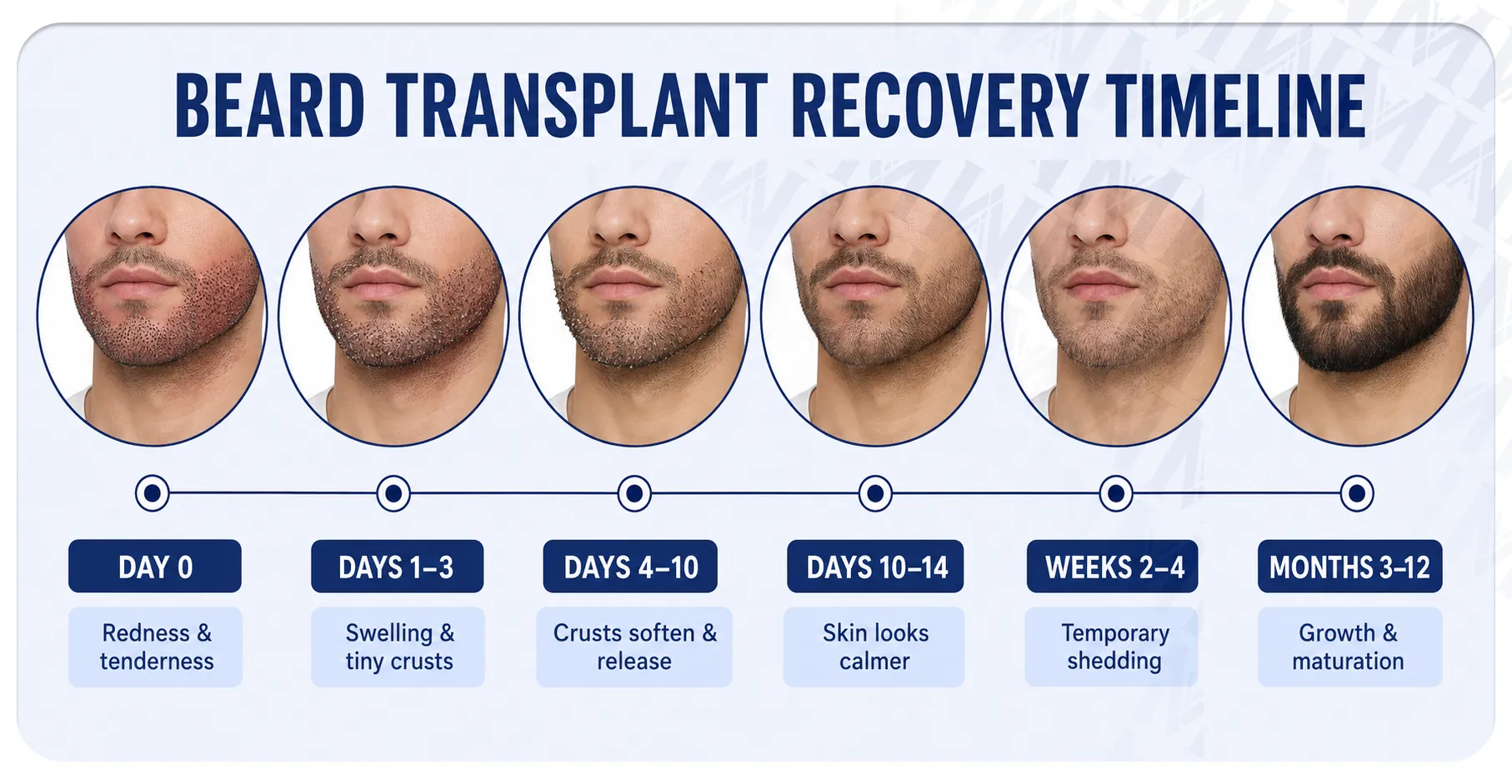
Beard transplant recovery usually progresses from redness and crusting in days 1–7 to scab release around days 7–10, temporary shedding in weeks 2–4, and new growth beginning around months 3–4. The phase table above sketches the shape of healing. The decision table below fills in the detail that patients actually need: what is permitted at each stage, and what should prompt a call.
Two terms recur throughout this guide. The recipient area is the facial skin where grafts were placed. The donor area is the area where transplanted hair was taken from, and it heals on its own schedule under separate instructions from your surgeon.
Peer-reviewed reviews of facial hair transplantation indexed on PubMed describe a broadly similar sequence: early crusting, temporary shedding, then growth that matures over roughly a year. Exact dates shift with skin type, crust thickness, graft density, and clinic protocol.
Medart Beard Recovery Decision Table
Recovery stage |
What patients typically see |
What is usually permitted |
What requires contacting the clinic |
|---|---|---|---|
Day 0 |
Redness (erythema: redness caused by healing inflammation), tenderness, punctate bleeding, meaning pinpoint spots |
Rest, prescribed medication, head elevation if advised |
Bleeding that does not settle with your clinic's instructions; heavy bleeding needs urgent care |
Days 1–3 |
Crusting, swelling (edema: swelling caused by fluid buildup), tightness |
Sleeping on the back, soft foods, button-front clothing |
Fever or rapidly increasing facial swelling |
Days 4–7 |
Crusts darker, redness often starting to settle |
Gentle washing once your clinic has cleared it |
Increasing pain, pus, or foul odour |
Days 7–10 |
Scab release during washing, itching |
Continued gentle washing, patting dry |
Thick crusts that will not soften; redness spreading outward |
Days 10–14 |
Calmer skin, some residual pinkness |
Guarded electric trim only if approved |
New painful pustules or worsening tenderness |
Weeks 2–4 |
Postoperative shedding of hair shafts |
More normal washing once skin has closed |
Suspected graft trauma after an injury |
Months 3–4 |
Fine early regrowth, uneven coverage |
Usual grooming once cleared |
New pain, drainage, or skin changes; discuss uneven growth at routine follow-up |
Months 6–9 |
Thicker, more even coverage |
Routine trimming and shaving |
Recurring folliculitis (inflamed hair follicles that can look like tender pustules) or troublesome ingrown hairs |
Months 9–12 |
Texture and direction maturing |
Full grooming routine |
Unexpected skin changes; review density at scheduled follow-up |
Beyond 12 months |
Slower final thickening in some patients |
Review dated photographs with your surgeon |
Symmetry or density concerns you want formally assessed |
Table note: stage descriptions follow the general healing sequence described in facial hair transplantation reviews indexed on PubMed, combined with Medart's postoperative protocol. Your written instructions override this table.
"In our clinic, facial crusting is often more noticeable than scalp crusting, because the recipient area moves constantly during meals, speech, and expression." — Dr. Busra Yakupoglu, Hair Transplant Surgeon
Timelines are approximate and vary by patient, recipient-skin healing, and clinic protocol. Two milestones vary most between patients: when crusts release, and when a first close shave is cleared.
What Happens in the First 24-72 Hours After a Beard Transplant?
During the first 24–72 hours, the priority is preventing rubbing, pressure, scratching, contamination, and accidental contact with the newly placed beard grafts. The timeline above shows how quickly the picture changes. This section covers the habits that keep grafts undisturbed while early healing gets under way.
Bernstein and Rassman's graft-anchoring research, published in Dermatologic Surgery and indexed on PubMed, found that the risk of dislodging a graft falls as wound healing progresses. That evidence comes primarily from scalp transplantation studies, so facial-graft precautions should be individualized by the treating clinic.
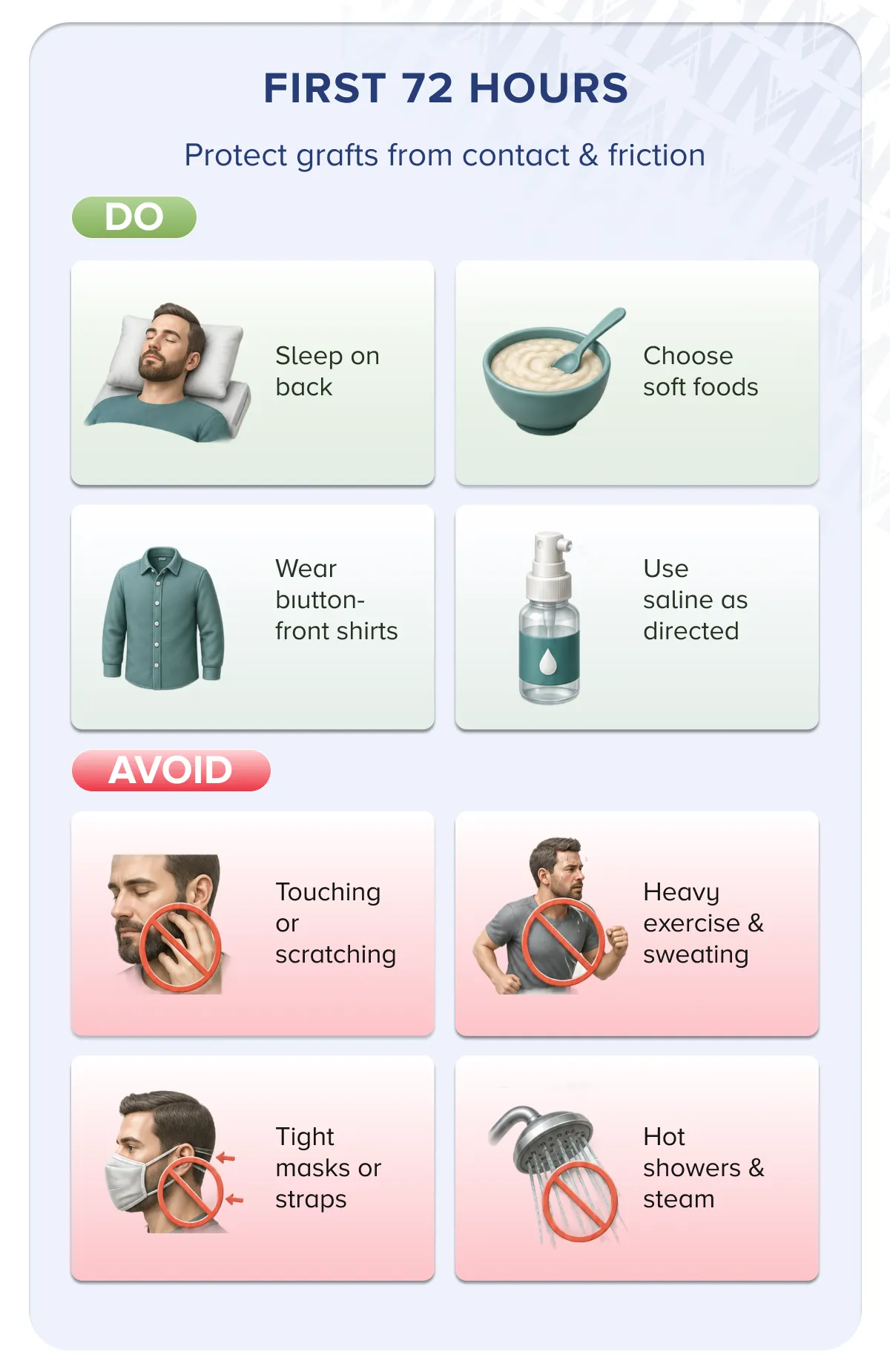
Do:
● Sleep on your back with head elevation if your clinic recommends it.
● Use prescribed saline spray or prescription medication only as directed.
● Choose soft foods and small bites while mouth movement feels tight.
● Wear button-front shirts instead of pull-over clothing.
Avoid:
● Touching, scratching, or inspecting the recipient area with fingernails.
● Exercise, heavy sweating, swimming, sauna, steam room, and direct sun.
● Tight collars, scarves, helmet straps, or a mask pressing on grafts.
● Any skincare, aftershave, or beard oil that was not approved.
Mild redness, tenderness, tightness, and small crusts are commonly expected in this window. Punctate bleeding may also appear on day 0.
If you accidentally touch or rub the recipient area:
1. Stop touching the area and do not inspect it with fingernails.
2. Do not pull at crusts, hair shafts, or any tissue-like material.
3. Photograph active bleeding, visible trauma, or a suspected displaced graft in good light.
4. Contact the treating clinic with the photo and your postoperative day.
A light touch does not automatically mean a graft was lost, but your treating clinic can assess trauma in the context of your procedure.
Composite example (day 2): A patient wakes and realises he rolled partly onto his cheek overnight. There is no bleeding, but one crust looks flattened. He does not rub or lift it. He photographs the area, notes his postoperative day, and contacts the treating clinic rather than guessing.
Crusting, Redness and Sleeping Position in the First 3 Days
Sleep is where good intentions quietly fail. If your clinic recommends back sleeping with slight head elevation, arrange pillows on either side of your head so rolling becomes less likely.
Bedding matters too. Use a clean pillowcase, and ask your treating clinic how often it should be changed while crusts are present. Grafts on the cheeks or chin sit exactly where a pillow drags.
Eating deserves the same care. Wide mouth movement pulls on the chin, jawline, and moustache area, so smaller bites and softer foods reduce that stretch. Keep food and drink off the recipient area, and follow your clinic's oral-hygiene and first-wash instructions.
Masks, if you need one, should not press or rub. Ask your treating clinic: whether a looser, non-contact alternative is suitable, and how long tight-fitting types should be postponed. Do not apply ice directly to grafts; any swelling routine must be clinic-approved.
Clinic-specific guidance: if you are recovering in Istanbul before travelling home, confirm your pillow setup, washing start date, and follow-up plan before you leave.
Unsure whether your redness, swelling, or crusting matches your recovery day? Use the WhatsApp button in the bottom-right corner to request a personalized assessment from the Medart team.
When Can You Wash and Shave Your Face After a Beard Transplant?
Gentle washing often begins within 24–72 hours, while trimming and close shaving are delayed until the grafts and facial skin have healed and the treating clinic has given permission. Scab release depends on that washing routine, which is why technique matters far more than starting early.
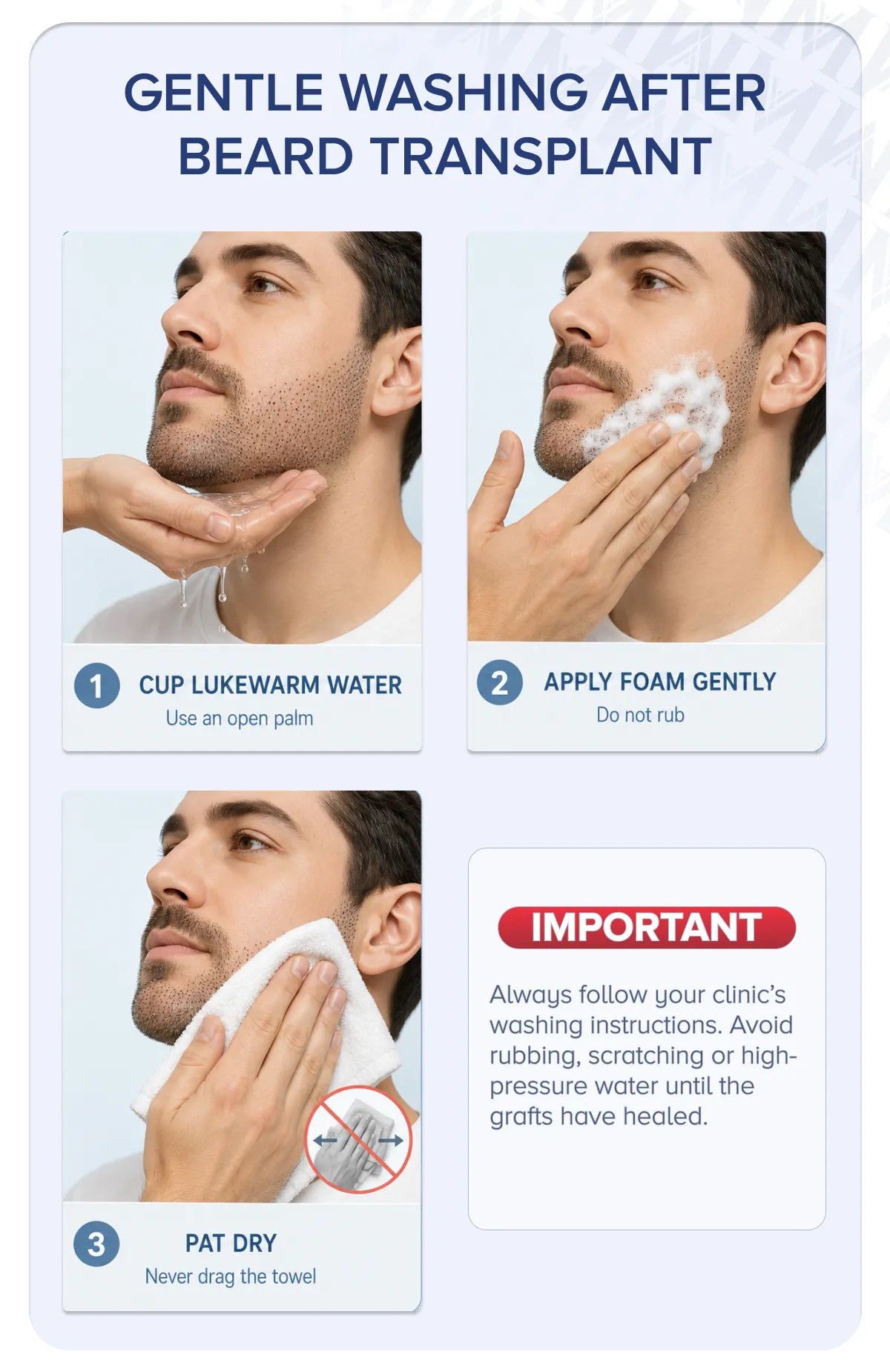
Washing after beard transplant surgery is deliberately unhurried. Ask your treating clinic: which cleanser to use, and when. Most protocols call for lukewarm water and low pressure. Apply lather with an open hand or let it sit. Do not scrub, and skip washcloths and sponges entirely.
Drying is where many patients slip. Pat with a clean, soft towel, or let the area air-dry. Patting rather than rubbing protects both the crusts and the fragile skin beneath them.
Hot water, steam, fragranced skincare, exfoliants, retinoids, and alcohol-based aftershave can all irritate healing recipient skin. Keep them away until your surgeon clears them.
Shaving after beard transplant surgery splits into two very different actions. A guarded electric trim keeps the blade off the skin. A razor or wet shave drags directly across the recipient area, and is usually postponed considerably longer. The International Society of Hair Restoration Surgery (ishrs.org) publishes professional guidance rather than a single universal date, and no high-quality study establishes one universal first-shave date for beard grafts.
Before any close shave, judge what you can actually see. Do not shave over active scabs, open or weeping sites, worsening redness, drainage, or marked tenderness. Ask the treating clinic before proceeding.
First Wash, First Trim and First Full Shave Timeline
This table separates four milestones that patients often merge into one, including shaving after beard transplant surgery. Treat every range as approximate.
Milestone |
Common timing |
Technique notes |
Before you start |
|---|---|---|---|
First gentle wash |
Often 24–72 hours |
Lukewarm water, low pressure, no rubbing, pat dry |
Ask your treating clinic |
More normal washing |
Often after crusts release and skin closes |
Mild cleanser, still no scrubbing or exfoliants |
Ask your treating clinic |
First guarded trim |
Commonly around days 10–14 or later |
Electric trimmer with guarded clippers, no skin contact |
Ask your treating clinic |
First close shave |
Often postponed to roughly 3–4 weeks or later |
Razor or wet shave only on fully healed skin |
Ask your treating clinic |
Medart postoperative protocol: Medart Hair Transplant sets individual washing, trimming, and shaving dates case by case and confirms them at follow-up, not by a fixed calendar. Clinic protocols differ, so do not copy a timeline from another patient.
Composite example (day 12): A patient needs to look presentable for work and is weighing guarded clippers against a razor. His clinic clears a guarded electric trim only, because a blade would pass directly over recently closed recipient skin. He trims lightly, keeps pressure off the area, and postpones the wet shave.
When Do Transplanted Beard Hairs Shed and Regrow?
Transplanted beard hairs often shed two to four weeks after surgery, while early replacement growth commonly becomes visible around months three or four and continues maturing for up to a year or longer. Once washing and trimming settle into a routine, shedding becomes the next thing that worries patients, usually without cause.
Hair shaft versus follicle: think of the hair shaft as the visible strand above the skin, and the follicle as the living root structure underneath. A visible strand can shed while the follicle remains capable of growing a new hair.
Postoperative shedding, sometimes called shock shedding, means temporary loss of visible transplanted hair shafts after surgery. It follows the normal hair growth cycle of anagen, catagen, and telogen phases described in physiology references hosted on NCBI Bookshelf. Shedding does not confirm that a transplant has worked, and it does not confirm that grafts have been lost.
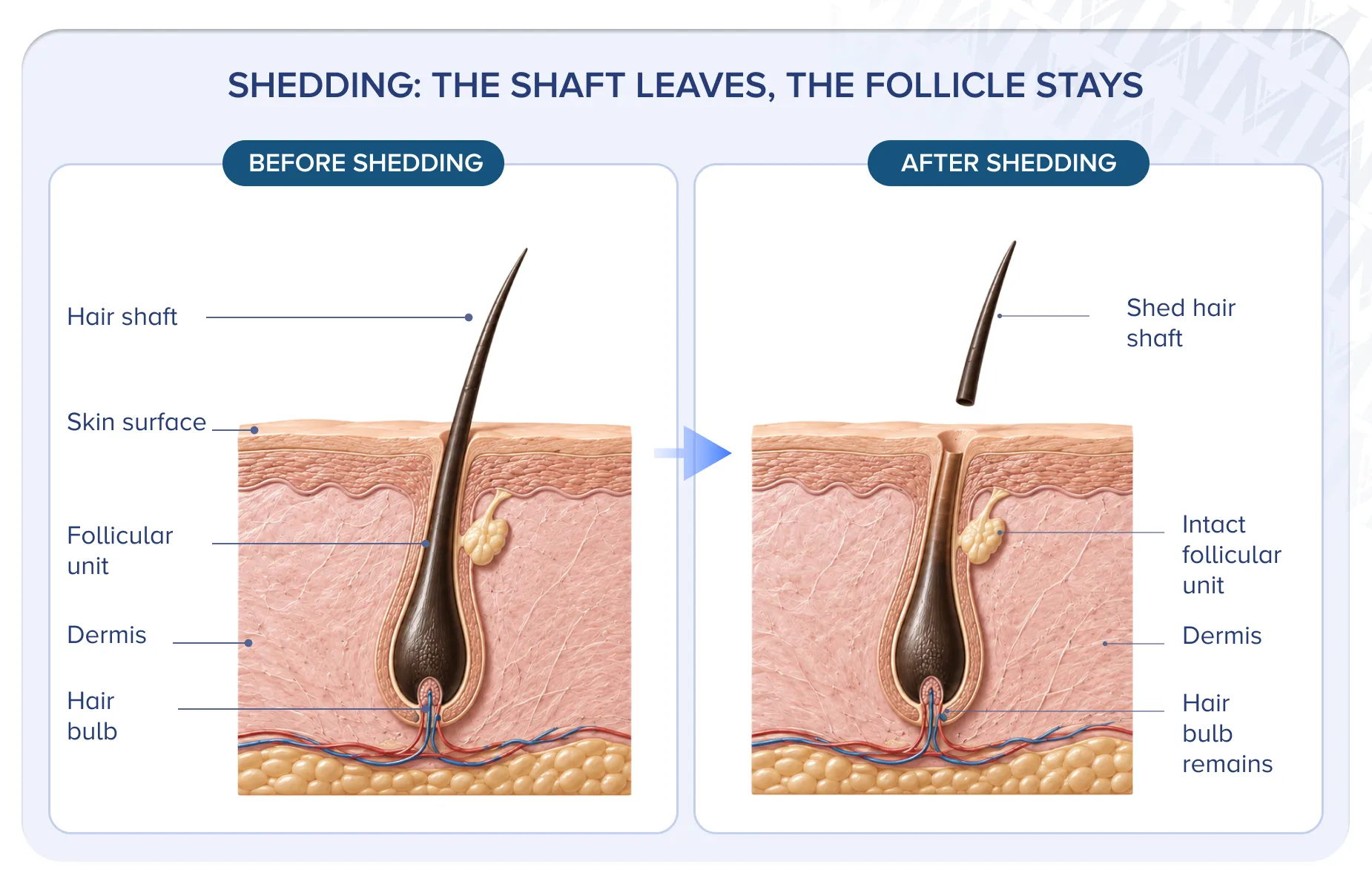
Beard transplant regrowth timeline milestones:
● Weeks 2–4: Transplanted shafts commonly shed, sometimes unevenly across zones.
● Months 3–4: Fine early hairs often appear, frequently thinner than expected.
● Month 6: Many patients see more visible coverage, although density can remain uneven.
● Months 6–9: Calibre and fullness generally continue improving.
● Months 9–12: Texture, direction, and blending typically mature.
● Beyond 12 months: Some patients see slower final thickening.
Shedding itself is quiet and painless. Anything painful is a different question, so keep this short contrast in mind:
● Commonly expected: loose shafts on the pillow or in the sink, patchy thinning across zones, mild itching, pink skin.
● Worth a clinic message: pain that is increasing, pus or drainage, spreading redness, painful pustules, or shedding that follows a knock or scratch to the face.
Early growth can look wiry or patchy, and different zones often restart at different times. That unevenness commonly settles as more follicles re-enter the growth phase.
If scalp donor hair was used, facial hair transplantation reviews note that those grafts often keep donor characteristics. Scalp-derived beard hair may grow longer and faster, so regular trimming is commonly needed long term.
Composite example (week 3): A patient sees most transplanted hairs falling out during washing and believes the procedure has failed. Beard transplant shedding at this stage is commonly part of the process. He keeps to the approved routine, photographs the area monthly, and reviews progress with his surgeon rather than changing anything.
How Does Beard Transplant Recovery Differ From Scalp Recovery?
Beard transplant recovery differs from scalp recovery because facial grafts are repeatedly exposed to eating, shaving, masks, skincare, mouth movement, and visible social contact. Warning signs look broadly similar at both sites. The daily demands do not, and that gap is why facial aftercare carries extra rules.
Practical factor |
Beard recipient area |
Scalp recipient area |
|---|---|---|
Movement |
Constant facial movement during meals and speech |
Not exposed to repeated mouth movement, though pillow and headwear friction still matter |
Friction sources |
Masks, collars, scarves, pillows, hands |
Hats, pillows, headrests, hands |
Grooming |
Trimming and shaving reintroduced in stages |
Cutting resumes without blade-to-graft contact |
Skincare |
Cleansers, aftershave, sunscreen all touch grafts |
Hair washing and scalp products rather than facial cleansers |
Visibility |
Redness and crusts are hard to conceal socially |
May be less socially visible; use only clinic-approved, non-contact headwear |
Long-term care |
Scalp donor hair in the beard may need regular trimming |
Donor characteristics already match |
Facial hair transplantation reviews note that graft direction and angulation are especially visible on the face, so early growth can look uneven before hairs mature. Neither site heals universally faster. The recovery demands simply differ.
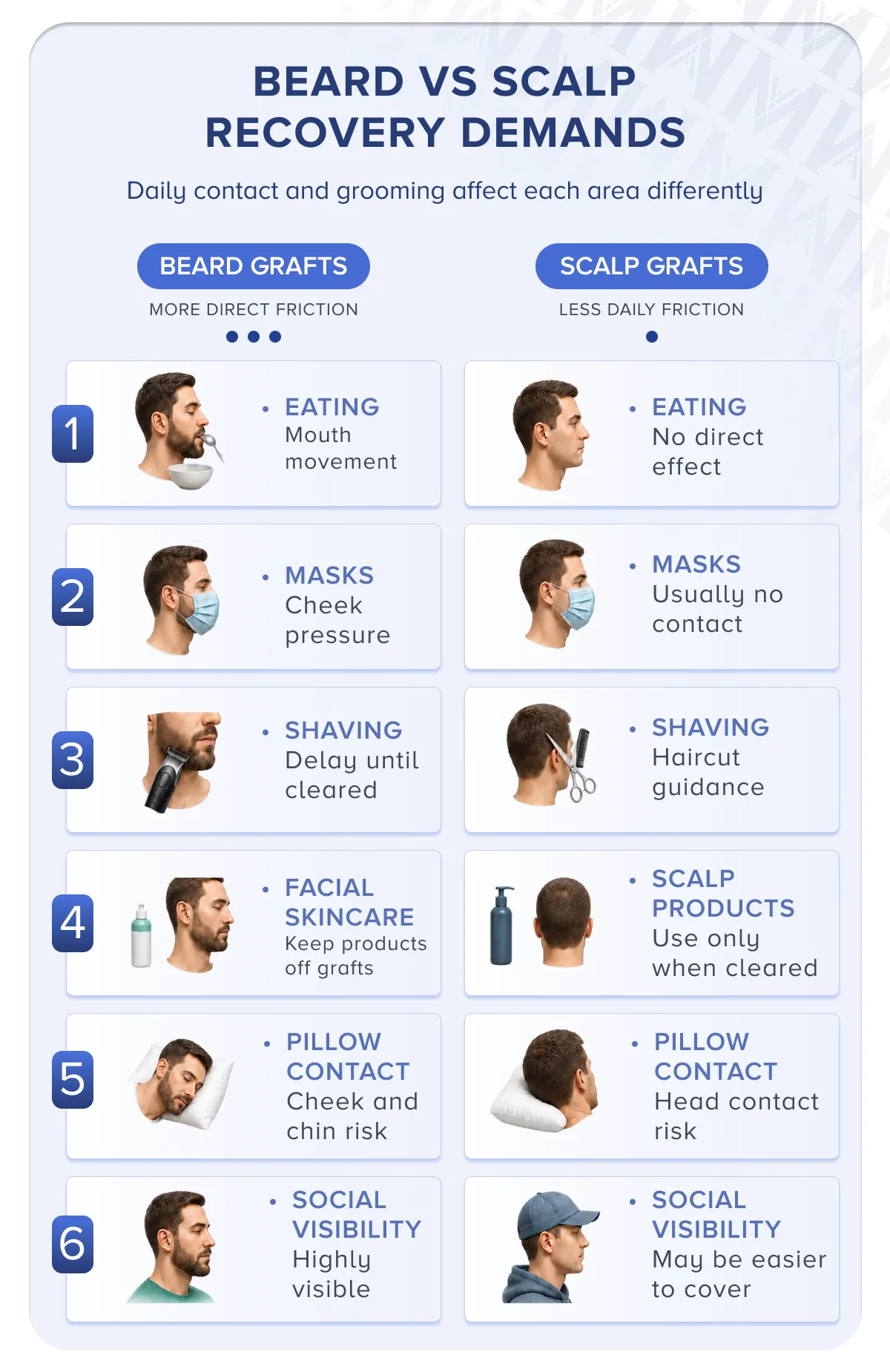
If both areas were treated in one session, expect two sets of instructions; our page on combined beard and hair transplant recovery planning explains why site-specific care matters. For head milestones, use the dedicated scalp hair transplant growth timeline rather than applying beard dates to your scalp.
Composite example (month 4): A patient sees early growth along the jawline but almost nothing on the upper cheek. Coverage looks patchy and finer than he expected. Instead of adding products, he photographs the same angles monthly in the same light and reviews the trend with his surgeon at the scheduled follow-up.