
CCCA Hair Transplant: Can Scarring Alopecia Be Transplanted?
A CCCA hair transplant may be possible, but only after inflammation is controlled and the condition has shown no symptoms or progression—commonly for at least 12–24 months. Doctors should assess the recipient and donor scalp with examination, trichoscopy and sometimes biopsy. Because growth in scar tissue is unpredictable, a small test-graft session is often the safer first step.
How Many Grafts Afro Hair Transplant Patients Need—and Why
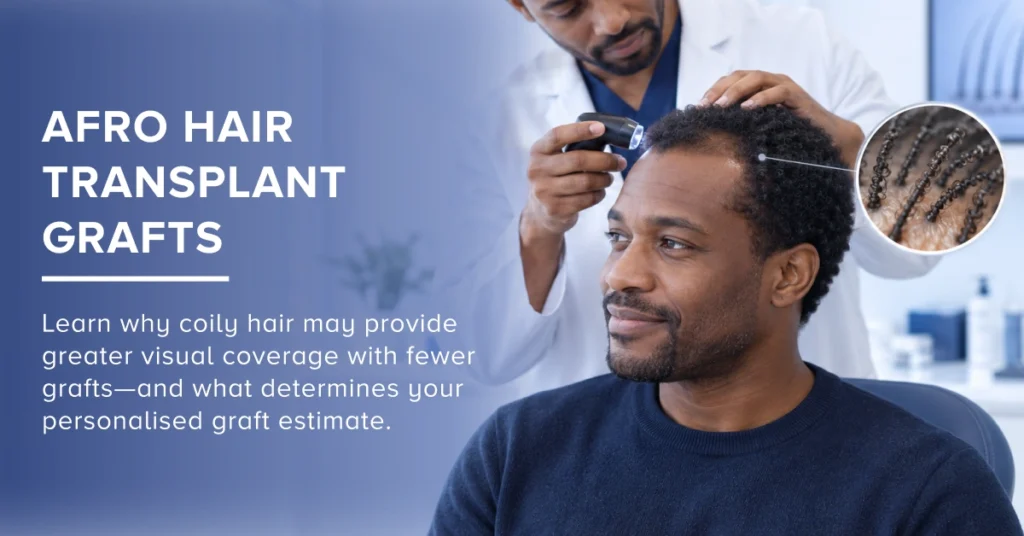
Afro hair transplants may need about 800–1,600 grafts for a limited hairline, 2,100–3,000 for Norwood IV and 3,800–5,000 for Norwood VI. Coily hair can create more visible coverage per graft than straight hair, but donor density, caliber, crown size and extraction difficulty determine the final number.
Unshaven DHI Hair Transplant: Eligibility, Grafts & Cost
An unshaven DHI hair transplant keeps the recipient hair long and may conceal small trimmed areas in the donor zone. It is usually best for selected patients needing about 1,000–2,000 grafts. Expect a longer procedure and an indicative 10–25% price premium compared with shaved DHI; extensive hair loss often requires partial or full shaving.
DHI Hair Transplant Recovery: Day-by-Day & Work

DHI hair transplant recovery usually allows light desk work within 2–5 days, while crusting generally clears in 7–10 days and redness improves within 7–14 days. Shaved DHI may remain more visible than unshaven DHI, and outdoor, physical, or helmet-dependent jobs often require 10–14 days or individual clinical clearance.
Two Day Hair Transplant: When Splitting Beats One Long Day

A two day hair transplant can be preferable for approximately 4,000–5,000 grafts because it reduces daily operating time and may shorten each graft’s time outside the body. A common plan treats the hairline and frontal third on Day 1, then the mid-scalp and crown on Day 2. It does not increase donor supply.
Afro Hair Transplant Aftercare: Durags, Braids & Cuts

Afro hair transplant aftercare requires extra care with tangling, friction and styling tension. Do not detangle the transplanted zone before day 14. A loose durag may be possible around days 10–14, while braids, retwists, wigs and haircuts depend on tension, scalp contact and healing. Always follow your clinic’s individual timeline.
6000 Grafts Hair Transplant: Possible in One Session?
A 6000 grafts hair transplant is possible for selected patients, but 6,000 usually exceeds the typical single-session FUE range. A credible plan may use about 4,500 scalp grafts plus 1,000–1,500 beard or chest grafts and divide treatment into two sessions around 9–12 months apart. Donor measurements, not a photo-based promise, must determine the final number.
4000 vs 5000 Grafts: Is the Extra 1000 Worth It?
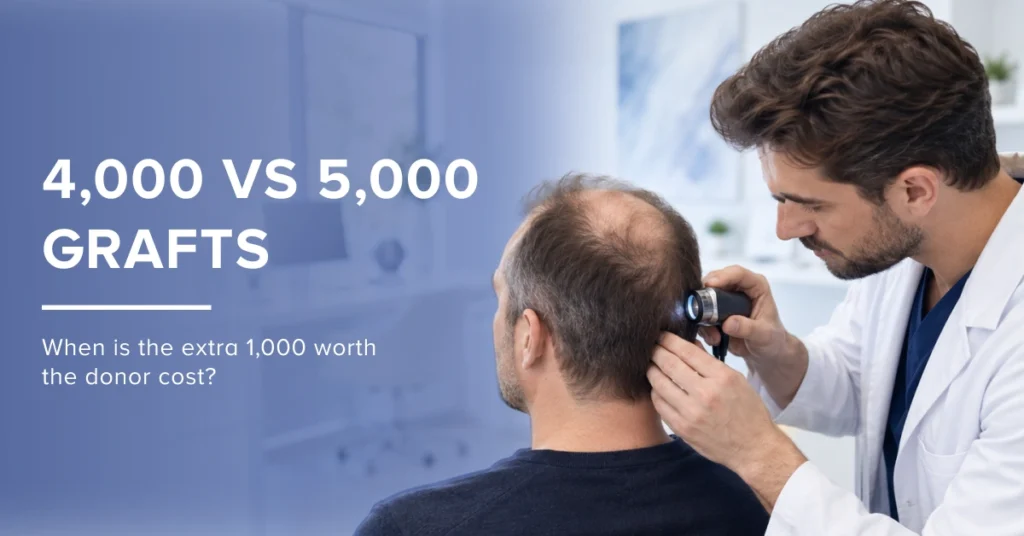
In a 4000 vs 5000 grafts decision, the extra 1,000 can cover roughly 25–50 cm² or strengthen density in a smaller area, but it permanently removes 1,000 grafts from future supply. Choose 5,000 only when donor mapping confirms adequate reserve and the surgeon shows exactly where those grafts will add value.
2000 vs 3000 Grafts: Which Count Fits Your Hair Loss?

For 2000 vs 3000 grafts, choose 2,000 when loss sits in the hairline or frontal zone and donor hair must be preserved. Choose 3,000 when measured mid-scalp or limited crown coverage is also needed. A sound quote shows recipient area in cm², density by zone, graft allocation by zone and estimated donor reserve.
Corrective Hairline Surgery for a Bad Transplant
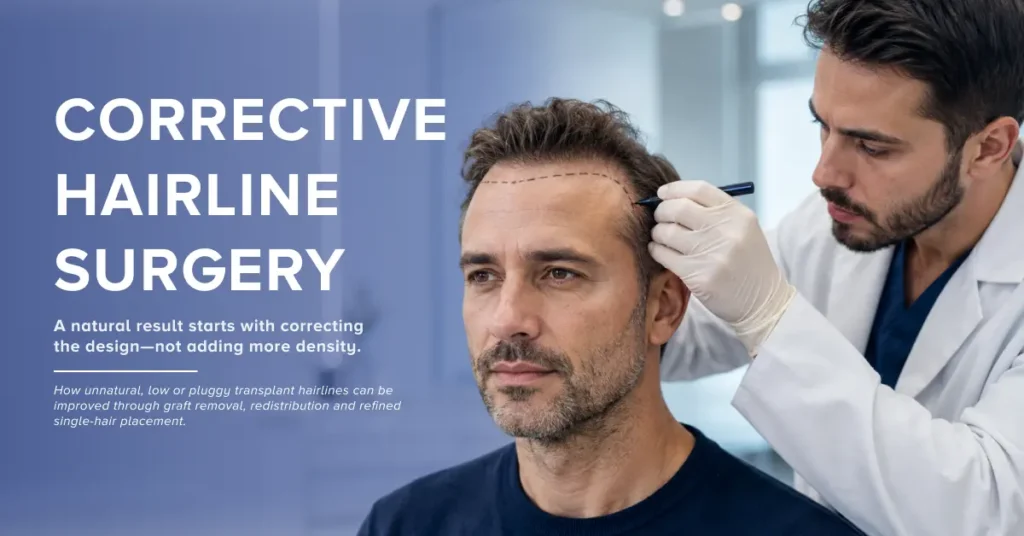
Corrective hairline surgery can improve a transplanted hairline that is too low, pluggy, asymmetric, or wrongly angled. Depending on the defect, a surgeon may remove misplaced grafts, reimplant viable follicles, or add fine single-hair grafts for camouflage. Final planning commonly occurs after the original transplant has matured, often around 12 months.