
Corrective Hairline Surgery for a Bad Transplant
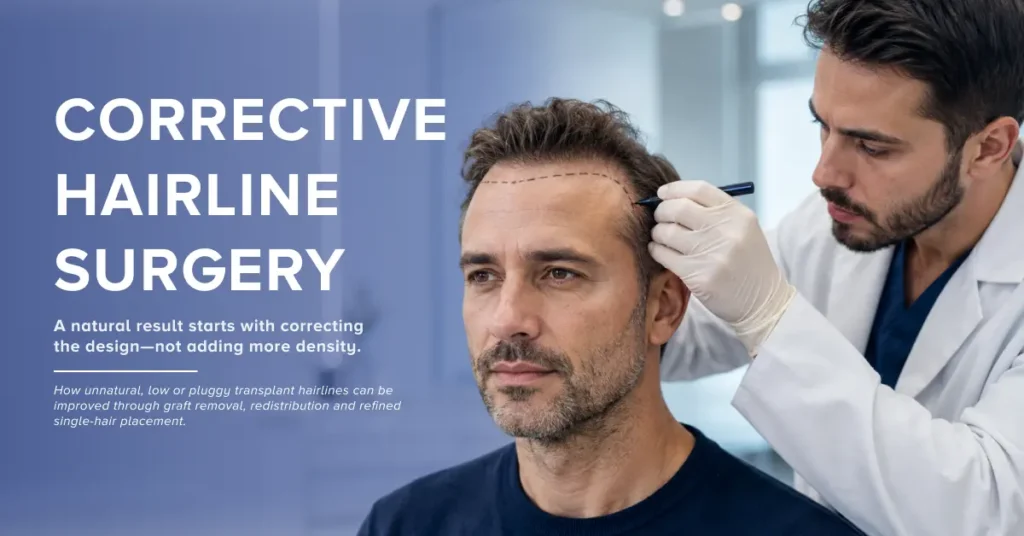
Corrective hairline surgery can improve a transplanted hairline that is too low, pluggy, asymmetric, or wrongly angled. Depending on the defect, a surgeon may remove misplaced grafts, reimplant viable follicles, or add fine single-hair grafts for camouflage. Final planning commonly occurs after the original transplant has matured, often around 12 months.
Topical Finasteride: Benefits, Side Effects and Results

Topical finasteride can slow male pattern hair loss and improve hair counts while producing lower blood exposure than oral finasteride in studied formulations. It is not side-effect-free: scalp irritation and systemic effects remain possible. Results usually require several months, and safe use depends on the exact concentration, volume, and application instructions.
FUT Scar Repair: Can FUE Fix a Strip Scar?
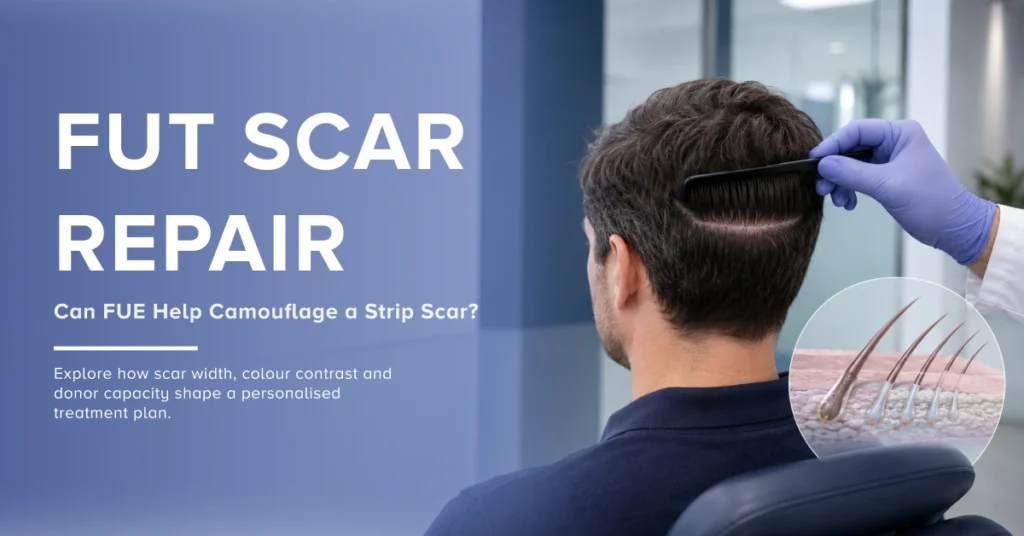
FUT scar repair can make a linear strip scar less visible by placing FUE grafts into or around mature scar tissue. FUE does not erase the scar, and growth may be less predictable than in normal scalp. Wide scars may respond better to revision followed by FUE, while SMP can reduce color contrast without adding hair.
Sapphire FUE vs DHI: Which Gives Better Density?

Sapphire FUE vs DHI has no universal density winner. DHI may suit compact areas and placement between existing hairs, while Sapphire FUE can efficiently create controlled density across larger bald zones. Your safe result depends more on donor supply, graft quality, recipient-zone biology and surgeon planning than on the implantation tool alone.
Is DHI Worth It? Honest Pros, Cons and Cost Verdict

Sometimes, but only when its implantation approach offers a clear benefit for your recipient area or existing hair. DHI does not automatically produce better density, survival, or naturalness than well-performed FUE. Compare like-for-like quotes and pay the premium only when the clinic can explain exactly what it changes in your plan.
DHI Hair Transplant Maximum Grafts: One-Session Limit
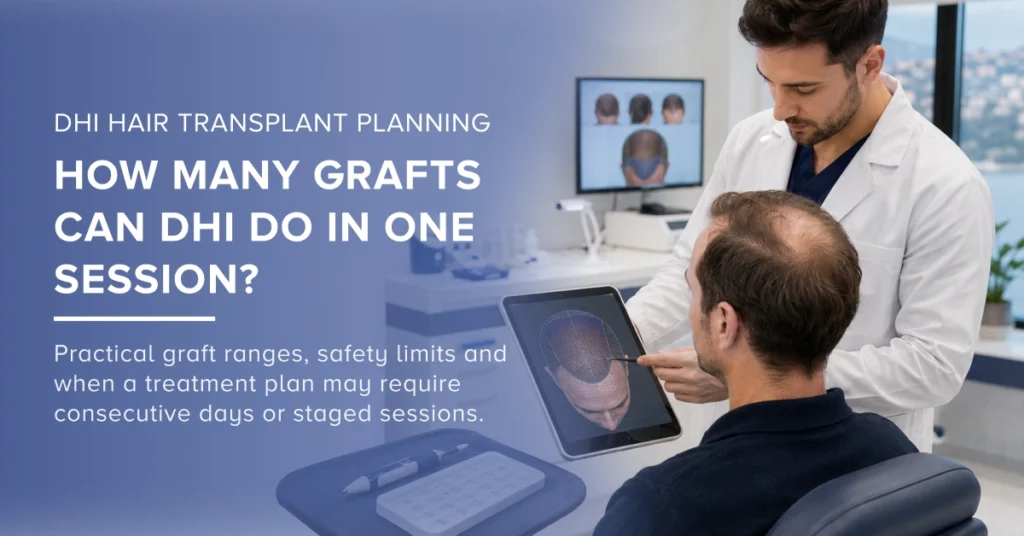
The DHI hair transplant maximum grafts per session is usually around 2,000–3,500. Selected patients may receive approximately 4,000 grafts when donor conditions, recipient-area access, staffing and operating time are favorable. This is a practical range, not a universal medical limit. Larger cases may be divided over consecutive days or staged as separate procedures.
How Accurate Is a Graft Calculator vs a Real Consultation?
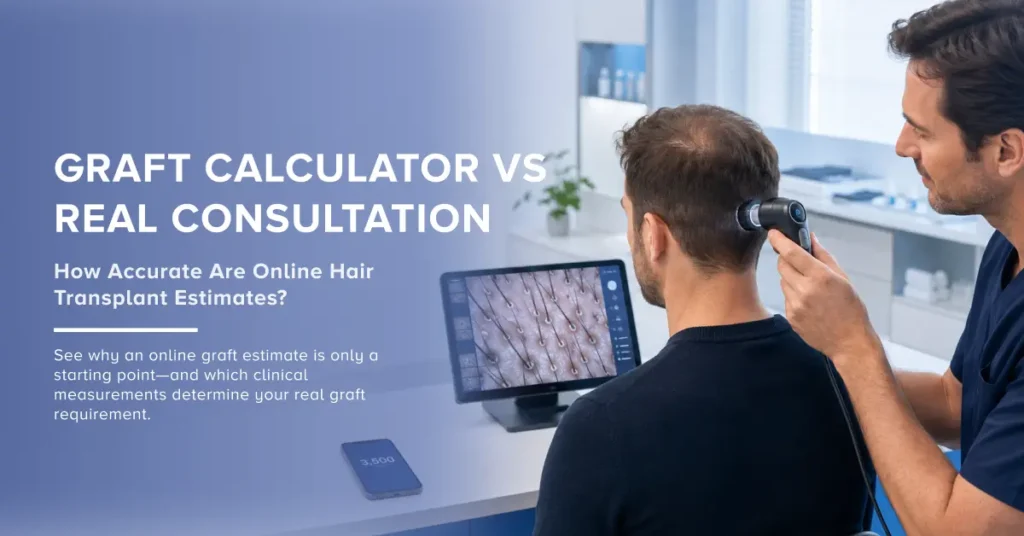
How accurate is a graft calculator? It gives a useful starting range, not a surgical count. It cannot measure donor density, hair caliber, miniaturization, scalp laxity or future loss. For early budgeting, allow roughly 20–30% variation either way. That is a practical planning allowance, not a universally validated clinical error rate. Confirm the figure with an assessment.
Patchy Beard Transplant: When Is It the Right Fix?
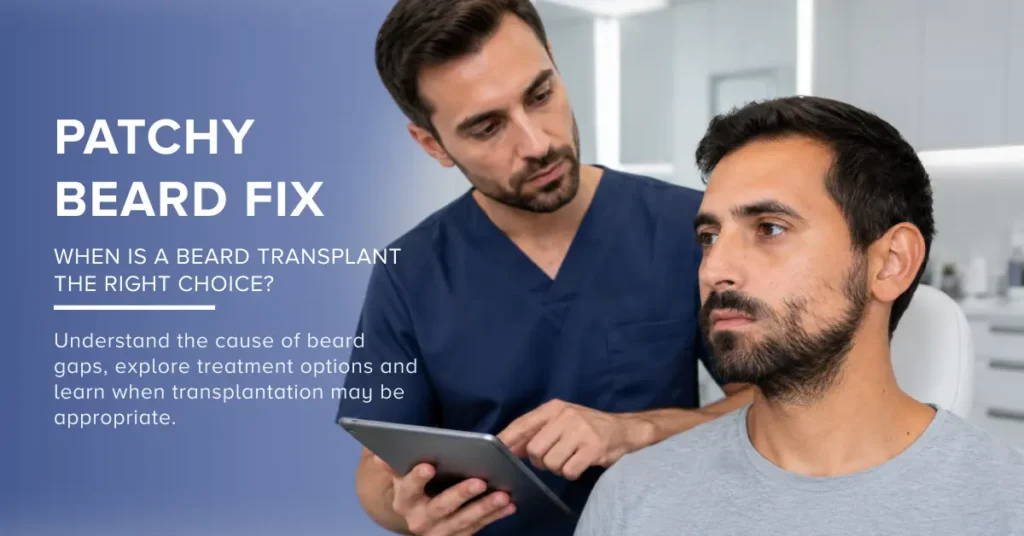
A patchy beard transplant can be the right fix when a stable gap lacks enough natural follicles, the skin is healthy and suitable donor hair is available. Minoxidil may help some responsive follicles but cannot guarantee coverage in an empty patch. Sudden, round, scaly or inflamed gaps should be medically assessed before either option.
Minoxidil vs Finasteride: Which Should You Start First?
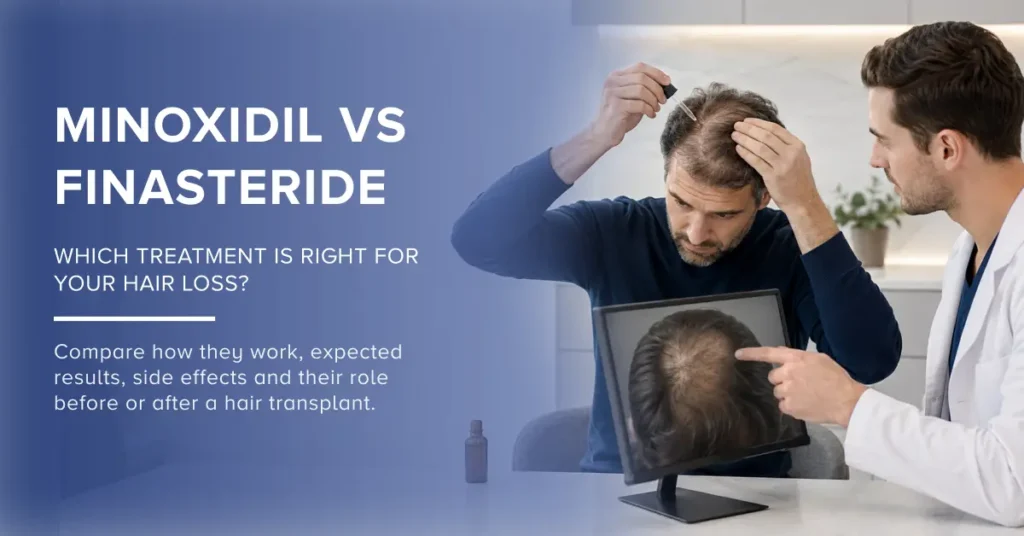
In a minoxidil vs finasteride decision, eligible men whose main goal is stopping active male-pattern hair loss usually discuss finasteride first. Topical minoxidil is often the better start when finasteride is unsuitable or unacceptable. Pattern, Norwood stage, medical history and adherence decide the plan.
Postpartum Hair Loss: Timeline, Causes and Recovery

Postpartum hair loss is usually temporary shedding caused by falling estrogen after delivery. It commonly starts two to four months after birth, often peaks around month four and improves over six to 12 months. Gentle care and adequate nutrition support regrowth, but patchy loss, scalp symptoms or persistent thinning should be medically assessed.