
Beard Transplant Recovery Day by Day: Healing & Aftercare
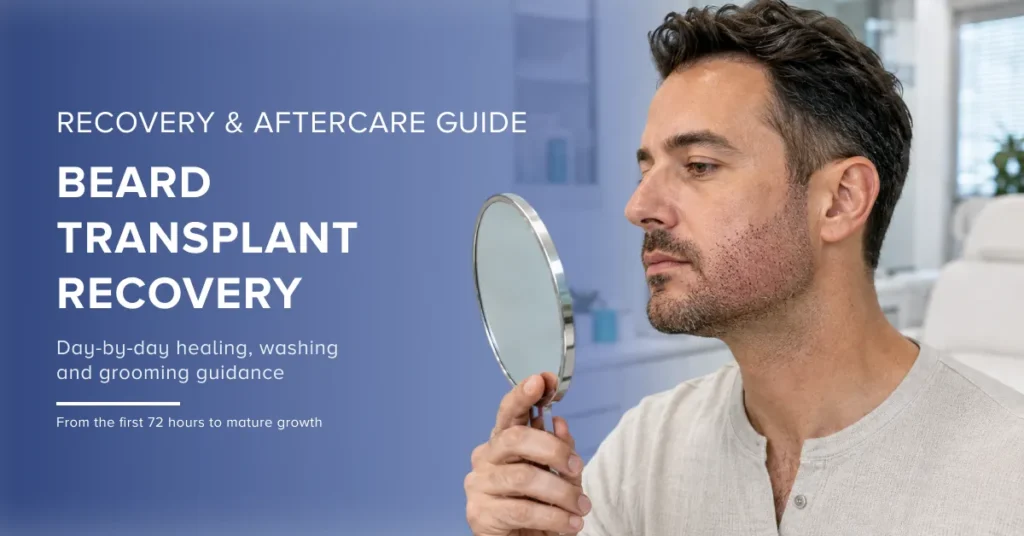
Beard transplant recovery starts with redness, swelling, and crusting during the first week. Scabs commonly release around days 7–10, transplanted hairs may shed after two to four weeks, and new growth often begins around months three or four. Avoid rubbing, picking, and shaving until your clinic confirms the grafts and skin have healed.
Beard Transplant Recovery: Timeline & When to Shave
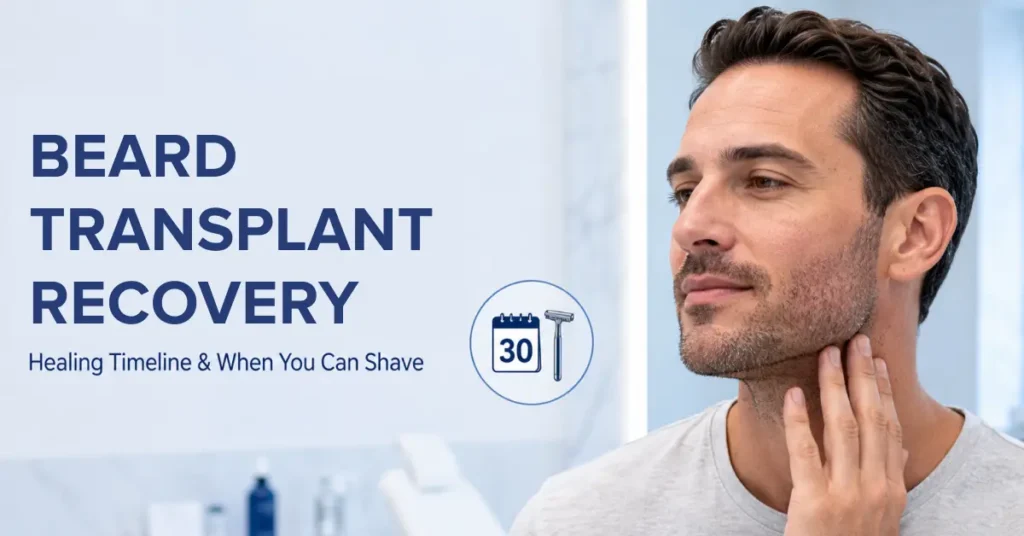
Beard transplant recovery usually involves 10–14 days of visible redness and scabbing. Avoid all grooming for 14 days; if healing is complete and your surgeon agrees, scissors may be allowed from day 14, a guarded trimmer from day 21, and a razor from day 30. Temporary shedding is common; final growth usually takes 9–12 months.
Beard Transplant Grafts by Style: Full Beard to Goatee
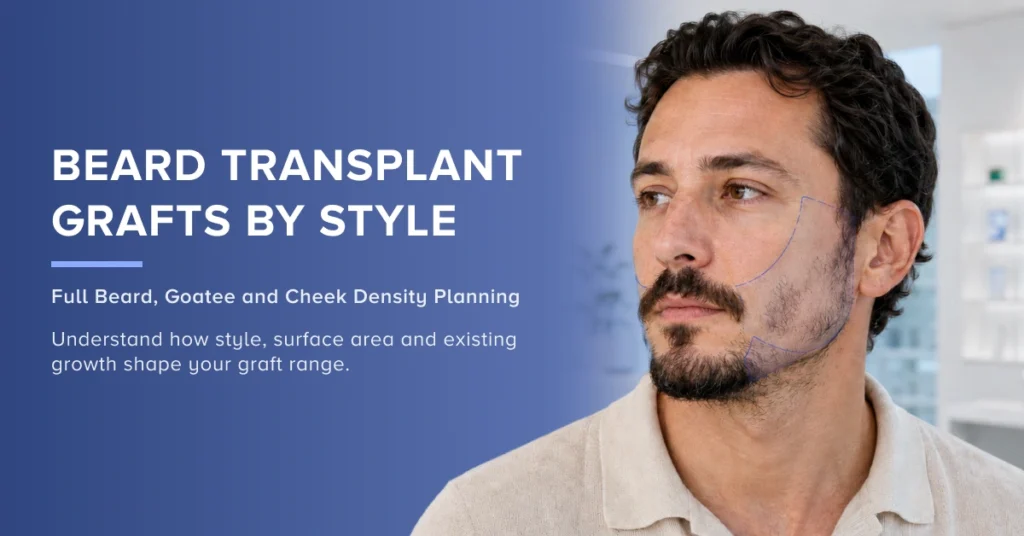
Beard transplant grafts by style range from roughly 300–600 for a moustache to 2,500–4,500 for a full beard from scratch. A goatee often needs 800–1,500 grafts, while patchy cheeks may need 600–1,500 across both sides. Your final count depends on treatment area, existing hair, density goals and donor supply.
Beard Transplant Grafts Needed: Calculator by Style
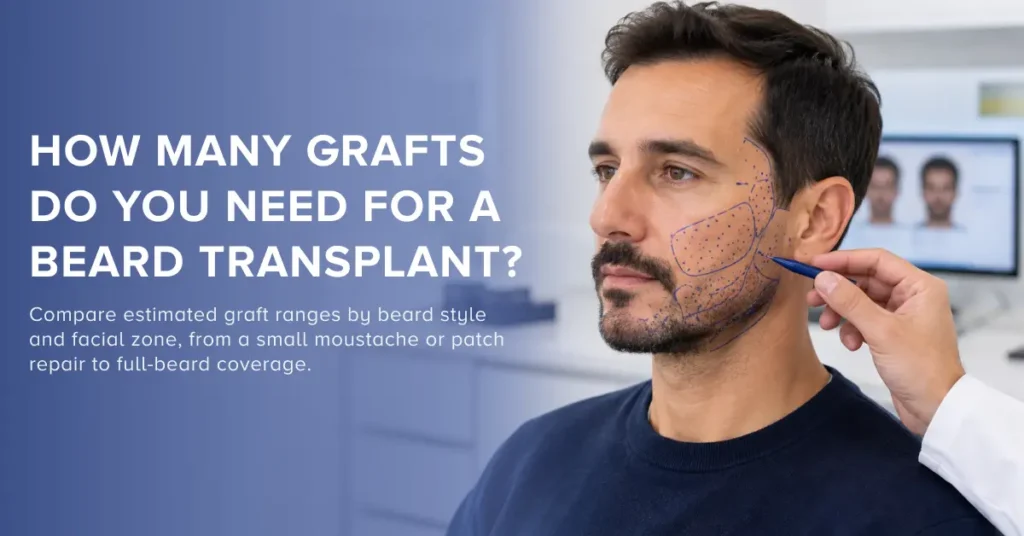
The beard transplant grafts needed can range from a few hundred for a small patch or moustache to about 2,000–3,500+ for broad full-beard coverage. Goatees, cheeks, jawlines and sideburns fall between those ranges. Use the style table as a starting point; existing hair, treatment area, density goals and donor capacity determine the personalized number.
Afro Hairline Transplant: Natural Design for Curly Hair
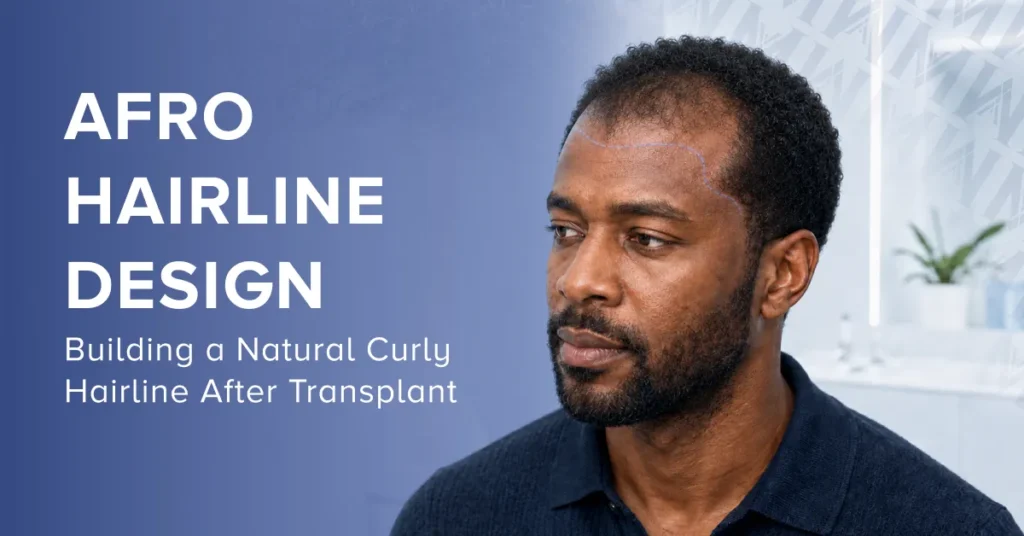
An afro hairline transplant looks natural when its shape fits the patient’s face, age, original pattern, and future hair loss, while individual grafts follow the existing curl direction. A soft front edge should use predominantly single-hair grafts, controlled irregularity, and density that increases gradually behind the hairline.
Afro Hairline Design Hair Transplant: A Natural Curve
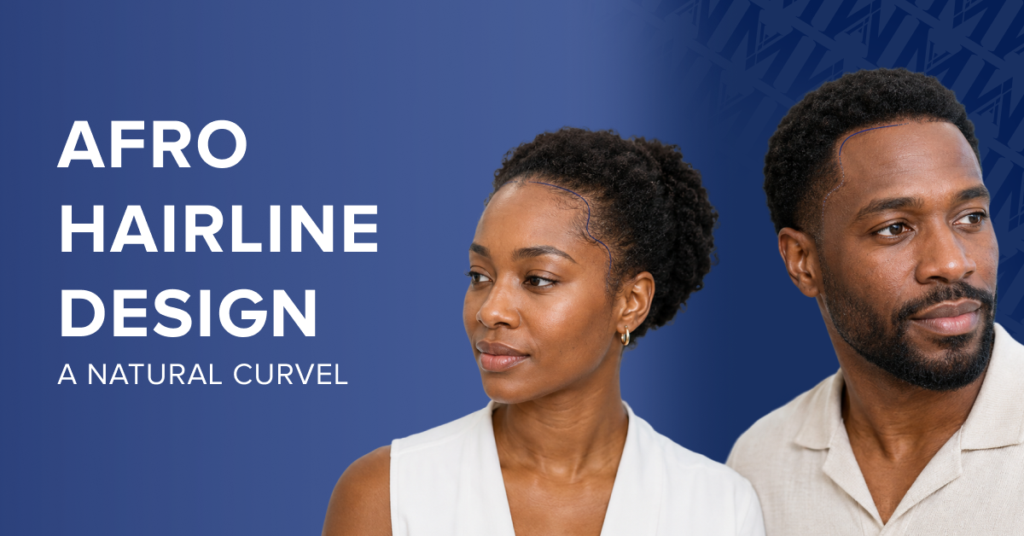
An afro hairline design hair transplant should create a face-appropriate curve rather than copy a rigid ethnic template. Natural results depend on conservative height, balanced temple points, a softly irregular 5–10 mm front edge and low-angle grafts that follow the patient’s curl direction. Male and female tendencies differ, but individual anatomy and preference come first.
DHI or FUE for Afro Hair: Which Protects Curly Follicles?
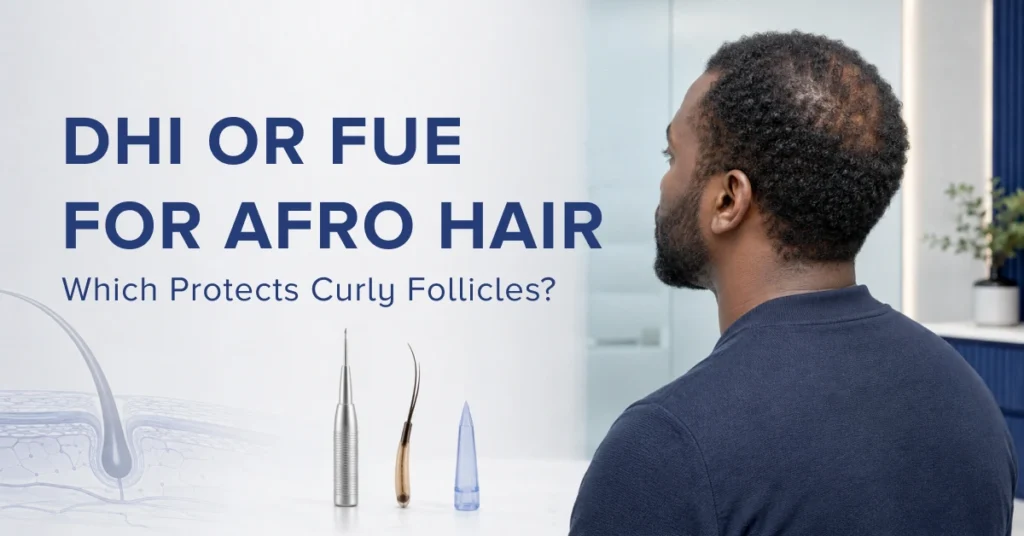
For patients asking whether DHI or FUE for Afro hair is better, neither DHI nor Sapphire FUE is automatically safest. Both commonly use FUE extraction, where curved follicles face the greatest transection risk. The better option is the one matched to your loss pattern by a team experienced in curved-graft extraction, coil-specific placement, and scar-risk assessment.
Eyebrow Transplant Turkey: Cost, Results & Safety

An eyebrow transplant in Turkey moves suitable donor follicles, usually from the scalp, into carefully designed eyebrow sites. Turkey can offer lower package prices, but natural results depend on diagnosis, single-hair graft selection, shallow implantation angles, qualified medical oversight, and reliable aftercare, not the technique name alone. Results develop gradually and transplanted hairs may require trimming.
Beard Transplant Turkey: Cost, Results, Safety & Process
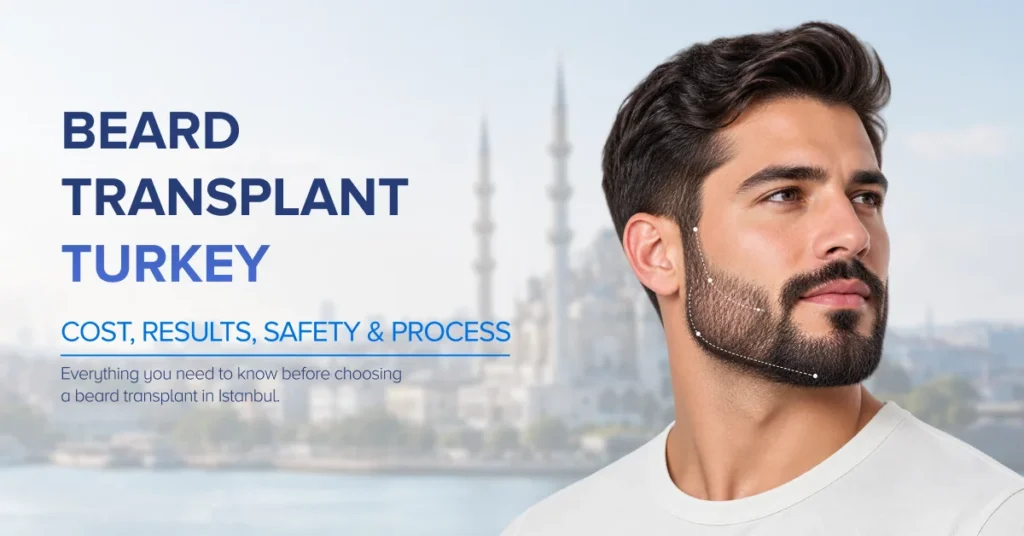
A beard transplant in Turkey moves suitable donor follicles—usually from the scalp—to sparse facial areas. Turkey may offer lower costs and convenient packages, but results depend on candidacy, beard design, hair direction, donor management and who performs the procedure. Compare the total trip cost, verified long-term cases, risks and aftercare before choosing a clinic.
Alopecia Areata and Hair Transplant: Can It Really Help?
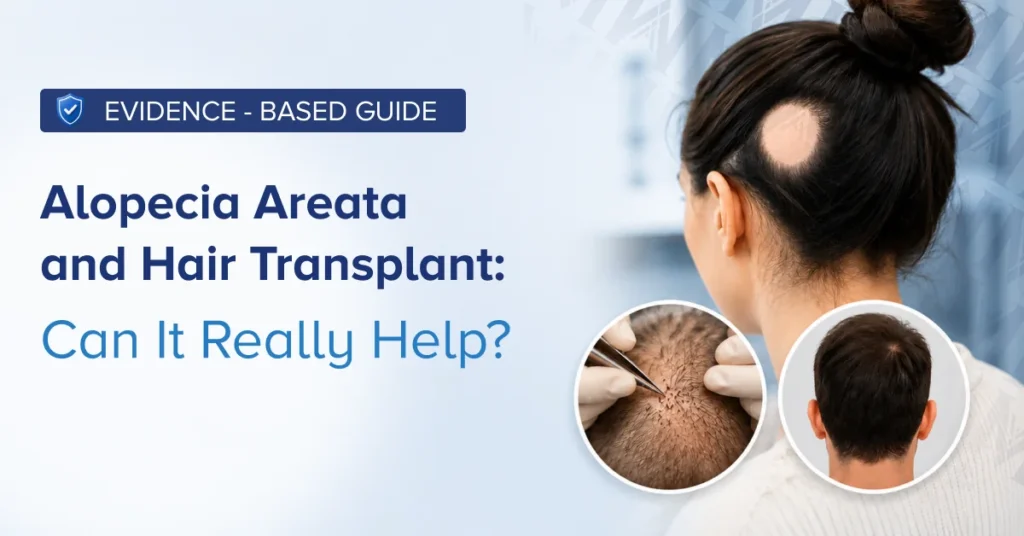
Hair transplant is not a first-line solution for alopecia areata, because the autoimmune process can attack transplanted follicles and cause them to fall out again. Surgery is a cautious option only for very small, long-stable patches after medical treatment, and even then results are not guaranteed. This article is for general information only and is not a substitute for personal medical advice.